Showing posts with label baf game. Show all posts

08 November, 2011

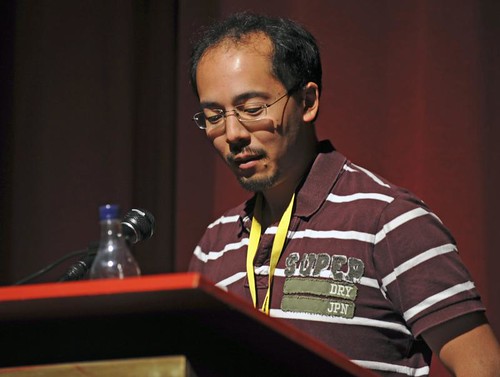
Simon Oliver shares his Lessons for Independent Developers at BAF Game

Blogger: Emma James, Web Content Coordinator

Simon Oliver is the founder of Hand Circus, creators of the hit Rolando series of games for the iPhone and Okabu on the Playstation 3. He was at BAF Game to advise anyone who wants to get into independent games development.
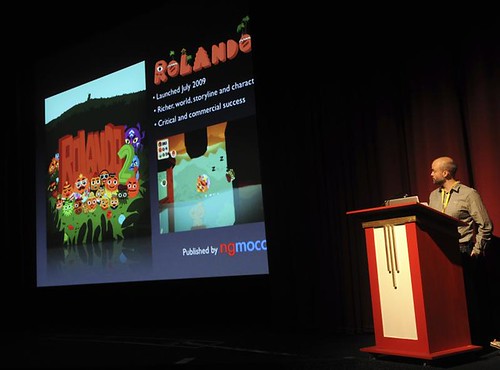
Simon Oliver, Hand Circus

Simon spoke about the history of indie, entwined with a bit of personal history.

The first computer he used was programmable, at a time when there was no divide between the people who created the games, and the machines they were created on. The government encouraged computer literacy, and for schools to teach ICT at a deeper level - not just Microsoft Word, but the basics of computer science.

When games consoles were released they were just machines for consumption. There was no concept of open source, which was a huge barrier to entry.

The release of the iPhone was a key moment for Simon, who wanted to grasp the opportunities and meet the challenges presented by this new gaming platform. And so, Hand Circus was born.

Simon is obviously concerned about the future of independent games development, given the expectation that games will deliver hyper real experiences which simply can't be created by a small team.

However, he cites David Braben's Rapberry Pi, which will teach children the building blocks of computer science and Codea (formerly Codify), which lets you create games on the iPad using a simple, easy to learn coding language, as two developments of the kind that Simon is really excited about.


The vast number of tools on the market gives developers freedom through access to these technologies. Unity stands out for Simon; it gives you a very sophisticated tool set, without which Hand Circus would not be able to create their games.

Freedom is a concept that Simon keeps on repeating...
  • The lure of independent development is freedom
  • Freedom through technology
  • Freedom to work differently
  • Freedom of expression
  • Freedom to meander
Is this why people are moving away from the AAA console space?

For Simon, this is the best work ever, and that's his message for today. It's the most challenging, and the level of personal involvement can make it an emotional experience, but Simon has some advice from fellow indie developers to help you along the way, which you can read about on his blog.

Or, to listen to the full presentation, here's the podcast which you're free to download and share.

Adrian Hon from Six to Start on Storytelling at BAF Game

Blogger: Emma James, Web Content Coordinator

Why do stories in games suck?!

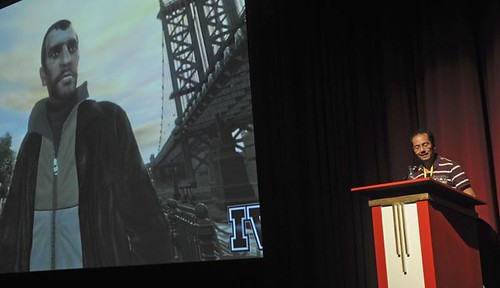
Adrian Hon is obviously not a man who beats around the bush, and I was intrigued by this frank presentation about the games industry's general inability to deliver an immersive experience when it comes to storytelling.

Adrian Hon, Six to Start

Adrian knows it can be done. He cites two of his favourites The Longest Story, and the Portal series, which tells its stories using the environment rather than time wasting cut scenes.

An opposite example is Grand Theft Auto IV. Though technically brilliant, it left Adrian deflated upon discovering that the story was not "amazing", as he'd heard it would be. Instead, it's just hotchpotch of stereotyped characters with clichéd dialogue.

Despite this failure, GTA IV received brilliant reviews, so the lesson here is that games with bad stories still sell. We don't care enough about bad stories to not buy the game, so we get the stories in games that we deserve. Fair enough!

Adrian asks why gamers looking for good stories are left wanting.

One of the answers is the element of interactivity; games aren't one way like other forms of media. Some gamers believe that the worst thing about a game with a story is that it tells you what to do. Real games should be like Sims, Minecraft and their ilk; having the ability to pretty much what you want is better than the story any writer can create.

Being a writer of Civilization fan fiction, Adrian sympathizes with this perspective.

Games which allow you to build your own story are no better or worse than those with a linear story, they're just different, and people want different things from their gaming experience.

Adrian Hon, Six to Start

So, if we know how, why don't good stories in games occur more often? Adrian believes that's a result of four factors: risk, distribution, funding and tools.

Publishers don't seem to take a lot of creative risks. If you treat video games as simply a way to make money, then that's fine. But that's not what you do it for, right?

We've witnessed a huge amount of change in the way people find, buy and play games - Steam, Facebook, Android, iOS to name a few - which empowers people to put their games in front of an audience without permission from anyone. This of course means you end up with a lot of crap, but conversely, you can discover some fantastic games that no publisher would have wanted to risk.

Developers are going to need money, and their sponsor is going to demand some level of input. These days, a lot of independent developers are going direct to the public. Six to Start successfully used Kickstarter to fund Zomies, Run! (which looks like a very entertaining way to keep fit.)

Adrian also mentioned IndieGoGo, and one member of the audience recommended Sponsume. Do you know of any good crowdsource funding organisations?

Adrian's final reason for the lameness of storytelling in games is that the writer is brought in too late. We need to give developers and writers better tools which will enable them to work on the creative process rather than the technology.

Why should we care? Because stories are important as both a form of entertainment, and a way of learning about the world.

If you want to listen to the full presentation, which includes the question and answer session, here's the podcast.


Adrian has kindly shared his slides from the presentation, which you can find on Slideshare.

Jay Grenier from Image Metrics presents Faceware 3.0 at BAF Game

Blogger: Emma James, Web Content Coordinator

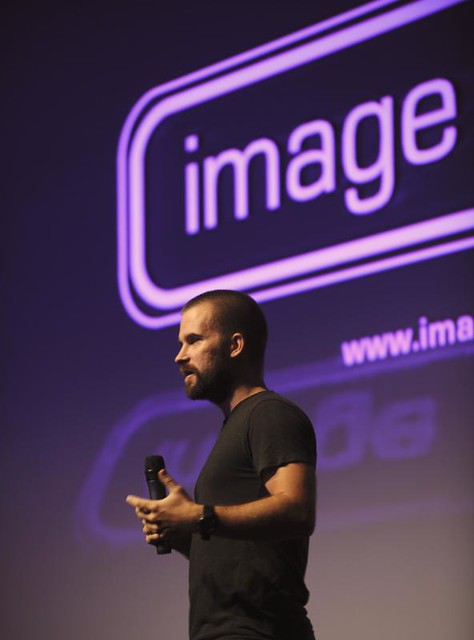
Image Metrics is the creator of Faceware, an award-winning facial animation technology used throughout the games, film and entertainment industries to streamline animation. Jay was at BAF to talk about how facial animation technologies can create an enhanced gaming experience and tackle the most demanding of schedules and rigging processes.

Jay Grenier, Image Metrics

According to Jay, the biggest challenge in games development is realistic facial animation, and there are two things which impact on the developers' ability to meet this challenge: cost and performance; and while facial motion capture is fast and gives a great result, there's a lot of set up and equipment involved.

Faceware has tried to take all these challenges head on and give users a turnkey solution to create good facial animation. To illustrate this this, Jay gave a demonstration of the Faceware workflow.

A trained animator, Jay worked on facial animation for Grand Theft Auto. He's had a lot of experience with Faceware and tells us with confidence that it's fun, easy to use and gives you a huge amount of artistic control.

There's more to motion capture than an animator creating an entire performance - their animation augments the work of an actor. With Faceware, the animator still gets to define what that performance will look like.

Your instinct when working with a new tool is to panic, but with Faceware, you're still using the software you know and love. Whatever type of rig or character you're using can be driven by Faceware - it's designed to neatly plug in to whatever you're doing.


Lip sync can be a really big problem for animators. It doesn't matter how good your rig or your rendering is if your timing is off. Faceware makes this much easier - you can let the software take care of all the heavy lifting and spend 90% of your time polishing the animation.

Plus, this is not a traditional animation workflow because you're not posing the whole face on every frame, which means you can get a lot more animation done in less time.

Faceware separates the face into three groups:
  • Eyes - what direction they're looking and the movement of the eyelids
  • Brows - everything above the eyes
  • Mouth - everything below the cheeks and around the mouth
Jay says that the most important thing about facial animation is the eyes, and getting this wrong can immediately draw the gamer out of the performance.

He demonstrated Faceware autopose. This tool knows where the key poses are, so you can go straight to them and set up the poses to match the performance. Using a simple example of two poses (blink and look), with about 30 seconds of work, Jay had created 277 frames of blinks.

While it's not a particularly difficult job to hand animate eyes, all the subtle little eye darts might be missed by an animator. Faceware picks these up - another example of how the software can save you time and still result in a more realistic animation.

There was a workshop later on in the day to give delegates the opportunity to play with the software. If you want to have a go, you can download Faceware for free. The cost comes in when you upload your files, but the good news is that student rates are available.

Did anyone attend the workshop? What did you think of Faceware?

07 November, 2011

Get ready for the 18th Bradford Animation Festival

Blogger: Emma James, Web Content Coordinator

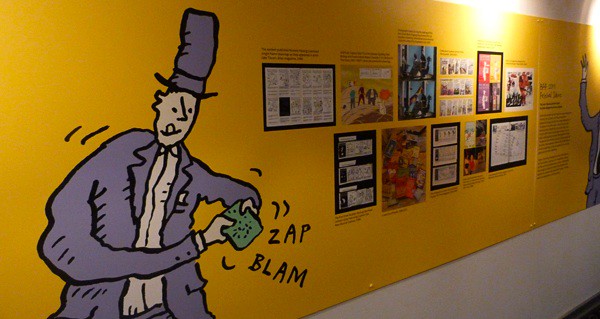
Finally, it's here! The Bradford Animation Festival team have been busy bees getting everything ready for tomorrow. We even have some new displays up in Pictureville cinema, the festival hub. These wall panels feature Steven Appleby's artwork, and of course his fabulous ident created especially for this year's festival.

StevenApplebyArt

In case you missed the animated sting, a film by Steven Appleby and Linda McCarthy, here it is again...


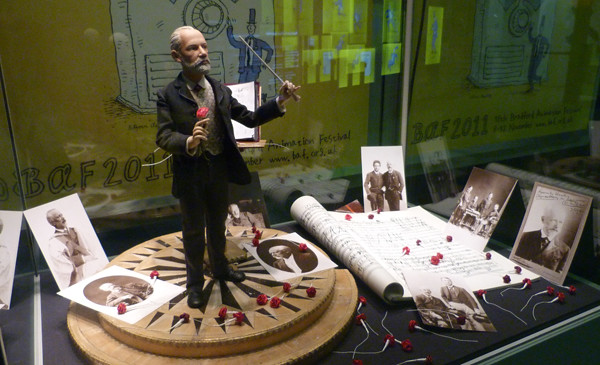
Another chap you'll spot when you arrive at the Museum this week is Barry Purves' wonderful model from his latest short film.

BarryPurvesTchaikovsky

Tchaikovsky - an Elegy is screening as part of the BAF Official Selection in the Professional Films Category, and Barry will also be deconstructing his latest films in Frame by Frame, Note by Note on Friday 11th November at 6.30pm.

Our team of volunteers, the BAFettes (unofficially though affectionately named) arrived at the Museum this morning for training. They've been put through their paces filling out forms, getting to grips with world class customer service, making sure they know their health from their safety, and that all important delegate bag stuffing.

There are one or two familiar faces amongst the volunteers, and what a nice bunch they are. From tomorrow they'll be kitted out in their official yellow BAF t-shirts, so you'll be able to spot them easily. Ask them anything, though we can only guarantee they'll be able to assist you with BAF-related enquiries.

Our BAF 2011 Festival Brochures have also arrived, and you can download a copy of the brochure from our website.

The task of making sure that everyone has the right tickets is in the very capable hands of Jeni, Rebecca and Gill - here are Rebecca and Gill taking a break from all that hard work. Go team!

RebeccaGill

Right, I'm off for a restful evening ahead of all the blog posting and photo sharing, video linking and podcast uploading that's to come this week. It's going to be busy, but BAF is always such a buzz.

Make sure you let us know what you think of the festival, and what you've been enjoying by commenting on this blog. We have a team of dedicated bloggers from Bradford College, as well as myself and a few special guests.

Don't forget to like our festival Facebook page, and follow old Osgood on Twitter for all those lovely links, bits of news and festival chatter. See you tomorrow!

11 November, 2010

BAF Game day 2 overview - BAF 2010 Part 4

Tom Woolley, Curator of New Media at the Museum and BAF Game programmer, provides an overview of the final day of BAF Game at Bradford Animation Festival 2010:

The second day of the BAF Game talks took place up the road from the National Media Museum in the luxurious surroundings of the Great Hall at the University of Bradford.

Tim Heaton, Studio Director at the Creative Assembly kicked things off by talking about the history of the company and explaining all the different roles in the team behind the BAFTA winning Total War franchise. Tim also talked about the devout following the Total War games have attracted and revealed that the award-winning strategy games have nearly 1 million players with an astounding average play time of 91 hours.

Next up was Adam Green, Director of Assyria Studios, a small independent development house Adam formed last year during his University gap year. Assyria specialise in addictive, casual games for mobile platforms and have already caught the attention of Sony and Apple. Adam’s talk was an inspiring presentation with lots of practical advice on the challenges of setting up your own studio. Continuing the casual game theme, Simon Barratt from Bradford based studio Four Door Lemon then spoke about the ins and outs of making games for Apple devices such as the iPad, iPhone and iPod touch.

3D glasses were given out to the audience in the afternoon so they could enjoy Ian Bickerstaff's talk about the history and uses of stereoscopic 3D technology. A Senior Engineer at Sony, Ian is heavily involved with the recent push behind 3D technology. He explained how to get the best results from using stereo 3D in games to create more immersive experiences. A fervent crowd then welcomed Andy Brunton to the stage. Lead animator at Lionhead, Andy has worked on both Fable 2 and Fable 3 and revealed how the animation team works with coders to produce seamless interactive game characters. Andy showed lots of examples of animation tests and even added a few rather brutal execution scenes that got cut from the final game.

The concluding panel session chaired by Game Republic’s Jamie Sefton offered perspective on how technology impacts the games industry, particularly relevant considering the day’s release of the Microsoft Kinect peripheral. The discussion carried on over drinks in the University atrium before the Street Fighter 2 tournament took place in the Museum’s Games Lounge.

Enslaved: Ninja Theory - BAF2010 Part 3

Based on an ancient chinese story, Enslaved: Odyssey to the West is the latest game produced by Cambridge-based studio Ninja Theory whose Lead Animator, Guy Midgeley and Senior Animator, James Stevenson joined us to talk about character animation, narrative, and the involvement of actor Andy Serkis and writer Alex Garland in the project.

It was important to consider character interaction and realism: Originally Monkey had a brutish nature and Trip was a futuristic goth, but the two characters need to relate to each other as their relationship builds, and so their physical forms were toned down for congruity.

For fidelity, ease and so the characters can perform actions in-game that you can't recreate in real life, the in-game animation was hand drawn rather than produced using motion capture. We were shown a series of videos shot at Ninja Theory HQ with the team acting out some character motions used as a reference point for their animations - a process which the team highly recommend in order to understand how the body works and create realistic looking in-game movement.

To avoid videogame cliches, Alex was brought in as a story writer, and Andy Serkis came on board as cinematic director and actor for the cut scenes which were shot using motion capture - he had worked with the team previously on Heavenly Sword. The cut scenes drive the story, develop characters and give the game a cinematic feel. To avoid the pitfall of disconnction between cut scenes and game play, Alex was involved throughout the process and played through the game to ensure its integrity.

In summary, the talk was a useful lesson in story and character development with the audience being taken through Ninja Theory's creative process and what to consider when you want a cinematic game with a decent story.

BAF 2010 day one came to a close with the Guardian Tech weekly podcast captured live in Pictureville cinema. Hosted by the Guardian's games columnist Keith Stuart, the session featured interviews with the aforementioned games guru Charles Cecil, writer and journalist Keiron Gillen. and games artist Dan Pinchbeck.

Look out for the podcast or listen from the Guardian Tech Weekly Podcast page.

10 November, 2010

Doctor Who: Adventure Games - BAF 2010 Part 2

BAF welcomed back legendary games developer Charles Cecil (last seen at the Museum acting as an official invigilator when we beat the World Record for simultaneous Nintendo DS gaming) alongside Sean Millard from Sumo Digital and Anwen Aspden, BBC Executive Producer - all here to talk about their involvement on the Doctor Who: Adventure Games series.

So why did they do it? The BBC had planned on producing four interactive episodes for the latest reincarnation of the series, but went one step further and created something special with free downloadable games - over 1.6 million downloads so far, and more episodes to come.

The pitch went out all over the world, but landed in Sumo's lap. Charles had worked successfully with the Sheffield based company before (Broken Sword) but it was their grasp of the brand and production values in only two scenes of their pitch video which sealed the deal.

The Doctor - with sonic screwdriver acting as a skeleton key allowing him to go virtually anywhere, and his tendency to negotiate rather than fight, is an unlikely game hero, but Sumo overcame these issues by using avoidance, discovery and infiltration. The developers also need to ensure that they didn't assume gaming knowledge nor make the game too complex for Doctor Who's expansive audience range.

Sean is obviously thrilled that he was given the opportunity to create a Doctor Who character - the Cyberslaves - which could potentially appear in a televised episode; he claims it's the coolest thing he's done during his 20 year career. Charles went through the process of creating the cyberslaves under the protective guidance of the Beeb, and concluded that it is the human behind the monster which is most frightening.

The actors movements (Matt Smith and Karen Gillan) were shot using rotoscope rather than motion capture, which enabled Sumo to animate the characters in game. The resulting facial textures were too realistic and the BBC felt that it was "too dark", so removing the texture and smoothing out any lines was the computer equivalent of putting the actors into make up. An interesting analogy.

"The second coolest thing" for Sean is seeing his company's game advertised during primetime - this level of publicity is generally a rap on the knuckles for disrupting the nation's youth.

Charles revealed that his experiences working with the BBC on the Doctor Who Adventure Games are "a lesson in how to market": Keep it a secret, then blitz it and surprise everybody.

During the Q&A we learned that the funding for the game came from public service money, but it created such a buzz at Comic-con that there are plans in place to sell it abroad.

The audience expressed a desire to see some of the Doctor's previous incarnations crop up in the game, and the team, as passionate as they are about the brand and their product, clearly hope so too. And so the celebrated heritage of the Doctor continues.

09 November, 2010

Brink: Splash Damage - BAF 2010 Part 1

Bradford Animation Festival is here once again. Day one of the biggest annual event at the Museum, indeed the biggest animation festival in the UK, and the crowds alreading gathering in the foyer and Pictureville show signs of this being yet another successful year.

BAF's audience is always a joy to see - a devoted bunch of enthusiasts, industry professionals, industry hopefuls and students just starting out on the road to a hopefully brilliant career. Enough of the scene setting... on with the show.

The first session of the day was an exclusive with Tim Appleby and Lauren Austin from Splash Damage who talked about the concept art and character design behind one of the 'most queued-for' games at this year's Eurogamer Expo: Brink.

A round of applause followed the cinematic trailer - there is a definite buzz surrounding this game. The pair took us through the story, the style of the two main factions, how they developed those styles, and then on body types, character customisation, overlays and tints. Everything from initial concepts to facial hair.

One thing which does stand out about Brink is that there is not one recognisable character - but about twenty of them, each with their own name and identity - a useful tip for game character designers.

"Customisation doesn't lend itself to quality", but Splash Damage wanted to focus on the quality, and in doing so discovered that "limitation spurs invention". Now, I couldn't go into too much technical detail* - partly because you might not understand it, mostly because I certainly don't, but it does make a lot of sense.

For example - all heads need to be the same width to ensure the head gear can be used for all characters, so instead they played about with length.

Lauren clearly had a lot of fun developing these characters, sometimes taking her inspiration from celebrity mashups (Danny Trejo vs Jason Statham, anyone? Sounds post-apocalyptic to me!)

And in a sea of post-apocalyptic first person shooters, this game stands out. Not only is it colourful, but it has a whole range of characters and customisation options which helps with player investment and gives Brink an instantly recognisable look.

So, here's Splash Damage's three golden nuggets:

1. Start simple and protoype early.
2. Make sure there is close collaboration as you develop your characters.
3. Designs need to reflect technical limitations.

*If you want to hear the finer technical detail, look out for all the podcasts from BAF 2010 which will appear on the new National Media Museum website in the very near future.