Showing posts with label film festival. Show all posts

19 June, 2011

Son of Babylon: Review and Q&A with Mohamed Al Daradji

Guest blogger: Mike McKenny

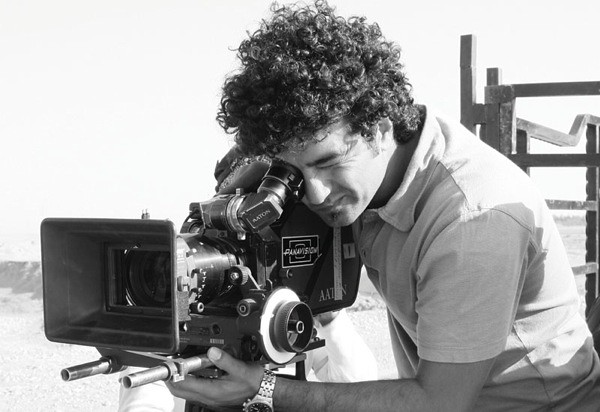
During Leeds International Film Festival 2010, which I was covering for Film & Festivals magazine, I attended the screening of Son of Babylon. The film was preceded by an introduction from the director, Mohamed Al Daradji, who described it as a homecoming event, for although it was shot and set in Iraq, it was produced in Leeds. Mohamed, an Iraqi born filmmaker, lives in and completed his education in the city.
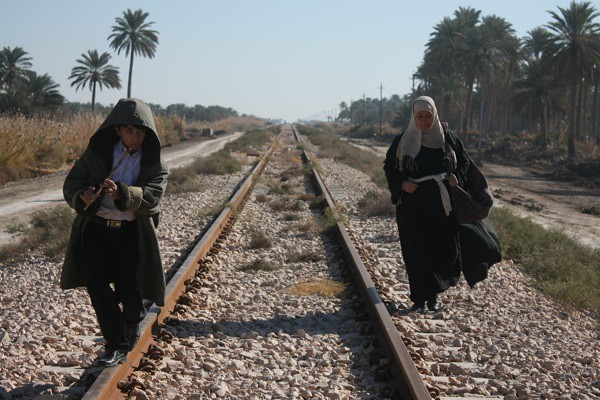
Son of Babylon

Review of Son of Babylon

The fact that it was produced in Leeds and that the filmmakers learned their trade in the West makes a telling contribution, as the film adopts formulaic road movie genre functions - a tried and tested method of portraying physical, existential and socio-cultural journeys. Yet this road movie's beauty comes from having such an honest, genuine and fresh perspective.

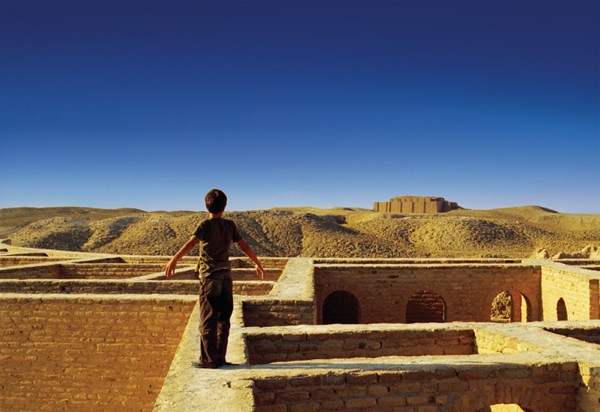
Set three weeks after the fall of Saddam Hussain's regime, the film follows the young Ahmed and his Kurdish grandmother through Iraq as they search for his father who has been missing for twelve years, having been forced to become a soldier and torn from his passion for music. In showing this child’s journey, the film also illustrates the journey that Iraq is currently undertaking; the past that brought it to this present, and a glimpse of possible futures.

The bilingual Ahmed, who can speak both Kurdish and Arabic, is juxtaposed against his elderly grandmother who is hampered by her inability to speak Arabic; he represents the youth of the country and hope for the future, which belongs to the young.
Son of Babylon

Although the American and allied forces feature as an occupying presence, the film never veers away from its main focus: on Iraq, Iraqi people and their concerns for the future. I thought this was a wonderfully subtle and adept way of acknowledging the occupation of Iraq, while asserting that the only way forward is for Iraqis to find and make their own future.

It would be some stretch to describe this as an uplifting story but there really is a well crafted optimism at its heart. Speaking of of well crafted, the landscape was used within the cinematography with such striking effect that the country really does adopt its own character.

After the screening, Mohamed took to the stage and humbly and admirably insisted that he is by no means the only force behind the film. The Director proceeded to call up many from the crew along with a representative from Screen Yorkshire, who were credited as being an essential factor in producing this film.

Iraq's Missing Campaign

Isabel Stead (Producer) spoke about the Iraq’s Missing Campaign (IMC), which the film is supporting. IMC was established to campaign about and provide support to the relatives of missing and disappeared person in Iraq. Isabel explained that nobody in the United Nations, nor any department that they spoke to would take responsibility for, or supply them with the statistics regarding missing people in Iraq that they wanted to show before the end credits. The campaign intends to pressure the UN into doing something to address this problem.

You can show your support for the Iraq's Missing Campaign by signing their petition and joining their Facebook group.
Mohamed Al Daradji

Short Q&A with the Director

Any spoiler questions have been left out, but one did lead Mohammed to explain that whenever he got stuck creating the character of Ahmed, he based it on his own experiences and feelings at a similar phase in his own life.

When did you shoot the film?


October 2008 - March 2009. Mohammed explained that a great deal of the shooting was a little problematic, but Nasiriya was a nightmare. The Mayor gave him permission to shut down the square, but during shooting, called and asked who gave them permission to do this! He said that he may lose his job and therefore they needed to wrap up in two hours despite having at least eight hours of planned shooting left that day.

How - as an individual – did it feel returning to Iraq?


Mohammed explained that alone, he is very afraid, but surrounded by family and friends it feels really good. He said that it's amazing to see how the country is coming along; that it's getting safer and more secure all the time. The Iraqi army and police - which they would much rather use than private security companies - were very protective and very helpful.

What was it like, shooting the scenes with the mass graves?

Son of Babylon

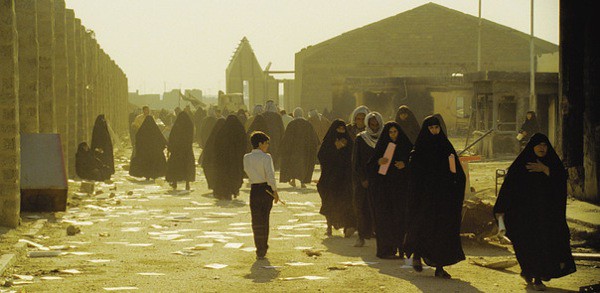
All the mass graves were produced, rather than shot on location, which was out of respect for all individuals and families involved. However, all the women at the mass graves in the film had lost loved ones and agreed to feature in the film in support of its cause.

Finally there was a difficult question from a man who had recently been to the northern regions of Iraq, and claimed that the characters being able to travel through borders so easily was implausible. Mohammed dealt with this tricky question in a very sensitive, but thorough manner and justified this feature of the story as the film was set three weeks after the fall of Saddam, and the chaos which ensued caused these checkpoints to break down. He further ratified his point by stating that the actress who played the grandmother had actually made that very journey.

A full interview with Mohammed Al Daradji can be found in issue 26 of Film & Festivals magazine. The issue was dedicated to the Middle East and Middle Eastern cinema.

Mike McKenny is a Bradford based academic and film writer. He writes for Film & Festivals magazine, contributes to Hope Lies at 24 Frames Per Second and is the editor of Destroy Apathy. He can also be found on Twitter (@destroyapathy).

08 June, 2011

The Dead: Interview with the Ford brothers

Guest blogger: Mike McKenny

Last November, I was covering the Leeds International Film Festival (LIFF) for Film & Festivals magazine. During that intense two weeks of film viewing I had the pleasure of interviewing the filmmakers behind the African set, British produced zombie-apocalypse film The Dead, which is playing at this year's 10th annual Fantastic Films Weekend here at the National Media Museum (9.30pm on Friday 10th June).

Prior to the screening at LIFF, I met up with Howard and Jon Ford, the brothers responsible for writing, directing, shooting and producing the film, along with the film's main star Rob Freeman. It is really heartening, meeting a group so enthusiastic about their film; a truly independent film, funded primarily by the brothers themselves. Further still, to see the lead actor get so strongly behind this along with the filmmakers gives more indicators as to the energy within and behind the production.

Review of The Dead

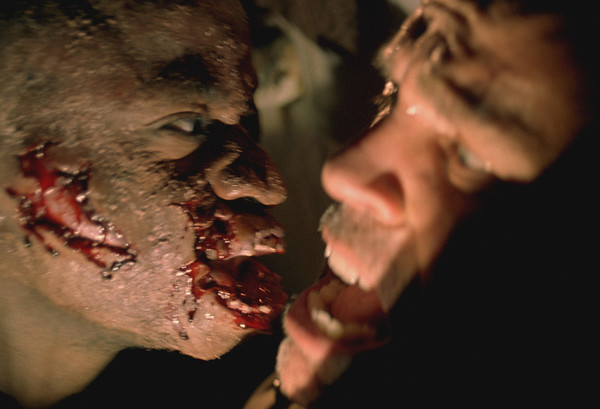
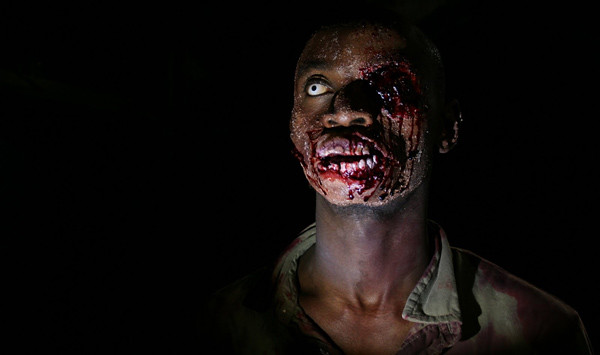
The film really is a genre homage on many levels, fitting equally perfectly as a contribution to the zombie movie, the road movie or the buddy movie, with Leone infused nods to the spaghetti western chucked in for good measure. All genre elements are utilised lovingly and knowingly rather than cheaply and exploitatively and the sheer fact that so many genre elements can be infused without ending up a complete mess shows for some great script writing ability.

Lt Brian Murphy (Freeman) (a character based – lovingly rather than lazily – on Leone's Clint Eastwood/Man with no name) is a mechanic, who after having attempted to flee the continent of Africa in the opening sequence crashes just off of the West coast and steadily sets on his journey inland in an attempt to find some way of getting back to his family in the US. As he makes his way inland, he runs into Sgt Daniel Dembele (Prince David Oseia), a soldier who has deserted his post to return to his village in search of his wife - who was killed in the opening sequence - and his son, who has been taken to a survivor's base in the north.

This is all you need to know of the plot as it is rightfully and elegantly simplistic. As with all great genre cinema, the film keeps all elements that make the formulaic plot recognisable and simple, but deviates from this formula enough to say something interesting and give the audience a completely new perspective on a familiar setting.

The Dead

Without doubt, the major game-changer here is the setting of Africa; the landscape is so at odds with the post-apocalyptic, claustrophobic urban environment seen in so much zombie-media in the last thirty years and for this reason has been unjustly compared to the Resident Evil 5 game, which is also set in Africa. Resident Evil 5 has taken a series full of suspense and intrigue with a slow burning anticipation at its heart and turned it into a mindless, dull, explosion-fest. The Dead, adversely, takes a genre that, through the evolution of the 'fast zombie' has strayed from its suspenseful roots; this places itself firmly back there, complete with slow zombies and a well crafted, laboured suspense rather than cheap jumps and breakneck editing.

The Romero influenced slow zombies are complemented by the Leone influenced long takes and expansive landscape shots, with zombies slowly but inevitably filling that vast landscape. This technique allows the suspense to build constantly, to the point where the slightest setback (stalled car, jammed pistol, etc) can turn the threat from constantly steadily building to imminently present in a matter of seconds. It is this slow burning suspense, along with well crafted set-pieces that makes this film a very worthwhile contribution to the genre.

It lacks the blatant political allegory of the Romero films, yet in an acceptable way, never becoming pointless or apathetic. One of the worries I had about the African setting was the way relentless liberal academics (myself, unfortunately sometimes included in this category) would be poised to criticise a film with the central white protagonist in amongst the 'zombified' natives of Africa, yet having seen it, I believe the way the buddy relationship is handled along with the representations of tribesmen and local militia met along the way easily do enough to make some statements on humanity without relying on lazy and potentially offensive typecasts.

Interview with the Ford brothers and Rob Freeman

(As will very shortly become clear, this interview took place before Mike watched the film.)

First of all I haven't read anything about the film as I haven't seen it yet (see?) and I do like to go into films with as blank a slate as possible; especially when it has picked up quite a bit of buzz as this has since playing at Frightfest. So, my questions will be more about you guys and genre film in general.

Fast Zombies or slow Zombies; which have you chosen, why, and was this a lengthy discussion?

Howard: Definitely slow zombies! Not only was this how our inspirations such as Romero did it, but from a directing perspective it was also the best way to make the film more suspenseful as the fast running zombies force you to shoot an action sequence.

Did you have a premise and then added the zombies to that, or adversely did you think: zombies are cool, let's build a story around them?

At this point Jon pre-empts a later question going back to what initially lit the filmmaking fire in his belly; he explained:

"Seeing Dawn of The Dead at such a young age really made me want to be a filmmaker, so this script has been in the process of being made for a very long time."

Howard: We had always wanted to do a movie about a lone man in an unfamiliar landscape, but it was when shooting all kinds of TV commercials in Africa that we discovered these un-tapped locations, and at the same time we were getting the feeling of having worked on commercials for so long and that this was paying the bills but just not fulfilling our dreams. Then a commercial for a well known brand of nappies tipped us over the edge and Jon said "we have to do this Zombie film now".

The Dead

How has current momentum behind zombie media helped? For the last ten years, starting with the original Resident Evil games, coming right up to the present with the TV show, The Walking Dead, zombies have been an increasingly successful commodity. Even specifically in Britain, we have had Dead Set, 28 Days Later and Shaun of the Dead.

Howard: It was 28 Days Later more than anything else, that enabled the Z-word to be used in pitching or trying to establish partnerships, even though 28 Days Later doesn't technically feature 'zombies'. This and Shaun of the Dead had done so well financially that it gave people confidence in the genre again. We had wanted to do a zombie movie since teenagers but the time had to be right if it was to work. I then went to my accountant to tell him about the idea, thinking he would laugh me out the window but not at all, in fact he offered to match my finance pound for pound and became an executive producer!

How have your journeys to get here been?

Rob came in at this point to reveal the extent of Howard & Jon's passion as filmmakers – he is visibly impressed with the filmmaking brothers after hearing their stories.

"When they were young, they would never go out and spend money on having a social life; they would save up and buy film equipment, going out all night shooting short films rather than going out on the town."

Co credits – what is the situation here? It always interests me when filmmakers make a point of pluralising the creators like Powell and Pressburger.

Howard: We have been compared to the Coen brothers – and embarrassingly, the Scott Brothers - but that's just the way it is. I have been directing and Jon as DOP through three features and well over 100 commercials and this is the way it usually works. Yet with The Dead, Jon had been so heavily involved with the script and initial concept it was only right that he had the chance to co-direct. However, as we got going, the reality of the tough shoot in Africa meant that Jon had enough responsibilities as a DOP so mainly we slipped back into our usual roles with me directing, but at the same time we were both as involved and invested.

Rob, how and when did you get involved?

Rob explained that he was taking a break from acting over in the states and came over to England to do some inline skating, a personal hobby. He met a girl who knew the Fords, and acquaintances were made. When it was time to start putting this zombie film together, Howard and Jon instantly thought of Rob. Howard remarked that

"probably no other actor could have survived the shoot as Rob is a fitness fanatic and this was one hell of a tough ride"

and anyway, his piercing blue eyes were essential to the role.

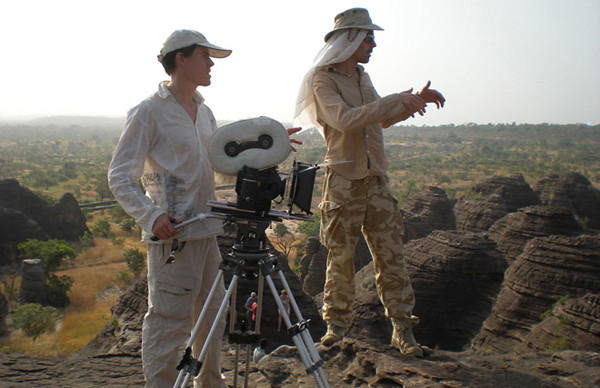
The Ford brothers on location

We spoke about their experiences on the shoot.

Howard: Rob got malaria and even features in The Dead whilst almost dead for real; "three days from death" as the doctor had told us at one point. For a shot in the film where his character Murphy has a fever, [Rob] had been wheeled out of the hospital, had his drip taken out and shot it right there whilst still delirious.

Howard reveals that he was mugged at knifepoint on their first day in the West African city where they would start their journey. Because his licence was taken, the production had to pay the police to keep him out of jail.

"We would have money extracted from us constantly, a lot of the time this was by armed police. We also had to wait five weeks to get all of our gear out of the ports there and when sufficient money had been parted with to get it in, some of it had been damaged and some of the prosthetic props had even melted in the heat."

Jon: Having come so close to death many times during the shoot, I still sometimes wake up in the middle of the night in a sweat, thinking I am stuck back out in Africa on location. A big part of me wanted to go home the moment I arrived, but luckily Howard persuaded me to stay.

Rob: I felt that something strange had been going on. I and many others felt that we may never get back home.

Howard: Although it was an incredibly harrowing experience, the African people in the villages that we encountered were fantastic and even though they hadn't even seen cameras before they agreed to become involved in the film, often acting as zombies or survivors. We all remain grateful for the people allowing us to film in their homes and villages and hopefully adding to the unique appeal of the film.

Come and watch The Dead on Friday night and decide for yourself - don't forget to let us know what you think.

Visit the official The Dead movie website

Mike McKenny is a Bradford based academic and film writer. He writes for Film & Festivals magazine, contributes to Hope Lies at 24 Frames Per Second and is the editor of Destroy Apathy. He can also be found on Twitter (@destroyapathy).
22 March, 2011

BIFF 2011 Day 2

Blogger: James Cross, Front of House

Continuing on my film odyssey, where I watch football, fantasy, avante garde film, and a drunk man sings A Whole New World.

Kick Off

Kick Off UK Premiere

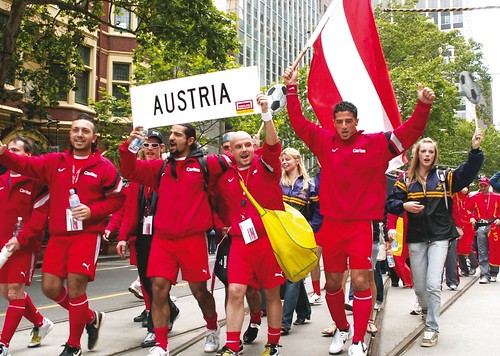
This documentary follows the Austrian homeless soccer team competing at the 2008 Homeless World Cup in Australia. These men, all of who have been homeless and addicts of one sort or another, are playing to restore their faith in themselves. Each have their own stories, but as one of the team members comments "it's the same stories", of isolation, desperation, hopelessness, and the desire for redemption.

Although Kick Off doesn't exploit the story to its full potential, the human-interest appeal of the film's characters carries you through to the end. I was left wondering "What will happen to these people, whose sense of self is so intertwined with this tournament, now that it is over?"

Kick Off screened for a second time on Sunday 20th March, did anyone else watch this film? Let me know what you thought.

Tideland

Tideland

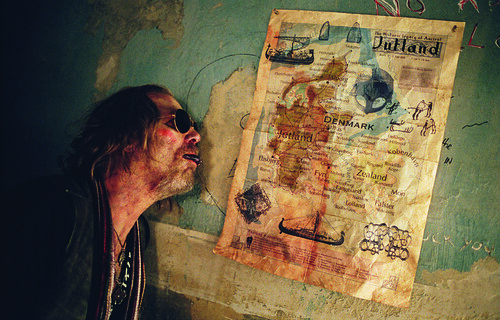
Terry Gilliam has always toyed with the surreal, but with Tideland he took a far more sinister turn. Jeliza-Rose (Jodelle Ferland) is the daughter of a dead-beat rocker (Jeff Bridges) and self-obsessed junkie (Jennifer Tilly), who spends her childhood cooking up heroin for mum and dad. When her mother ODs, Jeliza-Rose is whisked away by her father to grandma's abandoned farmhouse house in the deep south of America. When her father goes 'on vacation' (takes an overdose) we find ourselves pulled into Jeliza-Rose's fantasy world. References to Alice in Wonderland mix with a healthy dose of the macabre to highlight Gilliam's convention-defying sensibilities. I just hope I don't meet his inner child...

BIFF 2011 Day 2

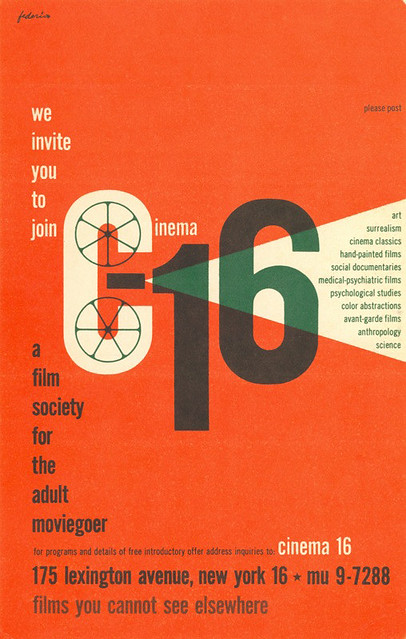
Amos Vogel Part 1: Cinema 16

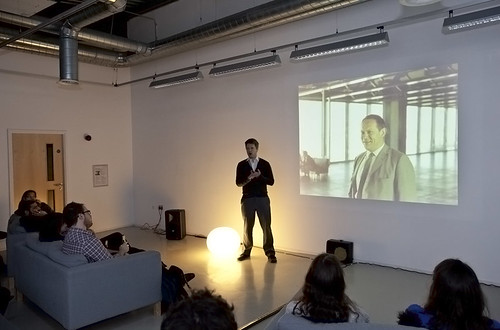
This has been my favourite strand of the festival so far. The session was dedicated to a selection of short films representative of Amos Vogel's work. Screened at Impressions Gallery, the atmosphere was amazing. Sitting on a couch with an old projector clacking away behind me; this is DIY film exhibition at its best.

Tom Vincent introduced the session explaining that the aims of Bradford International Film Festival are very much the same as those of Vogel's Cinema 16 film society: to screen films you can't see anywhere else. This is certainly true of the innovative and thought provoking films that were shown here today, and one of the most intriguing aspects was to examine how the films had aged 50 years on.

BIFF 2011 Day 2

The intermission provided an opportunity for the audience to discuss the films, and as we stood outside in Bradford's Centenary Square, currently undergoing some regeneration, a passing drunken man serenaded me with A Whole New World, which definitely added to the overall experience). I won't be missing Amos Vogel: Part 2 on Friday night, a selection of modern films created with the Cinema 16 aesthetic in mind. Will I see you there?

18 March, 2011

BIFF 2011 Day 1

Well, the film festival is in full swing now, and there's lots going on this weekend, including Q&As from Jim Loach (Oranges & Sunshine), Marcin Wrona (The Christening) and the cast and crew of Blooded tonight, followed by the Terry Gilliam Screentalk and the Bradford After Dark mini horror-fest in collaboration with Celluloid Screams tomorrow. On Sunday, Gaylen Ross (former actress turned director) will be here with her new documentary Killing Kasztner, which I hear is incredible.

There's so much going on, that I've enlisted the help of Museum staff and festival goers to review some of the events and film screenings they've been enjoying (or not!) Yesterday you heard from Ben Eagle, BIFF Producer, and now - yesterday's film discoveries from James Cross, box office pro and all round helpful chap.

Blogger: James Cross, Front of House

Yesterday, the festival started in earnest, and it was nice to see some familiar faces along with some new ones. Best of all was being able to compare notes with that special breed of film fan, willing to spend much of the next 10 days sitting in a dark room. On to the films...

Limelight

Limelight

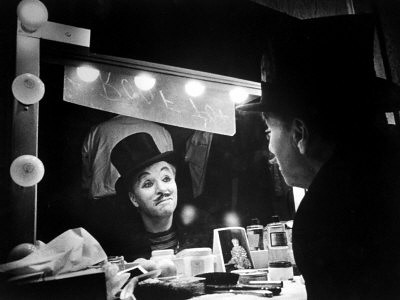
The first in the Claire Bloom retrospective, this film is a perfect example of art mirroring life. Charlie Chapin plays Calvero, a music hall performing 'tramp' clown, who rescues dancer Terry (Claire Bloom) from an attempted suicide. Calvero then nurses Terry back to health, after her inexplicable paralysis. By enthusing and encouraging Terry to seek and achieve her dream of becoming a prima donna ballerina, he realises that his own career and talents are waning.

This is almost a direct comparison between Chaplin and Bloom, because Limelight was his self-referential swan song and her big break. Both leads show what tremendous talent and chemistry they have; people were crying as they left the auditorium.

Cinema16

Film as a Subversive Art: Amos Vogel and Cinema 16

A brilliant introduction to Amos Vogel and the Cinema 16 film society, especially if you are as uninformed as me. Although not cinematically brilliant, the story and personality of Amos Vogel keeps you engaged. He's tried to be "sand in the machinery of the world" his whole life, and as a result turned the New York film scene on its head.

Despite Vogel's many successes, you are left with a slight feeling of missed opportunity and longing as he tells of the demise of Cinema 16. A great introduction to an irrepressible character.

Double Bill: Disfarmer: A Portrait of America + An American Journey

It's easy to see why these two films were programmed together, as both focus on photographers who felt isolated from the culture they documented, and the consequences of their work. I will try not to give too much away as this duo is repeated on Monday 21 March.

Disfarmer

Disfarmer: A Portrait of America

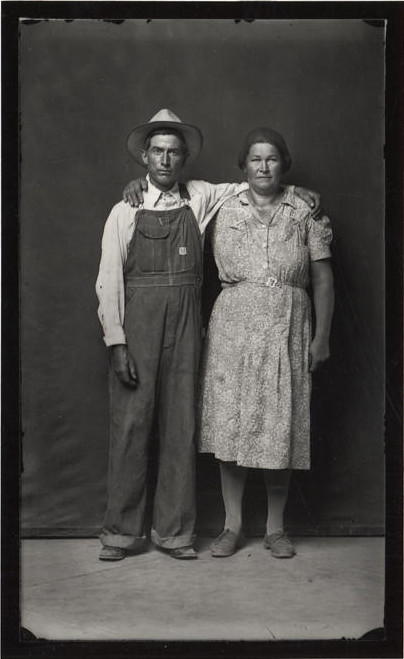
This intriguing story follows the discovery and subsequent selling of odd-ball Mike Disfarmer's (aka Mike Meyers) portrait photography from the depression era of his local farm community. It wasn't until 1974, when photographer Peter Miller found the prints and sent them to New York, that Mike Disfarmer was 'discovered'.

What ensues is a tale that gradually pulls you in as the townspeople are amazed and bewildered at the importance of his work, and the wider photographic community stirs. Small town meets big city.

An American Journey

We were lucky enough to be joined by the film's Director, Philippe Séclier, who introduced his film and stayed for a brief Q&A afterwards. In 1958, Swiss-born Robert Frank first published The Americans, his photographic investigation of the American way of life. 50 years later Philippe Séclier retraced Robert Frank's steps. On this odyssey we learn about the differences in culture 50 years on, the characters portrayed in the book, and its importance in photographic and art history.

What comes across, not only in the film but in the way Philippe talks about his efforts, is that An American Journey is a personal one. Philippe says that Robert Frank was him 50 years ago, travelling and exploring across an unfamiliar culture. I would definitely recommend this to any photography fans.

17 March, 2011

BIFF 2011 Opening Night Gala

Blogger: Ben Eagle, BIFF Producer

BIFF 2011 Opening Night

The opening night of any large-scale event is always going to be a big deal, and last night certainly wasn't an exception for the BIFF team. We were delighted to be opening with Woody Allen's latest, featuring a who's who of Hollywood, and although due to working commitments the cast couldn't be in Bradford, the evening was still rich with glitz and glamour.

BIFF 2011 Opening Night

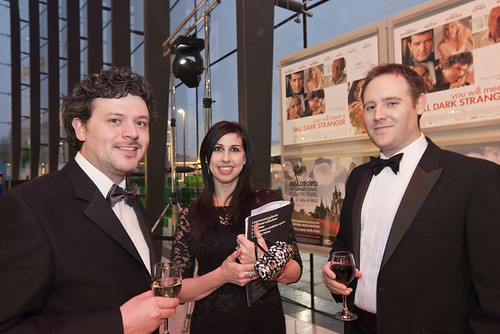
There were canapés and fine wine on offer for the invited audience who all seemed to thoroughly enjoy the night. Following that, there was a 9pm screening for delegates and members of the public, which was introduced by Artistic Director Tony Earnshaw.

BIFF 2011 Opening Night

And now, the fun really begins! The 27th March seems a long way off, and with almost 200 films and events between now and then, I sincerely hope you enjoy the 17th BIFF.

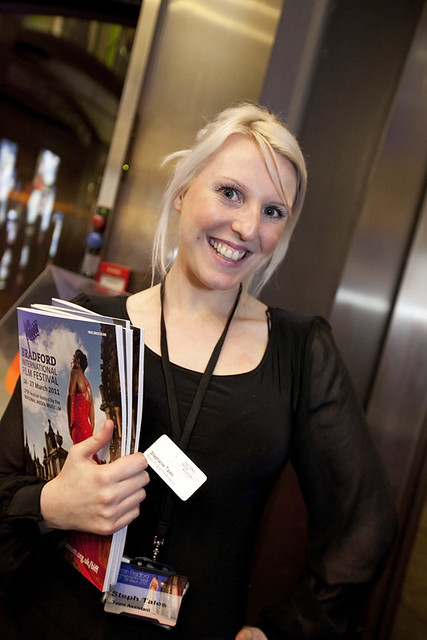
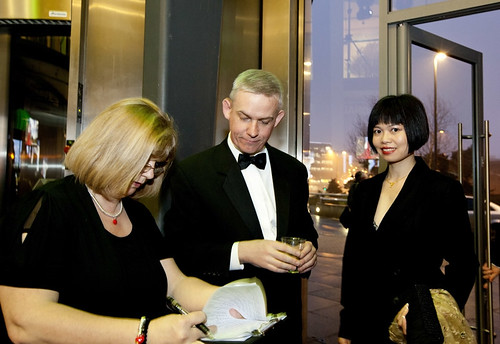
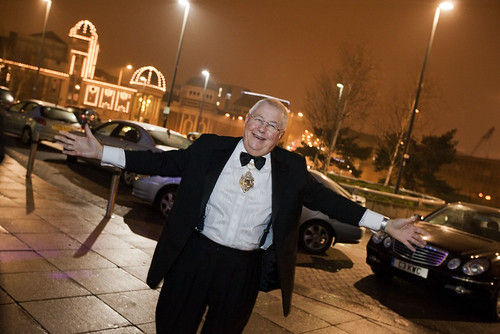
Here's a selection of photos from the Opening Night Gala - you can see them all in our Bradford International Film Festival 2011 Flickr set - and there's more to come.

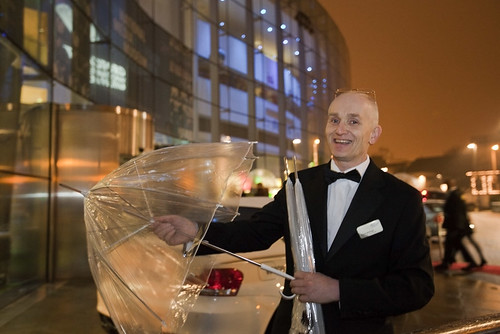
BIFF 2011 Opening NightBIFF 2011 Opening NightBIFF 2011 Opening NightBIFF 2011 Opening NightBIFF 2011 Opening NightBIFF 2011 Opening NightBIFF 2011 Opening NightBIFF 2011 Opening NightBIFF 2011 Opening Night

03 March, 2011

Interview: Neil Young Talks Film Festivals

Blogger: Greg Spencer

The name Neil Young may not be familiar to you, but as the International Consultant for Bradford International Film Festival, he is one of the people responsible for selecting the films screened at BIFF. I caught up with him to find out what it means to be a film festival programmer.

Greg: How many film festivals do you attend each year and why do you choose those particular festivals?

Neil: Last year I attended fourteen festivals - including Bradford - and this figure is average for my attendances over the last five years or so. I visited Tromsø in Norway, Rotterdam, Berlin, Bradford, Leicester (British Silent Film Festival), Crossing Europe in Linz, IndieLisboa in Lisbon, Edinburgh, Wroclaw in Poland, San Sebastian in Spain, Reykjavik, Vienna, Leeds and Ljubljana. I also had a day trip to London Film Festival to catch a single picture, but such a fleeting visit hardly counts as 'attendance'.

Some of these festivals I work with in a programming capacity, where I'll suggest films for the programmes, then attend to introduce the films or lead a Q&A. Tromsø, Linz, Lisbon, Edinburgh, Vienna and Ljubljana fall into that category (though I'm no longer connected with Edinburgh). Of the others, some are certain long-established and very big events like Rotterdam, Berlin and San Sebastian, which are of particular interest from a programming and journalistic capacity as they have so many world and/or European premieres. Others - such as Wroclaw and Reykjavik, I visited for the first time last year on the basis of recommendations from friends and colleagues, and because the cities themselves looked worth exploring (I'd never been to Poland or Iceland before).

Over the last 10 years I've built up a core list of festivals which I visit every year (or try to) but I'm always on the lookout for new places to go. If I'm lucky I might get invited by a festival, which means they will cover the hotel costs and maybe the transportation. If an invitation doesn't clash with an existing commitment, I'll probably take it up - unless I've heard negative reports about the event or its location. For example, in November I'll be on the jury of a festival in Skopje, Macedonia, and this will be my first time in that country. I'm expanding my film-festival attendance at the moment and might make it to 16 or more festivals during 2011, if I'm lucky.

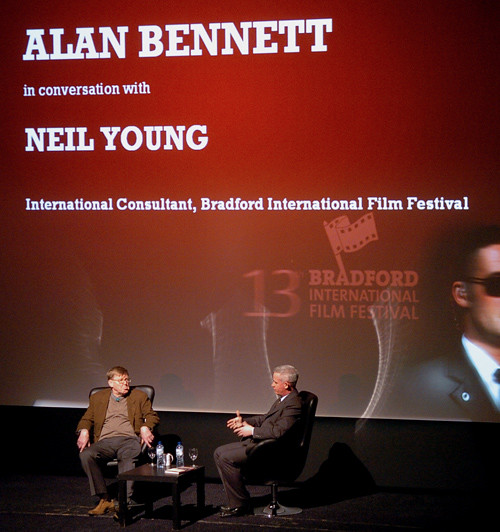
Alan Bennett and Neil Young

Neil Young in conversation with Alan Bennet at BIFF 2007

Greg: Based on your vast knowledge and experience, would you say that the overall quality of the films screened at festivals has improved or declined in recent years?

Neil: Commenting about overall quality is tricky, because there are so many hundreds of films being made and screened all over the world every year, and festivals are looking for the best and most interesting of these. Looking back at my first experience at the Berlinale in 2002 (Berlin International Film Festival, one of the big three in Europe alongside Cannes and Venice), I watched 33 films, walked out of three, and considered 7 especially noteworthy. This year I watched 32 films, had two walkouts, and found 10 noteworthy films. Not a scientific study, of course, and it could be that I've become more skilled at selecting movies to watch, but I don't think we can say that festival films are "getting worse". Of course, that's what many commentators say, and have been saying for 100 years now. Geographically, festivals have become more adventurous and eclectic, and it's no longer so rare to come across a new film from, say, Kazakhstan or Paraguay.

Greg: How do the British festivals compare to the other European ones that you have attended?

Neil: Of course I'm naturally biased when it comes to Bradford. Historically the major British festivals have never really had the international profile of Europe's big three, or of major North American events such as Toronto or Sundance, and it's a struggle for UK festivals to get prominent world-premieres for anything other than British films.

You'll see all the major new films each year at British festivals, of course, plus dozens of smaller discoveries, but it's surprisingly unusual to find programmers from European festivals who will make time in their schedules to go to the long-running film festivals at Edinburgh or London. This is partly because most other European countries have always had one big festival which dominates, and which gets the most coverage, support and funding - Cannes, Berlin, San Sebastian, Karlovy Vary in the Czech Republic, Locarno in Switzerland, and so on - whereas in Britain there's never really been one clear leader which attains international must-visit status.

Greg: Very interesting. I wonder if London Film Festival will become more prominent and a major player alongside Cannes and Berlin.

Neil: Well, it's not really a Bradford Film Festival person's place to comment on the future fate or fortunes of London Film Festival! We wish them all the best.

Greg: I'd like to ask about the BIFF strand that most concerns you which is Uncharted States of America. How does the selection process work, what criteria do you use, and how do you decide whether a film is suitable for the audience?

Neil: I contribute a hefty chunk of Moviedrome, at least 20 titles in that section each year. Uncharted is a smaller section but I'm pretty much responsible for all of it.

I look for very low-budget features and documentaries, preferably with directors and casts which are new to me, and I have a special interest in films which show unexposed corners of the USA. So many movies from that country are set and shot in Los Angeles, New York or the bigger metropolitan areas, but there has been a long tradition of what used to be called 'regional cinema' back in the 1970s and early 80s, taking us off the beaten track, as it were.

I look for films at the festivals I attend and request DVDs of interesting-sounding contenders which I either hear about or stumble across by trawling websites of the smaller American festivals - there's a network of underground film festivals over there which always have plenty of imaginative movies shot on the thinnest of shoestrings. In most cases, I rely on my own taste and judgement - but I'm aware that the films are playing to paying audiences, so I do take into account what it's reasonable to expect the public to spend their time and money on. With the more experimental or avant-garde material, I tend to concentrate on shorter running-times, perhaps 60-80 minutes, and look for documentaries dealing with relatively accessible subject-matter.

Greg: What do you think is special about film festivals? The shared experience, meeting new people, or discovering exciting new films?

Neil: Film festivals are appealing for several reasons, the most obvious being the films; the chance to see many films in a day, over the course of several days, and of a much greater variety than one would be able to see in any day or week's cinema attendance, even in a big city; ideally featuring a mixture of new (sometimes brand new) and archive materials, intelligently curated and professionally presented.

Then there's the communal aspect. You are always seeing people you know and meeting new people, all of whom share your interest in film and, hopefully, your hunger to discover the next delight. There's also the chance to discuss the films and wider cinema culture between and after the movies, often in a foreign or exotic city which is worthwhile visiting in its own right. And if you get to meet a film-maker or performer, so much the better - often smaller festivals are best for this, while at the really big jamborees such access is very heavily restricted.

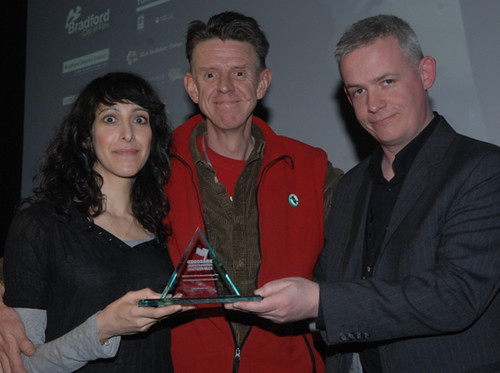
Alex Cox, Neil Young and Shine Short Film Award Winner Harry Wootliff

Alex Cox and Neil Young with Shine Short Film Award Winner Harry Wootliff

Greg: What can someone who is coming to BIFF for the first time expect?

Neil: A first-time visitor to BIFF should plunge in and take a chance on movies they might know nothing about at all, from a director - or even a country - whose films are unfamiliar to them. I'd strongly advise dipping into the retrospectives and archival screenings, as it's increasingly rare to see classic films shown from prints on big screens in top-quality projection conditions, which is what you are guaranteed to get at Bradford (though on occasion films have to be shown from digital sources).

Attending a film festival in person should be a social activity - chat about the films you've seen or are planning to see with fellow attendees, and take suggestions or recommendations. Anyone coming to BIFF, whether it's for the first or for the 16th time, will stumble across films that will startle and dazzle them - and maybe one or two that make them wonder why on earth they were selected! One of the great things about festivals is that everyone will have their own opinions about everything they see.

Greg: What has been your favourite festival moment in all the years you've been doing this job?

Neil: Two that stand out are James Benning's great masterpiece Casting a Glance at Bradford in 2008, when we had various problems with the 16mm projector, and I had to keep going out from the booth to beg the audience's patience - everybody stayed, and when the film finally came on it was quite magical, if nerve-shredding, to watch it unfold, and dreading a recurrence of the glitch any second.

Much more recently, there was the prize-giving at Rotterdam in January, which took place in the beautiful 1960s trashy splendour of the Luxor cinema (all mirrors and light bulbs on the walls), and featured a live electric-guitar performance from Sonic Youth's Lee Ranaldo - his guitar suspended from the ceiling - accompanying two 10-minute Japanese experimental films shown from a 16mm projector in the middle of the auditorium.

Straight after, they announced that my favourite film of the festival, Sergio Caballero's unclassifiable art-film spoof Finisterrae had (against all expectations) won one of the festival's three equal-top awards, the Tigers.

Greg: Finally, have you seen any films this year that you expect to be big hits or you would strongly recommend?

Neil: Finisterrae would certainly be one of the films I'd advise you to keep an eye out for later in the year - I do hope it comes to the Museum, perhaps for BIFF 2012...

Another must-see I spotted too late for BIFF 2011 had its world premiere in competition at Berlin a couple of weeks back - it's Alexander Mindadze's thrillingly visceral Chernobyl drama Innocent Saturday (think Cloverfield, with the reactor instead of the monster), which will hopefully get plenty of exposure in conjunction with the 25th anniversary of the explosion in April. For my money, it's a masterpiece.

See you at BIFF.

04 February, 2011

Filming a BIFF Trailer with the Stars

Blogger: Ben Eagle, BIFF Producer

It occurred to me, rather belatedly, that Bradford International Film Festival has never had a trailer.

Having discussed the extremely limited budget and what we wanted to achieve, we settled on the idea of asking previous BIFF guests to remember a moment in their personal cinema history.

I approached several high-profile guests from previous Festivals and was delighted to have positive responses from Imelda Staunton and Jim Carter. It seemed rather handy that, as they are married, they could film their 'editions' on the same day. We wanted to film the guests in familiar and comfortable surroundings, and where better than their own front room?

Along with Emma Shaw, the Museum's Media Developer and expert camerawoman, I set off to the Staunton/Carter household early one December morning. Jim had called me on the way to inform us that the council had decided to prune the trees outside their house – today of all days, when what we really needed was silence! Imelda and Jim greeted us with the warmness and kindness which they both exude in abundance. We enjoyed a very welcome cuppa with Hobnobs while Emma and our sound man, Jason, set up the lighting and camera in the front room.

Imelda sat stroking their lovely dog whose name I now forget, and asked how long her "speech" should last. We were aiming for each trailer to be approximately 40 seconds long, so Jim was ready, just off-camera, with his wristwatch – ensuring the 40 seconds was adhered to. She quickly spoke it through and we went for our first take. As was to be expected, Imelda did it perfectly and after a few differing close-up shots we had it in the can. During the various takes, Imelda frequently glanced at Jim to ensure she wasn't going over the allotted time, to which he frequently told her that the takes were "two hours long, love".

As we quickly rearranged the furniture, and some of the ornaments – including the photograph behind Jim, which features their daughter in a TV programme – Jim took the position and began to talk about his experience of "Lords acting" in Harrogate. Imelda frequently repaid the favour of reminding Jim his takes were way too long – and after a few takes, I hope you'll agree, his enthusiasm and passion for film really comes across.

Our next subject was the ever-popular John Hurt. John received the BIFF2010 Lifetime Achievement Award and both John and Anwen, his wife, have become friends of the Festival. A similar trip ensued with Emma and Sven – the Museum's Gallery Developer, and soundman on this occasion. John and Anwen live in Norfolk, which is a lovely journey and we arrived at their desirable country abode in time for lunch. Without doubt, the friendliest and most welcoming showbiz couple I know, John and Anwen had prepared a lovely lunch and so after the five hour journey, we sat around their kitchen table and discussed all-things-film. It was a treat.

Afterwards, we made our way into John's purpose-built artist's studio, in which hangs oil paintings featuring his sons, self portraits, and various sketches. He was working on an amazing self portrait which I loved - a really great use of colour and clearly the work of an experienced artist. I urged John to have them displayed in an exhibition - they were certainly of a high enough standard.

As we set-up the camera and sound equipment, John quickly talked through his plans for the trailer, comprising three separate cinema experiences: his first trip to the cinema to see Robinson Crusoe; a truly mesmerising viewing of Alec Guinness as Fagin in David Lean's Oliver Twist and finally Jules et Jim – the one we chose to feature in the finished trailer, and the one John felt most captures his passion for film. We left after a great day with a true gent and a genuinely lovely, bonefide movie star.

It has, thus far, been a privilege to work with the guests mentioned above, and I sincerely thank them for their time and generosity. We still have more to come, hopefully, so watch this space!

Visit the Bradford International Film Festival website

22 December, 2010

2010 at the Cinema

With great style, no shortage of black humour, and an intriguing concept at the heart of its strange tale, Greece's Dogtooth has topped our poll of Museum staff's favourite films of 2010.

Dogtooth had a relatively small cinema release, so has become something of a grassroots champion, one that made a big impression on those who saw it back in spring. Early birds caught this story of an isolated family and their misinformed way of life when it previewed at Bradford International Film Festival in March - proof that you can trust us to seek out the good stuff! – and the film has just been entered as Greece's contender for the Best Foreign Language Film Oscar.

In our survey each member of staff was asked to list their five favourite new films on general cinema release in 2010, and were also asked to list any films they're looking forward to for early 2011. Did you see many of our staff's choices? Do you agree with us, or have we got it all wrong? Please add your own list in the comments section below. It's fun to share!


Toni Booth, Collections Manager

Ponyo - Miyazaki effortlessly creates another magical world, very nearly reaching the heights of My Neighbour Totoro.

Dogtooth - a perfect mix of unsettling visuals and narrative.

Exit Through the Gift Shop - Was I being made a fool of? I didn't really care as this was smart, entertaining and at times hilarious.

Revanche - a stunning, serious film dealing with adult themes whilst avoiding the usual melodrama pitfalls.

Hump Day - this one just saw off The Kids are All Right, for its less polished, more awkward and entertainingly juvenile world view.

For 2011: The Great White Silence - Very much hoping to be able to see Herbert Ponting's restored film of the Scott Expedition on the big screen in 2011. Cave of Forgotten Dreams - Herzog's dramas are always entertaining (Bad Lieutenant), but it's his documentaries where he really shines.


Sarah Crowther, Internet Gallery Researcher:

Enter the Void - Hypnotic and mind-bending. Not so much a film as an experience.

Dogtooth - Brave and stylised filmmaking. Simultaneously hilarious and disturbing in equal measure.

Micmacs - Fun, quirky and charming. A Gallic delight to warm the cockles.

House of the Devil - A love letter to 80's horror - slow-burning and utterly involving. Extra points for the simultaneous VHS/DVD release.

Alice in Wonderland - A visual feast as ever from king of the genre Tim Burton.


Ben Haller, Duty Manager:

Inception - a masterpiece in modern suspense cinema that achieved new heights in cinematography. Nolan's meticulous study into the depth of character was a revelation.

The Town - a captivating reinvention of the heist movie, with stand-out performances from Jeremy Renner, Blake Lively and Pete Postlethwaite. The prison scene with Ben Affleck and Chris Cooper is the best scene I've seen all year.

Splice - haunting look into genetic research which pushes the boundaries of comfort with horrific intent. I was gripped throughout, Adrien Brody and Sarah Polley are brilliant as scientists caught between love, science and reality!

A Single Man - luxurious in style, elegant in process and harrowingly honest in character...Colin Firth's finest role to date.

Bad Lieutenant - Nic Cage delivers an inspired performance as a corrupt cop weaving his sinister way through the destruction of post-Katrina New Orleans. Magnificent filmmaking!

For 2011: Never Let Me Go, Blue Valentine, The Fighter, Immortals, Captain America - The First Avenger.


Kathryn Penny, Film Manager:

Dogtooth - dark, funny and different - that poor cat!

Winter's Bone - gripping tale of determination - amazing performance from Jennifer Lawrence.

Inception - great fun and visually great - just don't think about it too much.

Four Lions - I laugh every time I see a Mini Babybell. Great to see the premiere at the Bradford International Film Festival.

For 2011: Animal Kingdom. Intense Australian suburban crime drama - marry me Guy Pearce!

Sven Shaw, Assistant Gallery Developer:

The Social Network - Utterly compelling, slick interpretation of the events leading to creation of the website that defined an era.

The Arbor - Highly original, haunting account of Andrea Dunbar's life and the family she left behind.

Cemetery Junction - Very funny re-visitation of the Kitchen Sink genre which keeps the audience guessing.

Greenberg - Good characterization and great performance from the leads in this existentialist black comedy.

Valhalla Rising - Slow paced, atmospheric and immersive Viking drama.


Jen Skinner, Film Education Officer:

Toy Story 3 - What a rollercoaster ride of emotion, I had to sob silently so that my four year old son didn't notice, definitely the film of the year in terms of personal engagement with the characters.

A Town Called Panic - Animated equivalent of popping candy, totally exhilarating and a joy to watch.

Exit Through the Gift Shop - Clever and inventive. Really lifted Banksy to another level in my view.

A Prophet - Intense, brutal and beautiful.

Dogtooth - I watched this film very early on in the year, at 9.00am without knowing anything about it, I think it took me a while to digest it, I knew it was good but it has grown on me so much as the year has gone on and is now my top new film of the year, so powerful, it's incredible, a breath taking film.

For 2011: I'm very excited about the new Coen brothers film True Grit and I've seen Animal Kingdom which is brilliant.


Tom Vincent, Film Programmer:

The Arbor - Achieved much in many many ways. The British film of the year was also the most vital talking point on Bradford's screens.

Still Walking - Deep emotional impact that accumulated so subtly - I sometimes forget that films can do this. Ozu would approve, and Kore-eda is a great.

Jackass 3D - Along with Piranha, this strange film, the gayest multiplex movie since Top Gun, is the crass, joyous state of 3D art; no need to pretend otherwise.

The Social Network - Mark Zuckerberg's overactive brain races his status anxiety and loses by a whisker. Obsession breeds obsession in Fincher's movies.

I Am Love - The font used in the opening titles told us this was going to be great. Tilda Swinton reclaims melodrama from middlebrow pap.

For 2011: Black Swan (Aronofsky), 13 Assassins (Miike), Animal Kingdom (Michôd), The Descendants (Payne).


Tom Woolley, Curator Of New Media:

The Social Network - excellent script, punchy dialogue and great acting had me gripped. Also proved that it's possible to make a compelling film about websites.

Heartbreaker - a smart, stylish and highly enjoyable comedy with another star turn by Romain Duris.

A Single Man - beautifully shot and dripping in style, Tom Ford's debut perfectly captures those rare moments of clarity. Transcendent and moving.

The Girl With The Dragon Tattoo - a thrilling introduction to Stieg Larsson's world of corrupt media, computer hacking and twisted family trees.

Ponyo - an enchanting animation that deserves to be seen by as many people as possible.

In 2011: I'm especially looking forward to seeing the film version of Murakami's Norwegian Wood. From the stills it looks like Anh Hung Tran has captured the mood of the novel and a soundtrack by Radiohead's Jonny Greenwood makes it a must-see. Also intrigued to see new documentary Catfish and the forthcoming drama Never Let Me Go - after The Social Network and Red Riding, it’s exciting to see Andrew Garfield's ascent to stardom.


Neil Young, The Hollywood Reporter, International Consultant, Bradford International Film Festival:

Involuntary - Ruben Östlund's glacial, brilliant dissection of social boundaries world-premiered in 2008, but was only released in UK cinemas this year – all things Swedish now being apparently very cool thanks to Lisbeth Salander, Kurt Wallander and Let the Right One In.

Monsters

The Disappearance of Alice Creed

My Son, My Son, What Have Ye Done - 2010 proved a banner year for Werner Herzog, with Bad Lieutenant sneaking into multiplexes and his jawdropping making-of-Fitzcarraldo diary Conquest of the Useless finally appearing in English-language paperback.

I Am Love

For 2011: Darren Aronofsky's Black Swan; John Carpenter's The Ward; Joanna Hogg's Archipelago; Elliot Lester's Blitz and the re-release of Frank Ripploh's Taxi Zum Klo.


Thanks to our Film Programmer, Tom Vincent, for putting this together, and to all the staff who submitted their top fives.

Do you disagree with any of these choices? Let us know your films of 2010.

11 November, 2010

Nexus Retrospective - BAF 2010 Part 5

Professor Paul Wells sat in conversation with three of the Nexus team: Alan Smith, Adam Foulkes and Jim Le Feuvre, before which the audience were treated to a retrospective of their work, which includes (impressively), an Oscar nominated short, Grammy Nominated and MTV Award winning music videos, and Cannes Grand Prix, Gold Lions and Black D&AD pencil winning commercials.

The three talked about how they got into animation, and early successes during the Channel 4 animation boom. At this time, animation was embraced by the commercial market, and though there is an assumed schism between arts culture and commerce, the commercial world provides the necessary revenue to move individual talents forward.

Despite this, Nexus advocate choosing work wisely and trying out new styles wherever possible rather than returning to a comfort zone. All three are still very much exploring the craft of animation, remembering that 'form follows feasibility'.

When asked about the tension between old and new school animation styles, their resounding opinion is 'Digital Tools? Bring them on!". For Jim, sometimes the most satisfying thing is the context of the animation, not the visual finish - he cites as an example the Beefy and Lamby series of adverts.

An interesting discussion took place around the issue of archiving - obviously something that's very close to the Museum's heart. Adam, Alan and Jim say that they almost never think about it, though they recognise the importance of preserving their output for future generations, having experienced animation being exhibited alongside art which is generally considered as belonging to 'high culture'.

Somewhat surprisingly, according to the three, animators don't consider that their work is worth saving even though they realise the importance of other people's work.

Thanks to Adam, Alan and Jim, for their insight into animating for the commercial world, and their resounding passion for the art of 'making stuff move'.

Enslaved: Ninja Theory - BAF2010 Part 3

Based on an ancient chinese story, Enslaved: Odyssey to the West is the latest game produced by Cambridge-based studio Ninja Theory whose Lead Animator, Guy Midgeley and Senior Animator, James Stevenson joined us to talk about character animation, narrative, and the involvement of actor Andy Serkis and writer Alex Garland in the project.

It was important to consider character interaction and realism: Originally Monkey had a brutish nature and Trip was a futuristic goth, but the two characters need to relate to each other as their relationship builds, and so their physical forms were toned down for congruity.

For fidelity, ease and so the characters can perform actions in-game that you can't recreate in real life, the in-game animation was hand drawn rather than produced using motion capture. We were shown a series of videos shot at Ninja Theory HQ with the team acting out some character motions used as a reference point for their animations - a process which the team highly recommend in order to understand how the body works and create realistic looking in-game movement.

To avoid videogame cliches, Alex was brought in as a story writer, and Andy Serkis came on board as cinematic director and actor for the cut scenes which were shot using motion capture - he had worked with the team previously on Heavenly Sword. The cut scenes drive the story, develop characters and give the game a cinematic feel. To avoid the pitfall of disconnction between cut scenes and game play, Alex was involved throughout the process and played through the game to ensure its integrity.

In summary, the talk was a useful lesson in story and character development with the audience being taken through Ninja Theory's creative process and what to consider when you want a cinematic game with a decent story.

BAF 2010 day one came to a close with the Guardian Tech weekly podcast captured live in Pictureville cinema. Hosted by the Guardian's games columnist Keith Stuart, the session featured interviews with the aforementioned games guru Charles Cecil, writer and journalist Keiron Gillen. and games artist Dan Pinchbeck.

Look out for the podcast or listen from the Guardian Tech Weekly Podcast page.

10 November, 2010

Doctor Who: Adventure Games - BAF 2010 Part 2

BAF welcomed back legendary games developer Charles Cecil (last seen at the Museum acting as an official invigilator when we beat the World Record for simultaneous Nintendo DS gaming) alongside Sean Millard from Sumo Digital and Anwen Aspden, BBC Executive Producer - all here to talk about their involvement on the Doctor Who: Adventure Games series.

So why did they do it? The BBC had planned on producing four interactive episodes for the latest reincarnation of the series, but went one step further and created something special with free downloadable games - over 1.6 million downloads so far, and more episodes to come.

The pitch went out all over the world, but landed in Sumo's lap. Charles had worked successfully with the Sheffield based company before (Broken Sword) but it was their grasp of the brand and production values in only two scenes of their pitch video which sealed the deal.

The Doctor - with sonic screwdriver acting as a skeleton key allowing him to go virtually anywhere, and his tendency to negotiate rather than fight, is an unlikely game hero, but Sumo overcame these issues by using avoidance, discovery and infiltration. The developers also need to ensure that they didn't assume gaming knowledge nor make the game too complex for Doctor Who's expansive audience range.

Sean is obviously thrilled that he was given the opportunity to create a Doctor Who character - the Cyberslaves - which could potentially appear in a televised episode; he claims it's the coolest thing he's done during his 20 year career. Charles went through the process of creating the cyberslaves under the protective guidance of the Beeb, and concluded that it is the human behind the monster which is most frightening.

The actors movements (Matt Smith and Karen Gillan) were shot using rotoscope rather than motion capture, which enabled Sumo to animate the characters in game. The resulting facial textures were too realistic and the BBC felt that it was "too dark", so removing the texture and smoothing out any lines was the computer equivalent of putting the actors into make up. An interesting analogy.

"The second coolest thing" for Sean is seeing his company's game advertised during primetime - this level of publicity is generally a rap on the knuckles for disrupting the nation's youth.

Charles revealed that his experiences working with the BBC on the Doctor Who Adventure Games are "a lesson in how to market": Keep it a secret, then blitz it and surprise everybody.

During the Q&A we learned that the funding for the game came from public service money, but it created such a buzz at Comic-con that there are plans in place to sell it abroad.

The audience expressed a desire to see some of the Doctor's previous incarnations crop up in the game, and the team, as passionate as they are about the brand and their product, clearly hope so too. And so the celebrated heritage of the Doctor continues.

09 November, 2010

Brink: Splash Damage - BAF 2010 Part 1

Bradford Animation Festival is here once again. Day one of the biggest annual event at the Museum, indeed the biggest animation festival in the UK, and the crowds alreading gathering in the foyer and Pictureville show signs of this being yet another successful year.

BAF's audience is always a joy to see - a devoted bunch of enthusiasts, industry professionals, industry hopefuls and students just starting out on the road to a hopefully brilliant career. Enough of the scene setting... on with the show.

The first session of the day was an exclusive with Tim Appleby and Lauren Austin from Splash Damage who talked about the concept art and character design behind one of the 'most queued-for' games at this year's Eurogamer Expo: Brink.

A round of applause followed the cinematic trailer - there is a definite buzz surrounding this game. The pair took us through the story, the style of the two main factions, how they developed those styles, and then on body types, character customisation, overlays and tints. Everything from initial concepts to facial hair.

One thing which does stand out about Brink is that there is not one recognisable character - but about twenty of them, each with their own name and identity - a useful tip for game character designers.

"Customisation doesn't lend itself to quality", but Splash Damage wanted to focus on the quality, and in doing so discovered that "limitation spurs invention". Now, I couldn't go into too much technical detail* - partly because you might not understand it, mostly because I certainly don't, but it does make a lot of sense.

For example - all heads need to be the same width to ensure the head gear can be used for all characters, so instead they played about with length.

Lauren clearly had a lot of fun developing these characters, sometimes taking her inspiration from celebrity mashups (Danny Trejo vs Jason Statham, anyone? Sounds post-apocalyptic to me!)

And in a sea of post-apocalyptic first person shooters, this game stands out. Not only is it colourful, but it has a whole range of characters and customisation options which helps with player investment and gives Brink an instantly recognisable look.

So, here's Splash Damage's three golden nuggets:

1. Start simple and protoype early.
2. Make sure there is close collaboration as you develop your characters.
3. Designs need to reflect technical limitations.

*If you want to hear the finer technical detail, look out for all the podcasts from BAF 2010 which will appear on the new National Media Museum website in the very near future.

28 June, 2010

Hussain Currimbhoy Introduces Errol Morris Documentary The Fog of War

Last week, Hussain Currimbhoy from Sheffield Doc/Fest visited the National Media Museum to introduce Academy Award® winning documentary The Fog of War: Eleven Lessons from the Life of Robert S. McNamara.


The Fog of War, directed by Errol Morris, is the story of American foreign policy as seen through the eyes of the former Secretary of Defense, Robert S. McNamara. It was selected to complement our current Gallery Two exhibition - Robbie Cooper: Immersion.

Immersion considers the many ways in which people choose to engage with screen media and disengage from everyday life, and to present this concept, Cooper adopted the same Interrotron technique used by Errol Morris in his groundbreaking film.

This method enables the subject to retain eye contact with the camera and the audience, which results in emotionally powerful footage.

Find out more about the Immersion exhibition by visiting our website, or follow the Immersion Project on Robbie Cooper's blog.

You can listen to a podcast of this event by visiting the National Media Museum Podcasts page.

11 June, 2010

Stanley Long on Roman Polanski & Tony Earnshaw's Review: FFW2010 Day 3

First of all, an apology; I promised I would deliver the Fantasma podcasts on Wednesday, however the audio/visual key-keepers have been otherwise engaged until today. By the time this blog is posted, I’m hoping it will include a link to the newly updated podcasts page. Fingers crossed…

First film of the day was Psycho. The screening was preceded by an original trailer featuring Alfred Hitchcock, which I would have liked to have seen, but alas, 11.00 was not a sensible hour for me to get into Bradford that day.

Sarah Crowther (aforementioned horror expert) managed to make it in a little earlier and watched Patrick, a rarely screened Aussie horror which pays homage to Hitchcock in its visual style.

On Sunday evening, I attended the Stanley Long Screentalk. Stanley is a veteran of British sexploitation movies; credited as director, producer, writer and/or cinematographer during a 46-year career in movies. He is responsible for the “Adventures of…” series, and dipped his toes into the world of horror with The Sorcerers, The Blood Beast Terror and Screamtime.

Stanley also worked on Repulsion with Roman Polanski. In the following clip from the Screentalk, Stanley discusses the infamous writer-director and his pranking tendencies.

During the conversation with Benjamin Halligan, Senior lecturer at the University of Salford, Stanley also talked about the science of making people jump (though he doesn’t reveal the tricks of the trade), his healthy attitude toward sexuality in films, and the obstacle of today’s health and safety laws.

Stanley offered this advice to budding film-makers: “A small budget film starts with the script; it has to take the budget into account from the start... You wanna know how to make a low budget film? Keep it in one place.” Which invited a fitting conclusion from Benjamin: “It’s not the size of your budget, but what you do with it.”

After the Screentalk, Stanley stayed to sign copies of his new book “X-Rated: Adventures of an Exploitation Film-maker”.

To hear more from Stanley A. Long, please visit the National Media Museum podcasts page. As promised, you can now download the podcasts from Friday’s Fantasma symposium.

I spoke to Sarah the following day about what she’d seen during FFW2010 day 3. She only managed to only catch the last half of Robocop, a National Media Museum archive print which received high praise for its quality.

Here’s what Sarah had to say about The Living Dead at Manchester Morgue:

“[The film] proved a fitting closure for the Fantastic Films Weekend, which celebrates rare, classic – and dare we say kitsch - horror and fantasy alongside new and exclusive releases. Although shot in England (the film’s key scenes were filmed in St Michael’s Church in Hathersage), the 1974 film has the very European feel of 1970s zombie films. Indeed, director Jorge Grau is Spanish and the cast hail from all over Europe. Interestingly, the film’s original title Don’t Open the Window is rumoured to have inspired Edgar Wright’s 2007 fake trailer Don’t which featured in Grindhouse.”

I asked Tony Earnshaw, FFW Artistic Director, about his festival highlights. He offered the following:

“Two veterans of the once booming ‘60s/’70s UK horror scene were reunited at the 9th Fantastic Films Weekend. Exploitation king Stanley Long and writer/director Michael Armstrong recalled the gory, glory days of movies like The Sorcerers and Mark of the Devil, both of which screened during the weekend. Personal faves of the artistic director included Jorge Grau’s tremendous zombie shocker The Living Dead at Manchester Morgue and a spankingly good re-release of Alfred Hitchcock’s Psycho. Undoubtedly the film of the festival was the rarely-seen portmanteau gem Three Cases of Murder, featuring Alan Badel in three roles and a deliciously sinister rendering of Roderick Wilkinson’s short story In the Picture. FFW regulars also lapped up Horror Express, a perennial favourite and one of many titles forming part of the National Media Museum’s growing and unique print archive.”

That’s all for FFW2010. Thanks to all the regulars and new faces for your support. Don’t forget that you can add your photos from the event to the FFW flickr group, and check out videos from the festival on the National Media Museum YouTube page.

07 June, 2010

Michael Armstrong on David Bowie & Hanger Attacks: FFW2010 Day 2

On Saturday afternoon at FFW2010, the Screentalk with Michael Armstrong was preceded by a screening of The Image, which stars a young David Bowie in his first role. In this video clip, Michael talks about his working relationship with David, and how the filming was beset with difficulties.

The writer-director in our midst is a prolific and eloquent story teller -- indeed, the ‘conversation’ was almost a monologue -- and I was genuinely fascinated by what he had to say.

When asked about his influences, Michael told us he was enamoured with fairytales, folklore and mythology from an early age. He believes that “the only carnal sin [in art] is to bore.”

Michael was fervent on the issues of actor training -- “Acting is a craft, as skill… [a part] is not something [actors] can ‘make they’re own’” -- and the screenwriting business today -- “They now start the screenplay with the merchandising” -- neither of which received high praise from a man who is well-versed in both.

The decline of the British Film Industry during the 1970s, combined with the Eady Levy tax on box office receipts, meant that British films needed to fill a quota, so new production companies were given opportunities, and “horror was their best bet…independents gave opportunities to young film-makers, which was a very exciting time.”

Today, however, “[the film industry] is very nepotistic and based on networking…it’s like television, it’s very cliquey, and if you’re not part of the clique you’re an outsider.”

“The problem in the UK has always been investment, and that falls on producers. The good ones go to America. We lack film-thinking, creative producers based in the UK.”

Michael told the story of the making of Mark of the Devil, which had some audience members crying out with laughter. The original script included some ghastly character names amidst an unnecessary proliferation of S&M torture scenes and unintentional plot metamorphosis. On top of which, the filming in Germany with translators gone AWOL meant that it was a real Tower of Babel production.

Perhaps surprisingly, Michael describes himself as a very anti-violent man. His aim in making Mark of the Devil was to “make people feel sick…to show the crassness and unpleasantness… One tends for a comfortable life to put these things aside… This film shows the cruelty of what man is doing to man.” He told us about screenings of the film in America, which were accompanied by nurses waiting to attend to fainters, and vacated auditoriums smelling of vomit.

So I wasn’t going to stick around for the film itself, and decided instead to go and watch the zombie-tastic 28 Weeks Later. I asked our resident horror expert, Sarah, what she had managed to watch that day amidst all the hobnobbing.

First film of the day for Sarah was The Giant Spider Invasion, which was “very kitsch, got big laughs, and was a good warm-up for Birdemic…a giant furry spider on wheels with some horrendous acting.”

Sarah attended the two director-accompanied films on Saturday evening: David Gregory’s Plague Town, and James Nguyen’s Birdemic. Both guests were affable in the bar before and after the films, staying to chat and discuss their offerings with FFW attendees.

“David was a guest at the Museum ten years ago when he brought a double bill of Texas Chainsaw Massacre and The Last House on the Left, so it was like welcoming an old friend. The film had some spectacularly creepy touches – he has clearly learned from the masters throughout his career as horror documentary film-maker.”

Birdemic was, by all accounts, the star of the show but for all the wrong reasons. Audience members were inexplicably given coat-hangers on their way in, which was clarified when characters attempted to fight off killer birds with this as their chosen weapon. It certainly invited some great audience interaction in the style of Rocky Horror.

Sarah tells me there were cheers and howls of laughter, however the director absolutely believes it’s a romantic thriller and is quite surprised it’s been taken on at horror festivals. He is currently in talks with Hollywood about doing a sequel, which he hopes to bring to our screens in 3-D! You heard it here first.

Day 3 is the next and final blog about the Fantastic Films Weekend. Look out for a video clip of Stanley Long’s Screentalk, and closing reviews from Sarah, and the Festival’s Artistic Director, Tony Earnshaw.

If you want to hear more from Michael Armstrong, please visit the National Media Museum podcasts page, where you can listen to or download an audio podcast of the event.

06 June, 2010

Fantasy in Academia & Lizard in a Woman’s Skin: FFW2010 Day 1

A 60°F June morning was a far from allegorical setting for the launch of the 9th Fantastic Films Weekend on Friday, but nevertheless, here we are on the last day of what has been a great weekend with some fantastic turn-outs for our film selections.

I only managed to make it to a splattering of events, but I had resident horror fan and dedicated FFW attendee Sarah Crowther acting as reconnoiter – more from Sarah later.

The main event on Friday was the Fantasma symposium of speakers discussing everything from Italian Horror to British Sex Films. Mark Goodall from Bradford University introduced the event which he organised in partnership with the National Media Museum, due to the recognition of a growing community interested in and treating the subject seriously.

First up was Ian Hunter, who talked on the subject of British Sex Films – an apt subject as we welcomed veteran director of said genre, Stanley Long, to FFW2010 earlier on today. Despite once being described as having “no redeeming features whatsoever”, Hunter pointed to the genre’s importance, as it was sex films which propped up the British film industry during its collapse in the 1970s.

Ian talked us through the key genres, and showed how, like horror films, they responded to changing social trends, for example, the emerging discourse of a consumerist attitude toward sex, and how they often played out a conflict between an older repressed, and younger permissive generations.

From the carnal to the incorporeal, the next guest was David Robinson talking on his paper The Infected Idyll: The Living Dead at Manchester Morgue, a film which is showing tonight.

David spoke about the film in terms of the cultural anxieties of the age, all of which are hinted at in the “crass juxtaposition” of the opening scene, and concluded with a reading of the film which posits an enduring conflict between urban and rural. The film although set in England, is European, and is evidently worth seeing for the confused geography and variety of regional accents alone!

I ducked out just before Russ Hunter took centre stage with his whistle stop tour of Italian horror films, which I’m not sorry I missed since he had apparently chosen some particularly gory clips to entertain us with just before lunch! I also missed Gail-Nina Anderson’s Dracula’s Cape. But not to worry – all the talks will be available as podcasts to listen to or download from our podcasts page on Wednesday.

Last speaker of the day, and star of the event in my book, was Jeremy Dyson. I’m only really familiar with Dyson’s work on The League of Gentlemen, as I’m sure most of you are, but what a sweet-natured and engaging man he is!

In Shadows and Fog, Jeremy considered the feelings evoked by watching horror and fantasy cinema from childhood, and explored the question of how terror sensations are created within cinema and television productions, when they are often so difficult to articulate. What is it that makes I Walked With a Zombie chill-inducing, while LOTR: The Return of the King leaves him cold? Obviously the answer doesn’t lie with special effects and a huge budget, instead “what you need to get this sensation is a space between what’s being shown and what’s being represented.”

Dyson took some questions from the crowd, and the use of CGI came up on more than one occasion. On this subject, Dyson was enthusiastic.

“I think we’re living in amazing times. It has to be looked back on as a golden age…we have incredible resources, but you can be swamped with choice. This is the challenge now, how you navigate that [choice]. It would be foolish to be luddite about it.”

Fantasma concluded with a screening of Secret Rites, and this was only one of a few films on offer on Friday, as the symposium was the focus for Day 1. I asked our resident horror geek, about what she had seen, and Giallo being Sarah’s favourite genre, top of the list was always going to be Lizard in a Woman’s Skin.

“Lizard in a Woman's Skin is the film that nearly caused the incarceration of its director, Lucio Fulci. The notorious director only escaped jail time thanks to the testimony of his special effects artists who produced the mannequins of the film's gore-soaked dead dogs that the court had believed to be real. Ironically, Lizard is one of Fulci's less visceral films, instead a psychadelic trip into giallo as a woman struggles to separate dream and reality following a gruesome murder. A busy house at the Museum certainly enjoyed the Festival's first foray into Fulci - and can look out for more from the horror maestro at future fests.”

More fantastic films in the next post, along with a video clip of the scintillating screentalk from Michael Armstrong.

Don’t forget that podcasts of all the talks will be available on the National Media Museum’s podcasts page from Wednesday, and are yours to download and listen to at your leisure.