Guest blogger: Ayesha Farooqui, Bradford College Animation Student
Paul Wells spoke on behalf of the Archive for British Animation Collections (ABAC), which is trying to create a British animation archive. He was well spoken, really clear and to the point.
Paul talked about the several issues which prevent and delay them from creating this archive, such as damage to objects and film, and locating and securing artefacts which may have been passed to the animators' family. An obvious issue is funding, and the transfer of skills and knowledge is a future issue.
If you want to listen to Paul's presentation, the podcast is available on SoundCloud.
Up until the screenings, I was really uninterested. I thought preserving the history of old animations wasn't worth my time, never mind my money. But then I saw what animation was like back in the old days. The Police Dog is a divine animation that needs to be kept and stored. Its quality animation, its innocent humour even made this modern day audience chuckle.
Fun on the Farm was so imaginative and creative. Eggs are rolling around, and one cracks which brings out the egg ambulance and egg paramedics to treat the injured egg. It's an hilariously adorable animation. The soundtrack reminded me of the soundtrack from the Disney film Pinocchio. So upbeat and happy with corn that dances like the Egyptians. For an old animation it's very smooth, and I learnt so much watching just these few animations.
Guest blogger: Zara Hussain, Bradford College Animation Student
I have to say, this year the Bradford Animation Festival team have really outdone themselves with the animations chosen for the Panorama screenings; full of exciting, heart warming, hilarious films which refuse to let your mind wander.
Sadly I missed Panorama 1 due to the Motion Capture Workshop, but I did get to see the Panoramas 2 and 3. I'll only be telling you about the third since my fellow bloggers from the College will be writing about the other two.
Panorama 3 went beyond my expectations. If allowed, I would have hugged that cinema screen!
My favourites from the screening would have to be The Man Who Was Afraid of Falling, On the Rails and Out on a Limb - traditional and beautifully animated - quite inspiring. Their stories are unique and manage to muddle your mind with so many feelings, you don't know where to start.
The Man Who Was Afraid of Falling: I found this short clip incredibly humorous, but at the same time I felt somewhat sympathetic toward the old man and his fear of heights.
Out on a Limb: By far the most original animation style. Leaving faint outlines everywhere the birds fly, creating a trail. Beautifully animated, also very funny.
On the Rails - Very heart warming, watching the life of an old man as he travels on a train. Seeing his memories gives you a sense of his upsetting past.
Guest blogger: Alison Smith, Bradford College Animation Student
First of all, "hello". It's great to be writing for the National Media Museum Blog, so today I had an overall feeling of excitement, especially surrounded by people who have an interest in animation like me.
As I took my seat in Cubby Broccoli I was eager to set my eyes on the animations that were to be shown. As the lights went off and each of the short films finished, I thought to myself "Wow! I can't wait to go away and draw something." I was so inspired by what I'd watched on screen.
Out of the animations that screened, two were my favourite:
Princesse a stop motion animation directed by Frederick Tremblay. There was a genuinely unsettling feeling while watching the film. The camera angles used to capture the stop motion were the cherry on the top for me; such grim storytelling.
The wooden puppets seemed alive with emotion, even though their facial expressions stayed the same - the body language of the puppets was so strong. The especially scary part of the animation was when the wolf suddenly popped up, constantly banging and snarling outside the window trying to get inside to the woman. It just made me feel uneasy, so the animation was a success.
The other film that stuck with me was Las Palmas, an interesting mix of styles including stop motion, directed by Johannes Nyholm.
The setting was a hotel on a tropical island, where a real baby was dressed up as a middle aged woman on holiday with puppets, and it had the whole cinema roaring with laughter! I was even in tears; the baby's face, and how she stumbled around the bar set drinking (supposedly) alcohol and making a gigantic mess after partying too hard, was hilarious.
Once it finished, people couldn't stop giggling in the audience. I'd say that one was a success, to produce such a strong reaction.
Guest blogger: Ayesha Farooqui, Bradford College Animation Student
The cinema was filled with a healthy number of people - I had the right idea when I sat on the front row! Panorama 1 was an amazing collection of animations, all with various emotions and drawing techniques. It was enough to persuade me to watch the other Panoramas, the films were that inspiring.
A few of them really stood out for me.
The Saga of Biôrn, a 3D animation that is not only funny, but full of talent. A Viking is determined to get into the heaven of the Viking gods by heroic death. His attempts fail several times, for his enemies always end up killing themselves before he even touches them. My favourite technique in this animation is that it blends 3D animated characters with 2D backgrounds.
Another delightful animation is Ishihara, a simple animation made from coloured circles, telling the story of a boy who is colour blind, and later completely blind. David Lockard is the narrator, and his voice makes sense of the animation, even though it's a bunch of dots moving about. It really captured my attention and it was definitely an eye-opening and intelligent animation.
My eyes set upon a pretty lighthouse illustration with 'The Lighthouse' in a beautiful swirly typeface. This animation is made of flat browns, creams and cherry blossoms. The story is of parents supporting their children and making their children's dreams a reality.
A father and son live in a lighthouse and spend time together playing the piano. As the son grows up he spends less and less time with his father, and more time pursuing his dream. His father evidently gets older but is still happy his son has reached his goal.
When the father dies, the son with his wife and child continue the cycle, with the son supporting his family. This was an extremely emotional animation for me to watch, and I had tears in my eyes.
Guest blogger: Zara Hussain, Bradford College Animation Student
Let the festival begin! It has been such a busy day so far... worth it though. This morning I attended the Motion Capture Workshop.
Thankfully I ran into the guy leading the workshop, Karl Abson. If it wasn't for him, I would have been running around Bradford trying to find the venue! I ended up getting to rummage through the workshop area and talk to Karl, and through this one to one and the workshop, I did learn a lot.
Did you know that all the equipment they were using is worth quarter of a million pounds? That it was originally made for military defences? And, that the motion capture suits are incredibly clingy?
I'm not that interested in motion capture, but after attending this workshop my mind was completely blown away! It was that good!
This is definitely a job you could never grow bored of.
Overall, the lecturers were incredibly friendly and enthusiastic about what they do and their presentation was definitely worth the time. Playing with swords in a practical session is AMAZING!
Karl is working on several projects including motion capture using animals. Have a look at his blog, you will not be disappointed.
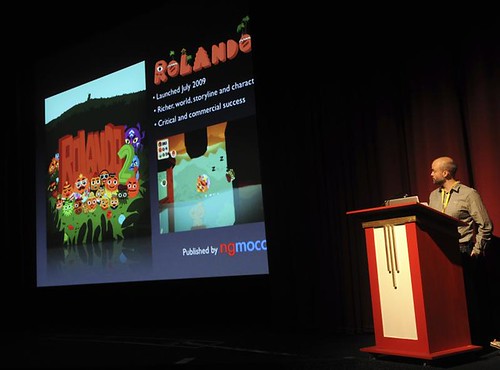
Simon Oliver is the founder of Hand Circus, creators of the hit Rolando series of games for the iPhone and Okabu on the Playstation 3. He was at BAF Game to advise anyone who wants to get into independent games development.
Simon spoke about the history of indie, entwined with a bit of personal history.
The first computer he used was programmable, at a time when there was no divide between the people who created the games, and the machines they were created on. The government encouraged computer literacy, and for schools to teach ICT at a deeper level - not just Microsoft Word, but the basics of computer science.
When games consoles were released they were just machines for consumption. There was no concept of open source, which was a huge barrier to entry.
The release of the iPhone was a key moment for Simon, who wanted to grasp the opportunities and meet the challenges presented by this new gaming platform. And so, Hand Circus was born.
Simon is obviously concerned about the future of independent games development, given the expectation that games will deliver hyper real experiences which simply can't be created by a small team.
However, he cites David Braben's Rapberry Pi, which will teach children the building blocks of computer science and Codea (formerly Codify), which lets you create games on the iPad using a simple, easy to learn coding language, as two developments of the kind that Simon is really excited about.
The vast number of tools on the market gives developers freedom through access to these technologies. Unity stands out for Simon; it gives you a very sophisticated tool set, without which Hand Circus would not be able to create their games.
Freedom is a concept that Simon keeps on repeating...
The lure of independent development is freedom
Freedom through technology
Freedom to work differently
Freedom of expression
Freedom to meander
Is this why people are moving away from the AAA console space?
For Simon, this is the best work ever, and that's his message for today. It's the most challenging, and the level of personal involvement can make it an emotional experience, but Simon has some advice from fellow indie developers to help you along the way, which you can read about on his blog.
Or, to listen to the full presentation, here's the podcast which you're free to download and share.
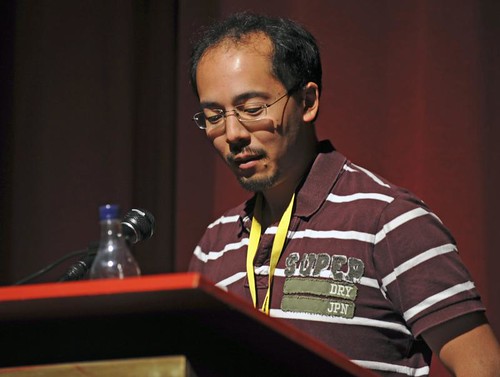
Adrian Hon is obviously not a man who beats around the bush, and I was intrigued by this frank presentation about the games industry's general inability to deliver an immersive experience when it comes to storytelling.
Adrian knows it can be done. He cites two of his favourites The Longest Story, and the Portal series, which tells its stories using the environment rather than time wasting cut scenes.
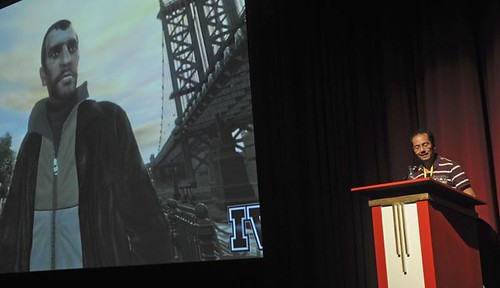
An opposite example is Grand Theft Auto IV. Though technically brilliant, it left Adrian deflated upon discovering that the story was not "amazing", as he'd heard it would be. Instead, it's just hotchpotch of stereotyped characters with clichéd dialogue.
Despite this failure, GTA IV received brilliant reviews, so the lesson here is that games with bad stories still sell. We don't care enough about bad stories to not buy the game, so we get the stories in games that we deserve. Fair enough!
Adrian asks why gamers looking for good stories are left wanting.
One of the answers is the element of interactivity; games aren't one way like other forms of media. Some gamers believe that the worst thing about a game with a story is that it tells you what to do. Real games should be like Sims, Minecraft and their ilk; having the ability to pretty much what you want is better than the story any writer can create.
Games which allow you to build your own story are no better or worse than those with a linear story, they're just different, and people want different things from their gaming experience.
So, if we know how, why don't good stories in games occur more often? Adrian believes that's a result of four factors: risk, distribution, funding and tools.
Publishers don't seem to take a lot of creative risks. If you treat video games as simply a way to make money, then that's fine. But that's not what you do it for, right?
We've witnessed a huge amount of change in the way people find, buy and play games - Steam, Facebook, Android, iOS to name a few - which empowers people to put their games in front of an audience without permission from anyone. This of course means you end up with a lot of crap, but conversely, you can discover some fantastic games that no publisher would have wanted to risk.
Developers are going to need money, and their sponsor is going to demand some level of input. These days, a lot of independent developers are going direct to the public. Six to Start successfully used Kickstarter to fund Zomies, Run! (which looks like a very entertaining way to keep fit.)
Adrian also mentioned IndieGoGo, and one member of the audience recommended Sponsume. Do you know of any good crowdsource funding organisations?
Adrian's final reason for the lameness of storytelling in games is that the writer is brought in too late. We need to give developers and writers better tools which will enable them to work on the creative process rather than the technology.
Why should we care? Because stories are important as both a form of entertainment, and a way of learning about the world.
If you want to listen to the full presentation, which includes the question and answer session, here's the podcast.
Adrian has kindly shared his slides from the presentation, which you can find on Slideshare.
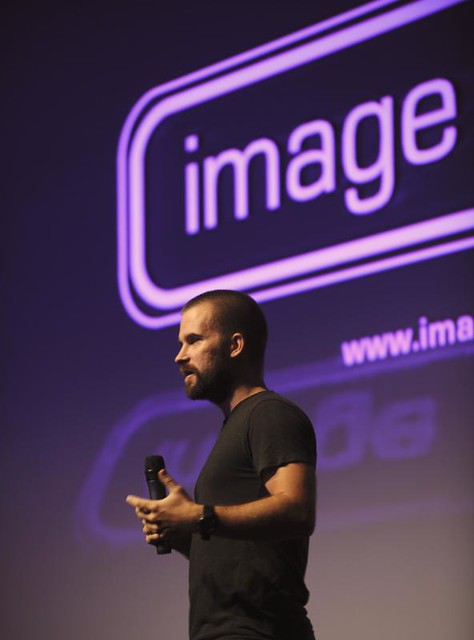
Image Metrics is the creator of Faceware, an award-winning facial animation technology used throughout the games, film and entertainment industries to streamline animation. Jay was at BAF to talk about how facial animation technologies can create an enhanced gaming experience and tackle the most demanding of schedules and rigging processes.
According to Jay, the biggest challenge in games development is realistic facial animation, and there are two things which impact on the developers' ability to meet this challenge: cost and performance; and while facial motion capture is fast and gives a great result, there's a lot of set up and equipment involved.
Faceware has tried to take all these challenges head on and give users a turnkey solution to create good facial animation. To illustrate this this, Jay gave a demonstration of the Faceware workflow.
A trained animator, Jay worked on facial animation for Grand Theft Auto. He's had a lot of experience with Faceware and tells us with confidence that it's fun, easy to use and gives you a huge amount of artistic control.
There's more to motion capture than an animator creating an entire performance - their animation augments the work of an actor. With Faceware, the animator still gets to define what that performance will look like.
Your instinct when working with a new tool is to panic, but with Faceware, you're still using the software you know and love. Whatever type of rig or character you're using can be driven by Faceware - it's designed to neatly plug in to whatever you're doing.
Lip sync can be a really big problem for animators. It doesn't matter how good your rig or your rendering is if your timing is off. Faceware makes this much easier - you can let the software take care of all the heavy lifting and spend 90% of your time polishing the animation.
Plus, this is not a traditional animation workflow because you're not posing the whole face on every frame, which means you can get a lot more animation done in less time.
Faceware separates the face into three groups:
Eyes - what direction they're looking and the movement of the eyelids
Brows - everything above the eyes
Mouth - everything below the cheeks and around the mouth
Jay says that the most important thing about facial animation is the eyes, and getting this wrong can immediately draw the gamer out of the performance.
He demonstrated Faceware autopose. This tool knows where the key poses are, so you can go straight to them and set up the poses to match the performance. Using a simple example of two poses (blink and look), with about 30 seconds of work, Jay had created 277 frames of blinks.
While it's not a particularly difficult job to hand animate eyes, all the subtle little eye darts might be missed by an animator. Faceware picks these up - another example of how the software can save you time and still result in a more realistic animation.
There was a workshop later on in the day to give delegates the opportunity to play with the software. If you want to have a go, you can download Faceware for free. The cost comes in when you upload your files, but the good news is that student rates are available.
Did anyone attend the workshop? What did you think of Faceware?
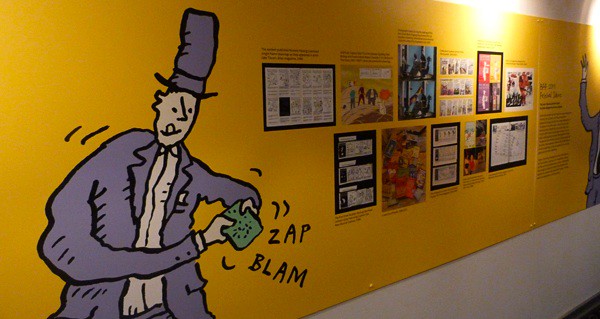
Finally, it's here! The Bradford Animation Festival team have been busy bees getting everything ready for tomorrow. We even have some new displays up in Pictureville cinema, the festival hub. These wall panels feature Steven Appleby's artwork, and of course his fabulous ident created especially for this year's festival.
In case you missed the animated sting, a film by Steven Appleby and Linda McCarthy, here it is again...
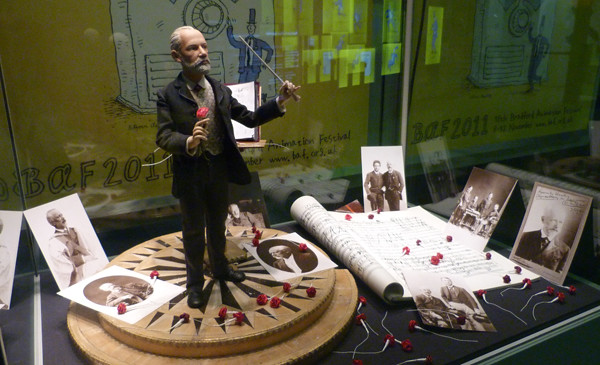
Another chap you'll spot when you arrive at the Museum this week is Barry Purves' wonderful model from his latest short film.
Our team of volunteers, the BAFettes (unofficially though affectionately named) arrived at the Museum this morning for training. They've been put through their paces filling out forms, getting to grips with world class customer service, making sure they know their health from their safety, and that all important delegate bag stuffing.
There are one or two familiar faces amongst the volunteers, and what a nice bunch they are. From tomorrow they'll be kitted out in their official yellow BAF t-shirts, so you'll be able to spot them easily. Ask them anything, though we can only guarantee they'll be able to assist you with BAF-related enquiries.
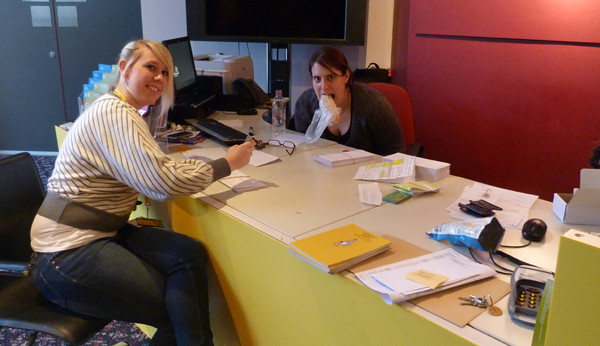
The task of making sure that everyone has the right tickets is in the very capable hands of Jeni, Rebecca and Gill - here are Rebecca and Gill taking a break from all that hard work. Go team!
Right, I'm off for a restful evening ahead of all the blog posting and photo sharing, video linking and podcast uploading that's to come this week. It's going to be busy, but BAF is always such a buzz.
Make sure you let us know what you think of the festival, and what you've been enjoying by commenting on this blog. We have a team of dedicated bloggers from Bradford College, as well as myself and a few special guests.
BAF welcomed back legendary games developer Charles Cecil (last seen at the Museum acting as an official invigilator when we beat the World Record for simultaneous Nintendo DS gaming) alongside Sean Millard from Sumo Digital and Anwen Aspden, BBC Executive Producer - all here to talk about their involvement on the Doctor Who: Adventure Games series.
So why did they do it? The BBC had planned on producing four interactive episodes for the latest reincarnation of the series, but went one step further and created something special with free downloadable games - over 1.6 million downloads so far, and more episodes to come.
The pitch went out all over the world, but landed in Sumo's lap. Charles had worked successfully with the Sheffield based company before (Broken Sword) but it was their grasp of the brand and production values in only two scenes of their pitch video which sealed the deal.
The Doctor - with sonic screwdriver acting as a skeleton key allowing him to go virtually anywhere, and his tendency to negotiate rather than fight, is an unlikely game hero, but Sumo overcame these issues by using avoidance, discovery and infiltration. The developers also need to ensure that they didn't assume gaming knowledge nor make the game too complex for Doctor Who's expansive audience range.
Sean is obviously thrilled that he was given the opportunity to create a Doctor Who character - the Cyberslaves - which could potentially appear in a televised episode; he claims it's the coolest thing he's done during his 20 year career. Charles went through the process of creating the cyberslaves under the protective guidance of the Beeb, and concluded that it is the human behind the monster which is most frightening.
The actors movements (Matt Smith and Karen Gillan) were shot using rotoscope rather than motion capture, which enabled Sumo to animate the characters in game. The resulting facial textures were too realistic and the BBC felt that it was "too dark", so removing the texture and smoothing out any lines was the computer equivalent of putting the actors into make up. An interesting analogy.
"The second coolest thing" for Sean is seeing his company's game advertised during primetime - this level of publicity is generally a rap on the knuckles for disrupting the nation's youth.
Charles revealed that his experiences working with the BBC on the Doctor Who Adventure Games are "a lesson in how to market": Keep it a secret, then blitz it and surprise everybody.
During the Q&A we learned that the funding for the game came from public service money, but it created such a buzz at Comic-con that there are plans in place to sell it abroad.
The audience expressed a desire to see some of the Doctor's previous incarnations crop up in the game, and the team, as passionate as they are about the brand and their product, clearly hope so too. And so the celebrated heritage of the Doctor continues.
Bradford Animation Festival is here once again. Day one of the biggest annual event at the Museum, indeed the biggest animation festival in the UK, and the crowds alreading gathering in the foyer and Pictureville show signs of this being yet another successful year.
BAF's audience is always a joy to see - a devoted bunch of enthusiasts, industry professionals, industry hopefuls and students just starting out on the road to a hopefully brilliant career. Enough of the scene setting... on with the show.
The first session of the day was an exclusive with Tim Appleby and Lauren Austin from Splash Damage who talked about the concept art and character design behind one of the 'most queued-for' games at this year's Eurogamer Expo: Brink.
A round of applause followed the cinematic trailer - there is a definite buzz surrounding this game. The pair took us through the story, the style of the two main factions, how they developed those styles, and then on body types, character customisation, overlays and tints. Everything from initial concepts to facial hair.
One thing which does stand out about Brink is that there is not one recognisable character - but about twenty of them, each with their own name and identity - a useful tip for game character designers.
"Customisation doesn't lend itself to quality", but Splash Damage wanted to focus on the quality, and in doing so discovered that "limitation spurs invention". Now, I couldn't go into too much technical detail* - partly because you might not understand it, mostly because I certainly don't, but it does make a lot of sense.
For example - all heads need to be the same width to ensure the head gear can be used for all characters, so instead they played about with length.
Lauren clearly had a lot of fun developing these characters, sometimes taking her inspiration from celebrity mashups (Danny Trejo vs Jason Statham, anyone? Sounds post-apocalyptic to me!)
And in a sea of post-apocalyptic first person shooters, this game stands out. Not only is it colourful, but it has a whole range of characters and customisation options which helps with player investment and gives Brink an instantly recognisable look.
So, here's Splash Damage's three golden nuggets:
1. Start simple and protoype early. 2. Make sure there is close collaboration as you develop your characters. 3. Designs need to reflect technical limitations.
*If you want to hear the finer technical detail, look out for all the podcasts from BAF 2010 which will appear on the new National Media Museum website in the very near future.
This blog is no longer being updated. Please visit our new blog. While browsing archive posts, please remember that the views on this blog are those of the respective writer only.
We’re in Bradford in the UK, and we’ve got seven fantastic floors of exhibitions and interactive galleries dedicated to photography, film, TV and new media. The blog is written by staff and takes you behind the scenes at the Museum.