Showing posts with label BIFF. Show all posts

30 March, 2011

BIFF 2011 - Amos Vogel, Terry Gilliam, Industry Networking & a Hobo with a Shotgun

Blogger: Lisa Brook, Bradford City of Film / Leeds Film Festival / Fanomenon

Saying that film festivals are "a chance to experience cinema that you otherwise might not see" is both the biggest appeal of film festivals for me and a phrase that has become cliché.

But I repeat that tenet to audiences, press, friends, family, and anyone who will listen to my obsession. Yes, it's about cinema, but BIFF 2011 reminded me that film festivals are about experiences that you cannot get anywhere else; films and frolic in a hazy festival bubble.

With that in mind, my planned list of film reviews is now something a bit different: I give you four BIFF experiences that I probably wouldn't encounter anywhere else in quite the same way as here in Bradford, the first UNESCO City of Film.

1. Being shocked by films screened at a film society that I’d previously never heard of.

Film can and should expose us to anything and everything outside our individual realities. I’m drawn to cinema that subverts, challenges, and is at times difficult to watch, and while this often results in an unhealthy diet of horror and extreme cinema, at BIFF I took a journey into another kind of subversive cinema.

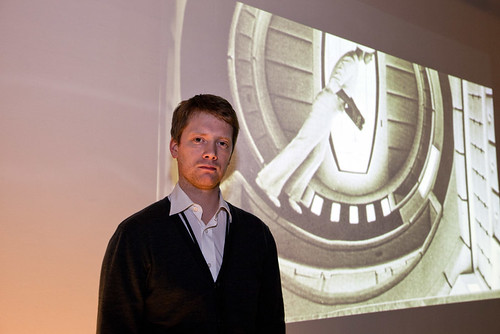
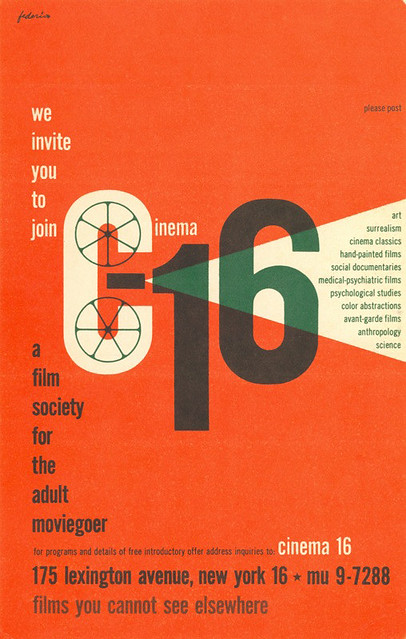
Amos Vogel and the subversive Cinema 16 society was something I knew very little about, and in the festival's tribute to them, I discovered a programme of short films that is as shocking and relevant today as it must have been when the films first screened over half a century ago.

BIFF 2011 Day 2

The disturbing dreamlike sequences appealed to me as a David Lynch fan, but the alarming footage of animal slaughter in the dingy abattoirs of Paris brought home that horror exists in the real world, and when a film exposes something both true and horrific, it has the power to shock us to the core.

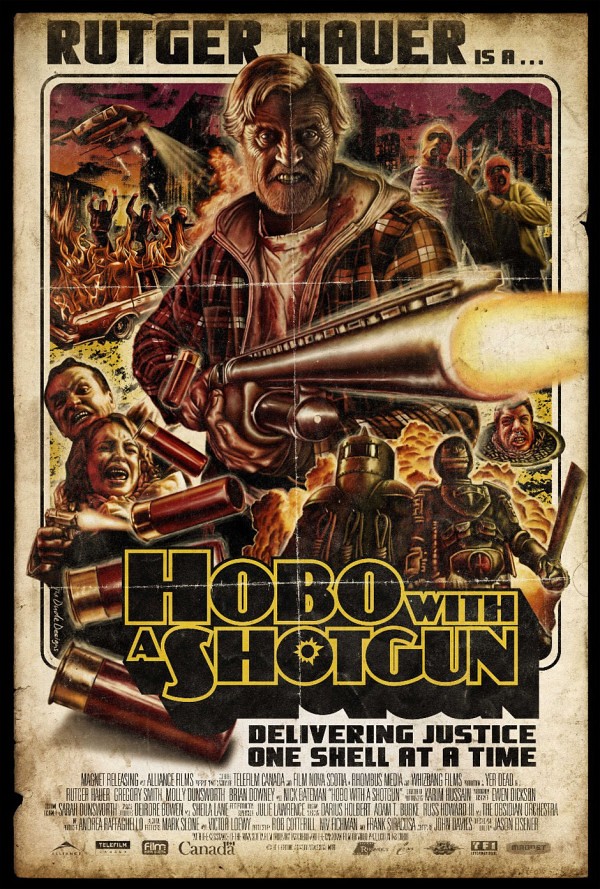
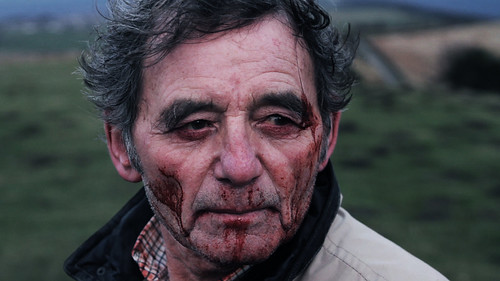
2. Cheering at 1am with a hundred other gore-hounds as Rutger Hauer asserts that saving the world with a shotgun is "the only way I know how".

How did a film that began as a fake trailer for Tarantino and Rodriguez's Grindhouse double-bill, manage to secure Rutger Hauer (Bladerunner, and genre cinema legend) as its lead - a tramp? Genius casting.

Hobo With a Shotgun

Those of us at the midnight screening of Hobo with a Shotgun were lucky enough to experience the utterly maniacal, blood-soaked, downright offensive yet positively joyous vigilante Hauer.

This is the ONLY film I have ever seen that I could genuinely watch again immediately after, despite it’s early-hours-of-the-morning credit roll. I will be quoting it for weeks, and I urge you to seek it out so you too can experience the mayhem, and feel the power of Hauer!

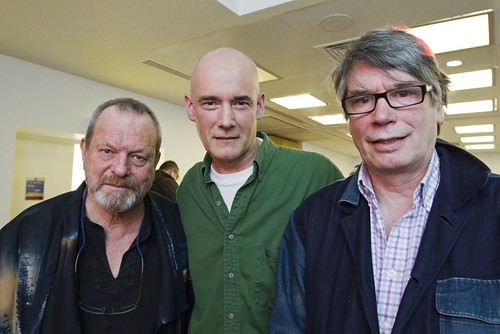
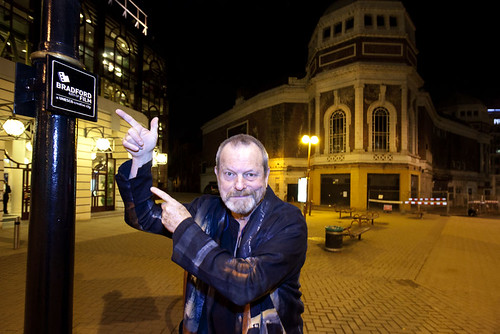
3. Opening the back door to the panel event at which I'm working, to see Terry Gilliam staring back at me.

Helping to organise a panel on low and no-budget filmmaking which was programmed at exactly the same time as the sold out Terry Gilliam Screentalk was naturally a concern, but one I needn’t have worried about. The draw of industry figures like Nik Powell (Oscar-winning producer of The Crying Game) and Marc Price (director of the £45 zombie movie Colin which has secured distribution around the world) brought a full-house to our event, regardless.

BIFF 2011 Day 3

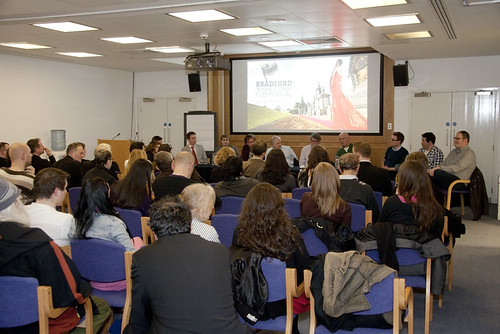
About an hour in, after we’d considered inventive ways of coming up with a budget (including remortgaging houses: very hard times...) and how to avoid trouble with the police during a shoot (some interesting stories there...) I opened the back door to check that everything was ready for the networking session, and Terry Gilliam was standing on the other side.

I managed not to ask him what he was doing here, (a wander during the screening of Time Bandits, in case you were wondering), and heads began to turn as in he came.

BIFF 2011 Day 3

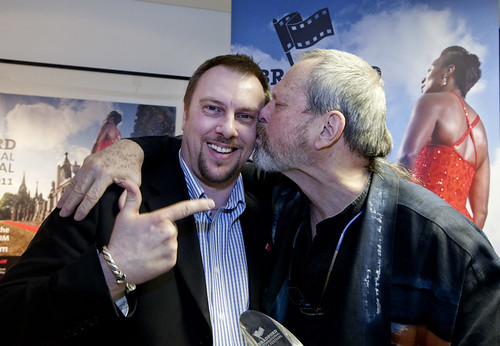
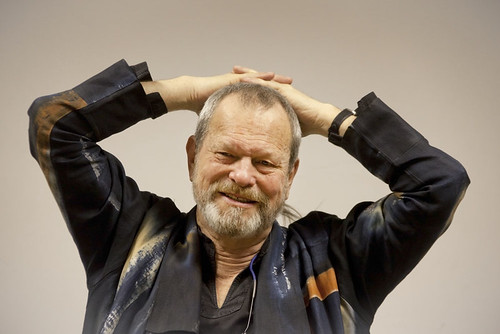
Confirming all reports that he is indeed a genuinely lovely man, Terry got involved with our little event, and was happy to chat to everybody before making it back to Pictureville for his Screentalk. What a guy! Thank you, BIFF, and thank you, Terry. A serendipitous occurrence for everyone who passed up Terry’s Screentalk to attend. Amazing.

4. Going into Pictureville Bar knowing there will be someone who wants to talk about how "their BIFF" is going.

Festivals are personal. Making a selection from 200 films screened this year means you can tailor your own experience, and that itself is part of the festival experience.

To see so many people planning their festival, perusing brochures, or with laptops out frantically blogging and tweeting, and to talk to them about how you’re doing exactly the same gives a festival its sense of community. We may fall in love with film together, but the individual experience of BIFF 2011 will always be mine.

25 March, 2011

BIFF 2011 Day 3 Part 3 - Terry Gilliam Screentalk + Time Bandits

Blogger: James Cross, Front of House

BIFF 2011 Day 3 - Tony Earnshaw and Terry Gilliam

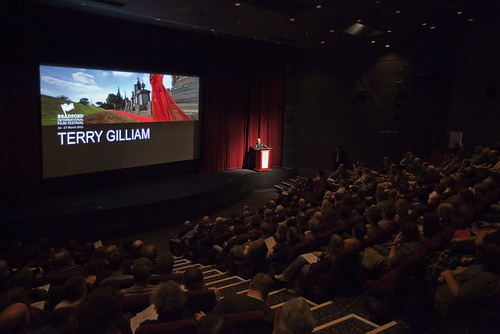
This was the hot ticket event of the festival, a sell out with a waiting list a mile long. But why is Terry Gilliam in such demand? I saw the man arrive outside the Museum where he was instantly mobbed by adoring fans, fans of all ages, and this is where his success lies; he has managed to cross the allusive generation gap.

BIFF 2011 Day 3 - Terry Gilliam in Bradford, City of Film

As a child, I remember sitting with my parents and shouting at the TV "We are the knights who say... NEE", and then as a teenager, watching Fear and Loathing in Las Vegas. Terry Gilliam’s résumé is a powerhouse of top talent, not just in the USA but here in England. A transatlantic success, BAFTA winner, and now Bradford International Film Festival Fellow, we gladly welcomed him.

BIFF 2011 Day 3

Before the screentalk, we were treated to a screening of Time Bandits - a classic family film, children enjoy the fantasy and the adults enjoy the ‘in-jokes’. If you haven’t seen it, WHY NOT? Time Bandits was the film made by Terry when he couldn’t get the funding to make Brazil and even had a hard time distributing it.

On the back of the success of Time Bandits he managed to complete Brazil, although the release wasn’t without its own drama. Still, Time Bandits stands the test of time 30 years on.

The feature was followed by Gilliam’s hilarious new animated short The Miracle of Flight, a testament to his skill even in the early days.

BIFF 2011 Day 3

Last, but certainly not least - in fact, the reason for this sold out auditorium - Tony Earshaw, BIFF's Artistic Director, interviewed the film maverick and presented him with the Lifetime Achievement Award. Watch this video, then tell us your favourite Gilliam moments of the evening (or of his career).

See more fantastic photos of Terry on the Museum's Flick channel.

BIFF 2011 Day 3 Part 2 - Putty Hill Review

Blogger: Greg Spencer, Front of House

Putty Hill

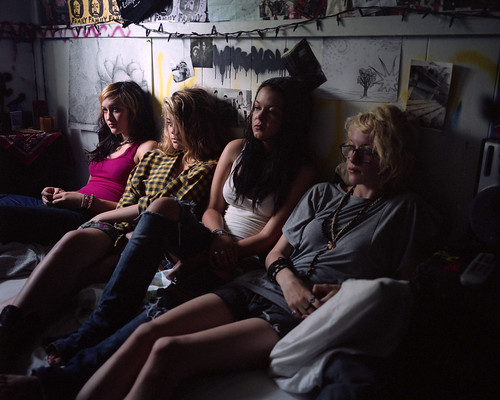
Putty Hill is based around the friends and family of a teenager who committed suicide, and how they deal with the incident. Its framing differs somewhat from mainstream narrative conventions, and the apparently improvised interviews with each of the characters leave you feeling uncertain as to which parts of the film are truth, and which are fiction. You could watch the film a thousand times and still not know.

Putty Hill 2

I'm not sure if this is a good thing as you don't quite know where you stand with the characters and the events taking place. How emotionally appealing can a film be when you don't know what to believe?

Having said that, if the film is fictitious, then the actors did a great job. Also to be admired is how director Matthew Porterfield shoots the environment in which the characters live, and the way Baltimore looks on-screen - at one time a desolate wasteland, and others, quite beautiful.

BIFF 2011 Day 3 Part 1 - Shine Shorts, Northern Noir and a Zombie Romance

Blogger: James Cross, Front of House

Day three of BIFF, and what an actioned packed day it was! I couldn't possibly have gone to all the midnight screenings, industry seminars and the myriad screenings and events, but here's what I did see:

Nowhere Elsewhere

Nowhere Elsewhere

Shine Award Jury Screening

I have a great sense of nostalgia for Shine - it was the first ever film festival strand I attended in 2003, and I'm pleased to say it still delivers the same variety and quality as always. As with the Amos Vogel strand, even if you don't enjoy a film, you know there is another contender just around the corner.

Shorts are not often given proper recognition, and showcases such as the Shine Awards reveal that they are a craft in their own right, distinct from features, providing a rare opportunity to watch emerging talent. Curated by Alissa Juvan, this year the Awards accepted submissions from outside Europe, with a separate screening dedicated to European Shorts.

Annick Blanc and Alissa Juvan

Annick Blanc and Alissa Juvan

Annick Blanc, Canadian Director of Nowhere Elsewhere was in attendance to introduce her short before jetting off to Hong Kong, then France to showcase her film - one of my top picks for the award along with A Gentle Push. Both are beautifully shot, well constructed pieces.

The Shine Awards are being screened again at Otley Courthouse on Sunday 27 March, and a screening plus the award presentation will take place at the Museum on Sunday at 6pm.

Innocent Crimes

Innocent Crimes

This film was part of the Northern Showcase strand, which was established to exhibit the best in low budget films from the North, and to give then the recognition they rightly deserve.

Innocent Crimes, introduced by Director Jonathan Green and Producer Chris Hees, shows how far £10,000 can go. Frankly, it wasn't my cup of tea, I thought the story and acting were heavy handed at times, and I didn't enjoy the out of focus shots.

Innocent Crimes was meant to be in the style of a noir; it lacked distinctive contrast lighting, quick-witted dialogue, and the developed female characters normally associated with the genre. The moments which worked for me were those of humour and adventure. A valiant attempt, but somewhat misses the mark - I would love to hear what other people thought.

Harold's Going Stiff

Harold's Going Stiff

To quote a friend

"Harold's Going Stiff is everything that is right with low budget filmmaking."

Innovative, funny, and ingenious, Harold's... shows that a low budget is no excuse for a poorly crafted film. Beautifully shot and nicely paced, but the real achievement is the performances. It may be a zombie film, but first and foremost it is a romance.

The two leads have a dynamic relationship as pensioner Harold (Stan Rowe) the sufferer of an advancing neurological disease which causes him to be zombie-like, and his bubbly nurse Penny (Sarah Spencer). Their relationship flourishes in the midst of zombie-hunters, medical tests, and despite the generation gap.

The support cast must also be given kudos; the vigilante zombie-hunters are central to some of the funniest moments in the film, but are not without drama. One of my favourite films of the festival so far, well done to all involved.

23 March, 2011

Why Would a Film Festival Bother with Television?

Blogger: Kate Dunn, Curatorial Assistant - Television

Every year, TV Heaven - our public television archive - screens a complementary schedule of programmes during Bradford International Film Festival. So why does a festival that celebrates film bother with television?

The relationship between film and television has historically been a competitive one. Following the Coronation of Queen Elizabeth in 1953, the percentage of British households owning a television set leapt from 30% to around 89% by the end of the decade. In response, film studios launched a widescreen, full-colour attack on the black and white upstart, with lavish historical epics like The Ten Commandments (1956, Dir. Cecil B DeMile) and Ben-Hur (1959, Dir: William Wyler) tempting people out of their living rooms and back into cinemas.

Despite - or perhaps because of - competition for audiences, film and television have also influenced each other in very positive ways, by nurturing and sharing creative talent and ambition.

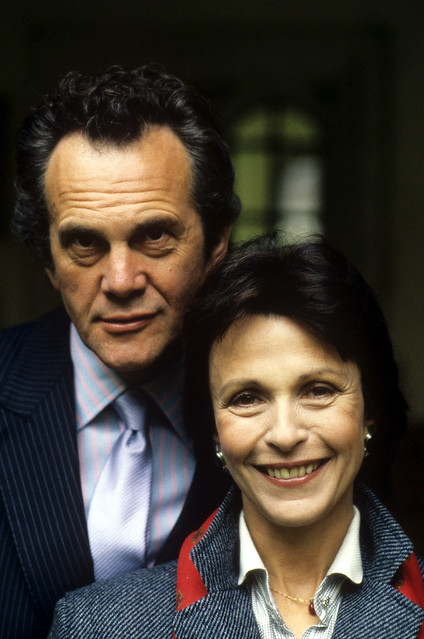
Intimate Contact

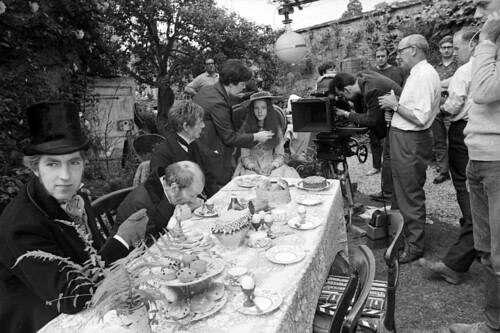
Claire Bloom in 'Intimate Contact', courtesy of ITV / Rex Features

Many well-known film stars, directors and writers cut their creative teeth on television projects, and TV continues to attract talent from the silver screen. Because a television series tends to offer a larger canvas than a feature film, film directors and producers have often turned to TV for epic projects, including the likes of Steven Spielberg (producer of Band of Brothers and The Pacific among many others) and Martin Scorsese (Boardwalk Empire), and if you want to look at the full scope of a film star's career, chances are you will have to look to television at some point.

The TV Heaven schedule for this years' Film Festival features many a big screen name, including James Mason, Virginia McKenna, and Claire Bloom, recipient of our Lifetime Achievement Award.

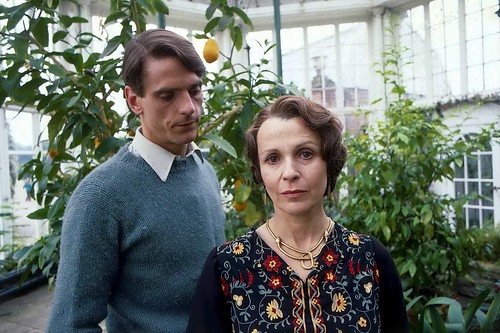
Brideshead Revisited

Claire Bloom in 'Brideshead Revisited', courtesy of ITV / Rex Features

To commemorate the occasion, TV Heaven will be screening some of the actress' greatest television work, including the ground-breaking four-part drama, Intimate Contact, which was among the first to realistically portray the impact of AIDs on patients and their families. We will also be showing a 1961 adaptation of Anna Karenina - lost in the depths of the BBC archives until 2009 - and an episode of Granada Televisions' gorgeous 1981 adaptation of Brideshead Revisited.

These last two programmes show another shared trait of film and television – they tend to look to the same sources for inspiration.

British entertainment is littered with television and film adaptations of the same plays, novels and short stories, and it was natural choice for us to fill the rest of this year's TV Heaven line-up with other great literary adaptations.

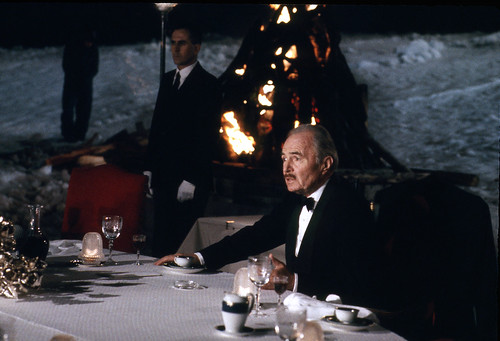
Dr Fischer of Geneva

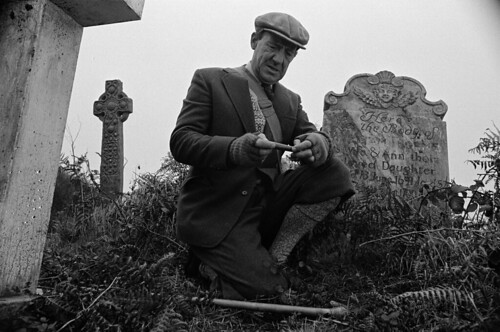
'Dr Fischer of Geneva', courtesy of BBC

These include: Dr Fischer of Geneva (BBC, 1984) an excellent version of Graham Greene's darkly satirical novel featuring James Mason's last ever performance; A Passage to India (BBC, 1965) an adaptation of E M Forster's novel directed by Waris Hussain; and a double-dose of Jonathan Miller with Alice in Wonderland (BBC, 1966) and Whistle and I'll Come to You (BBC, 1968).

Alice in Wonderland

'Alice in Wonderland', courtesy of BBC

Not only are Alice... and Whistle... wonderful adaptations of Lewis Carroll's classic children's fantasy and an M. R. James ghost story, but they also highlight television's a taste for the cinematic.

Television drama in particular has often been inspired by the look and feel of film, be it epic narratives, film-led production techniques, or experiments with form and style. Miller's adaptations of Alice... and Whistle... are both visually stunning, sharing an ethereal, gloomy beauty that would not look out of place on the big screen. Television drama like this exhibits huge ambition and a visual flair that is barely contained by the small screen it is made for.

Whistle and I'll Come to you

'Whistle and I'll Come to You', courtesy of BBC

Cinema and television are not opposing media forces. They are often seen as competitors because they share an audience, but they also share creative drive and talent. Any competition between the two has ultimately furthered the cause of each, encouraging both media to push the boundaries, to be ambitious, and we the audience have reaped the benefits.

During this year's Bradford International Film Festival I can highly recommend visiting TV Heaven and exploring the best cinema that British television has to offer.

22 March, 2011

BIFF 2011 Day 2

Blogger: James Cross, Front of House

Continuing on my film odyssey, where I watch football, fantasy, avante garde film, and a drunk man sings A Whole New World.

Kick Off

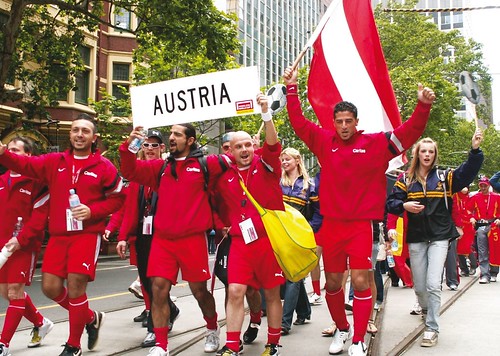
Kick Off UK Premiere

This documentary follows the Austrian homeless soccer team competing at the 2008 Homeless World Cup in Australia. These men, all of who have been homeless and addicts of one sort or another, are playing to restore their faith in themselves. Each have their own stories, but as one of the team members comments "it's the same stories", of isolation, desperation, hopelessness, and the desire for redemption.

Although Kick Off doesn't exploit the story to its full potential, the human-interest appeal of the film's characters carries you through to the end. I was left wondering "What will happen to these people, whose sense of self is so intertwined with this tournament, now that it is over?"

Kick Off screened for a second time on Sunday 20th March, did anyone else watch this film? Let me know what you thought.

Tideland

Tideland

Terry Gilliam has always toyed with the surreal, but with Tideland he took a far more sinister turn. Jeliza-Rose (Jodelle Ferland) is the daughter of a dead-beat rocker (Jeff Bridges) and self-obsessed junkie (Jennifer Tilly), who spends her childhood cooking up heroin for mum and dad. When her mother ODs, Jeliza-Rose is whisked away by her father to grandma's abandoned farmhouse house in the deep south of America. When her father goes 'on vacation' (takes an overdose) we find ourselves pulled into Jeliza-Rose's fantasy world. References to Alice in Wonderland mix with a healthy dose of the macabre to highlight Gilliam's convention-defying sensibilities. I just hope I don't meet his inner child...

BIFF 2011 Day 2

Amos Vogel Part 1: Cinema 16

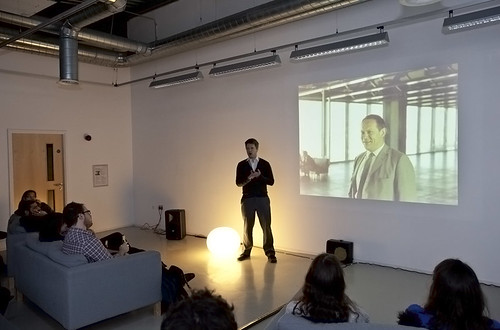
This has been my favourite strand of the festival so far. The session was dedicated to a selection of short films representative of Amos Vogel's work. Screened at Impressions Gallery, the atmosphere was amazing. Sitting on a couch with an old projector clacking away behind me; this is DIY film exhibition at its best.

Tom Vincent introduced the session explaining that the aims of Bradford International Film Festival are very much the same as those of Vogel's Cinema 16 film society: to screen films you can't see anywhere else. This is certainly true of the innovative and thought provoking films that were shown here today, and one of the most intriguing aspects was to examine how the films had aged 50 years on.

BIFF 2011 Day 2

The intermission provided an opportunity for the audience to discuss the films, and as we stood outside in Bradford's Centenary Square, currently undergoing some regeneration, a passing drunken man serenaded me with A Whole New World, which definitely added to the overall experience). I won't be missing Amos Vogel: Part 2 on Friday night, a selection of modern films created with the Cinema 16 aesthetic in mind. Will I see you there?

18 March, 2011

BIFF 2011 Day 1

Well, the film festival is in full swing now, and there's lots going on this weekend, including Q&As from Jim Loach (Oranges & Sunshine), Marcin Wrona (The Christening) and the cast and crew of Blooded tonight, followed by the Terry Gilliam Screentalk and the Bradford After Dark mini horror-fest in collaboration with Celluloid Screams tomorrow. On Sunday, Gaylen Ross (former actress turned director) will be here with her new documentary Killing Kasztner, which I hear is incredible.

There's so much going on, that I've enlisted the help of Museum staff and festival goers to review some of the events and film screenings they've been enjoying (or not!) Yesterday you heard from Ben Eagle, BIFF Producer, and now - yesterday's film discoveries from James Cross, box office pro and all round helpful chap.

Blogger: James Cross, Front of House

Yesterday, the festival started in earnest, and it was nice to see some familiar faces along with some new ones. Best of all was being able to compare notes with that special breed of film fan, willing to spend much of the next 10 days sitting in a dark room. On to the films...

Limelight

Limelight

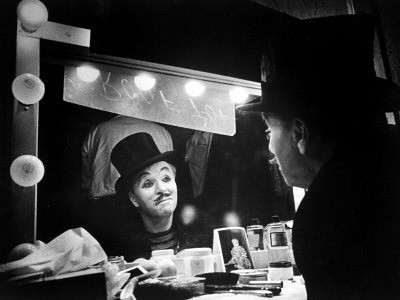
The first in the Claire Bloom retrospective, this film is a perfect example of art mirroring life. Charlie Chapin plays Calvero, a music hall performing 'tramp' clown, who rescues dancer Terry (Claire Bloom) from an attempted suicide. Calvero then nurses Terry back to health, after her inexplicable paralysis. By enthusing and encouraging Terry to seek and achieve her dream of becoming a prima donna ballerina, he realises that his own career and talents are waning.

This is almost a direct comparison between Chaplin and Bloom, because Limelight was his self-referential swan song and her big break. Both leads show what tremendous talent and chemistry they have; people were crying as they left the auditorium.

Cinema16

Film as a Subversive Art: Amos Vogel and Cinema 16

A brilliant introduction to Amos Vogel and the Cinema 16 film society, especially if you are as uninformed as me. Although not cinematically brilliant, the story and personality of Amos Vogel keeps you engaged. He's tried to be "sand in the machinery of the world" his whole life, and as a result turned the New York film scene on its head.

Despite Vogel's many successes, you are left with a slight feeling of missed opportunity and longing as he tells of the demise of Cinema 16. A great introduction to an irrepressible character.

Double Bill: Disfarmer: A Portrait of America + An American Journey

It's easy to see why these two films were programmed together, as both focus on photographers who felt isolated from the culture they documented, and the consequences of their work. I will try not to give too much away as this duo is repeated on Monday 21 March.

Disfarmer

Disfarmer: A Portrait of America

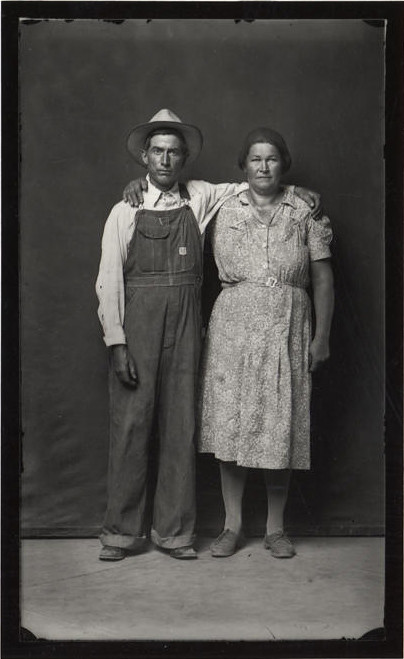
This intriguing story follows the discovery and subsequent selling of odd-ball Mike Disfarmer's (aka Mike Meyers) portrait photography from the depression era of his local farm community. It wasn't until 1974, when photographer Peter Miller found the prints and sent them to New York, that Mike Disfarmer was 'discovered'.

What ensues is a tale that gradually pulls you in as the townspeople are amazed and bewildered at the importance of his work, and the wider photographic community stirs. Small town meets big city.

An American Journey

We were lucky enough to be joined by the film's Director, Philippe Séclier, who introduced his film and stayed for a brief Q&A afterwards. In 1958, Swiss-born Robert Frank first published The Americans, his photographic investigation of the American way of life. 50 years later Philippe Séclier retraced Robert Frank's steps. On this odyssey we learn about the differences in culture 50 years on, the characters portrayed in the book, and its importance in photographic and art history.

What comes across, not only in the film but in the way Philippe talks about his efforts, is that An American Journey is a personal one. Philippe says that Robert Frank was him 50 years ago, travelling and exploring across an unfamiliar culture. I would definitely recommend this to any photography fans.

17 March, 2011

BIFF 2011 Opening Night Gala

Blogger: Ben Eagle, BIFF Producer

BIFF 2011 Opening Night

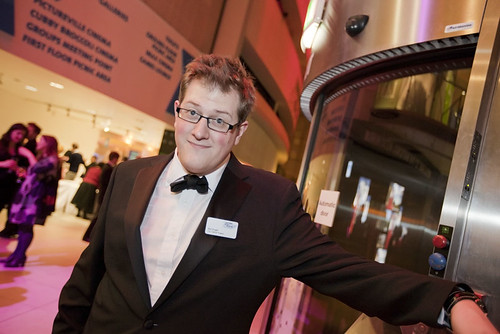
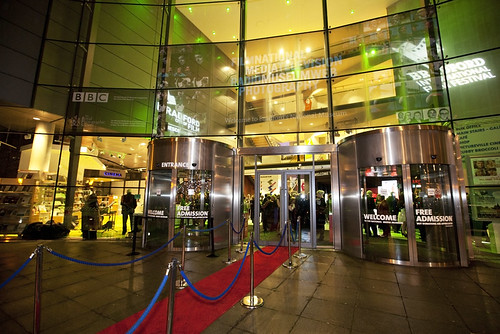
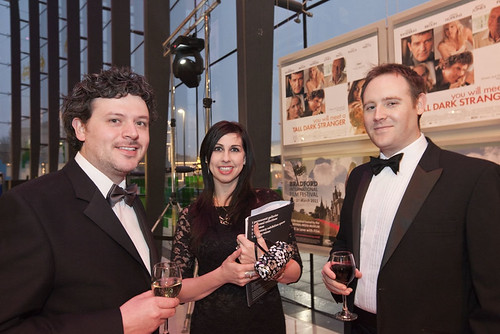
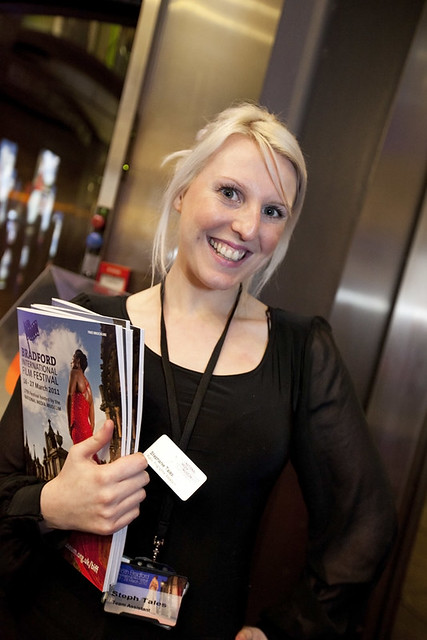
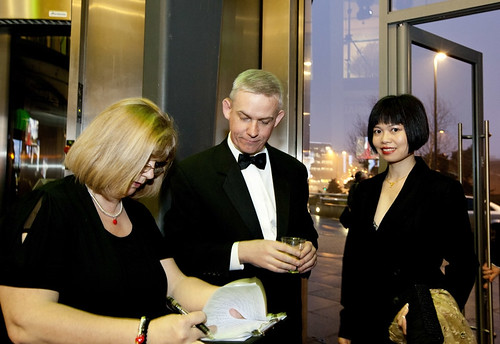
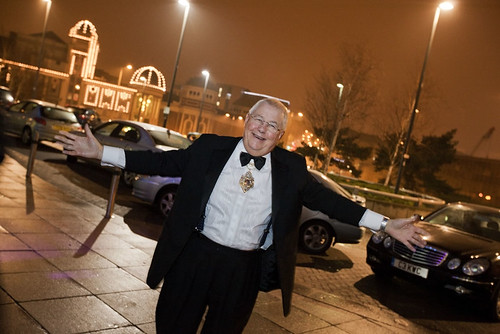
The opening night of any large-scale event is always going to be a big deal, and last night certainly wasn't an exception for the BIFF team. We were delighted to be opening with Woody Allen's latest, featuring a who's who of Hollywood, and although due to working commitments the cast couldn't be in Bradford, the evening was still rich with glitz and glamour.

BIFF 2011 Opening Night

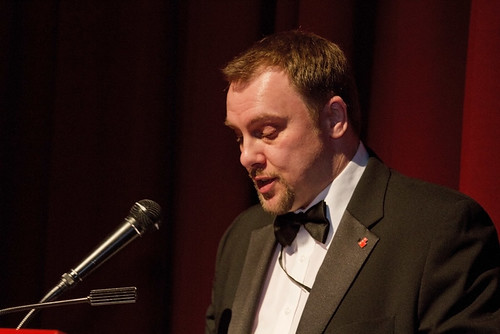
There were canapés and fine wine on offer for the invited audience who all seemed to thoroughly enjoy the night. Following that, there was a 9pm screening for delegates and members of the public, which was introduced by Artistic Director Tony Earnshaw.

BIFF 2011 Opening Night

And now, the fun really begins! The 27th March seems a long way off, and with almost 200 films and events between now and then, I sincerely hope you enjoy the 17th BIFF.

Here's a selection of photos from the Opening Night Gala - you can see them all in our Bradford International Film Festival 2011 Flickr set - and there's more to come.

BIFF 2011 Opening NightBIFF 2011 Opening NightBIFF 2011 Opening NightBIFF 2011 Opening NightBIFF 2011 Opening NightBIFF 2011 Opening NightBIFF 2011 Opening NightBIFF 2011 Opening NightBIFF 2011 Opening Night

03 March, 2011

Interview: Neil Young Talks Film Festivals

Blogger: Greg Spencer

The name Neil Young may not be familiar to you, but as the International Consultant for Bradford International Film Festival, he is one of the people responsible for selecting the films screened at BIFF. I caught up with him to find out what it means to be a film festival programmer.

Greg: How many film festivals do you attend each year and why do you choose those particular festivals?

Neil: Last year I attended fourteen festivals - including Bradford - and this figure is average for my attendances over the last five years or so. I visited Tromsø in Norway, Rotterdam, Berlin, Bradford, Leicester (British Silent Film Festival), Crossing Europe in Linz, IndieLisboa in Lisbon, Edinburgh, Wroclaw in Poland, San Sebastian in Spain, Reykjavik, Vienna, Leeds and Ljubljana. I also had a day trip to London Film Festival to catch a single picture, but such a fleeting visit hardly counts as 'attendance'.

Some of these festivals I work with in a programming capacity, where I'll suggest films for the programmes, then attend to introduce the films or lead a Q&A. Tromsø, Linz, Lisbon, Edinburgh, Vienna and Ljubljana fall into that category (though I'm no longer connected with Edinburgh). Of the others, some are certain long-established and very big events like Rotterdam, Berlin and San Sebastian, which are of particular interest from a programming and journalistic capacity as they have so many world and/or European premieres. Others - such as Wroclaw and Reykjavik, I visited for the first time last year on the basis of recommendations from friends and colleagues, and because the cities themselves looked worth exploring (I'd never been to Poland or Iceland before).

Over the last 10 years I've built up a core list of festivals which I visit every year (or try to) but I'm always on the lookout for new places to go. If I'm lucky I might get invited by a festival, which means they will cover the hotel costs and maybe the transportation. If an invitation doesn't clash with an existing commitment, I'll probably take it up - unless I've heard negative reports about the event or its location. For example, in November I'll be on the jury of a festival in Skopje, Macedonia, and this will be my first time in that country. I'm expanding my film-festival attendance at the moment and might make it to 16 or more festivals during 2011, if I'm lucky.
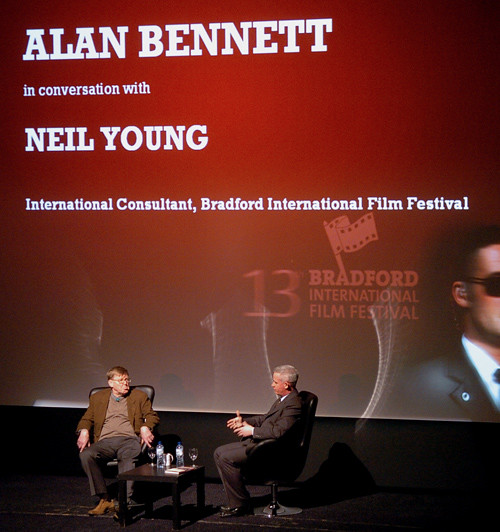
Alan Bennett and Neil Young

Neil Young in conversation with Alan Bennet at BIFF 2007

Greg: Based on your vast knowledge and experience, would you say that the overall quality of the films screened at festivals has improved or declined in recent years?

Neil: Commenting about overall quality is tricky, because there are so many hundreds of films being made and screened all over the world every year, and festivals are looking for the best and most interesting of these. Looking back at my first experience at the Berlinale in 2002 (Berlin International Film Festival, one of the big three in Europe alongside Cannes and Venice), I watched 33 films, walked out of three, and considered 7 especially noteworthy. This year I watched 32 films, had two walkouts, and found 10 noteworthy films. Not a scientific study, of course, and it could be that I've become more skilled at selecting movies to watch, but I don't think we can say that festival films are "getting worse". Of course, that's what many commentators say, and have been saying for 100 years now. Geographically, festivals have become more adventurous and eclectic, and it's no longer so rare to come across a new film from, say, Kazakhstan or Paraguay.

Greg: How do the British festivals compare to the other European ones that you have attended?

Neil: Of course I'm naturally biased when it comes to Bradford. Historically the major British festivals have never really had the international profile of Europe's big three, or of major North American events such as Toronto or Sundance, and it's a struggle for UK festivals to get prominent world-premieres for anything other than British films.

You'll see all the major new films each year at British festivals, of course, plus dozens of smaller discoveries, but it's surprisingly unusual to find programmers from European festivals who will make time in their schedules to go to the long-running film festivals at Edinburgh or London. This is partly because most other European countries have always had one big festival which dominates, and which gets the most coverage, support and funding - Cannes, Berlin, San Sebastian, Karlovy Vary in the Czech Republic, Locarno in Switzerland, and so on - whereas in Britain there's never really been one clear leader which attains international must-visit status.

Greg: Very interesting. I wonder if London Film Festival will become more prominent and a major player alongside Cannes and Berlin.

Neil: Well, it's not really a Bradford Film Festival person's place to comment on the future fate or fortunes of London Film Festival! We wish them all the best.

Greg: I'd like to ask about the BIFF strand that most concerns you which is Uncharted States of America. How does the selection process work, what criteria do you use, and how do you decide whether a film is suitable for the audience?

Neil: I contribute a hefty chunk of Moviedrome, at least 20 titles in that section each year. Uncharted is a smaller section but I'm pretty much responsible for all of it.

I look for very low-budget features and documentaries, preferably with directors and casts which are new to me, and I have a special interest in films which show unexposed corners of the USA. So many movies from that country are set and shot in Los Angeles, New York or the bigger metropolitan areas, but there has been a long tradition of what used to be called 'regional cinema' back in the 1970s and early 80s, taking us off the beaten track, as it were.

I look for films at the festivals I attend and request DVDs of interesting-sounding contenders which I either hear about or stumble across by trawling websites of the smaller American festivals - there's a network of underground film festivals over there which always have plenty of imaginative movies shot on the thinnest of shoestrings. In most cases, I rely on my own taste and judgement - but I'm aware that the films are playing to paying audiences, so I do take into account what it's reasonable to expect the public to spend their time and money on. With the more experimental or avant-garde material, I tend to concentrate on shorter running-times, perhaps 60-80 minutes, and look for documentaries dealing with relatively accessible subject-matter.

Greg: What do you think is special about film festivals? The shared experience, meeting new people, or discovering exciting new films?

Neil: Film festivals are appealing for several reasons, the most obvious being the films; the chance to see many films in a day, over the course of several days, and of a much greater variety than one would be able to see in any day or week's cinema attendance, even in a big city; ideally featuring a mixture of new (sometimes brand new) and archive materials, intelligently curated and professionally presented.

Then there's the communal aspect. You are always seeing people you know and meeting new people, all of whom share your interest in film and, hopefully, your hunger to discover the next delight. There's also the chance to discuss the films and wider cinema culture between and after the movies, often in a foreign or exotic city which is worthwhile visiting in its own right. And if you get to meet a film-maker or performer, so much the better - often smaller festivals are best for this, while at the really big jamborees such access is very heavily restricted.
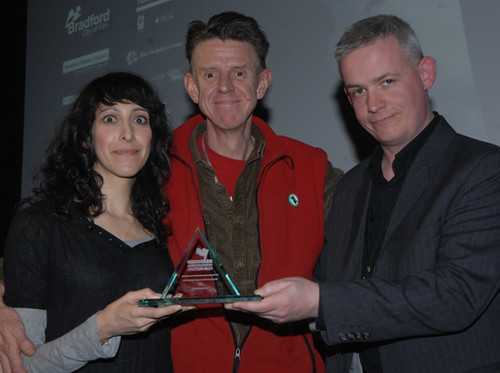
Alex Cox, Neil Young and Shine Short Film Award Winner Harry Wootliff

Alex Cox and Neil Young with Shine Short Film Award Winner Harry Wootliff

Greg: What can someone who is coming to BIFF for the first time expect?

Neil: A first-time visitor to BIFF should plunge in and take a chance on movies they might know nothing about at all, from a director - or even a country - whose films are unfamiliar to them. I'd strongly advise dipping into the retrospectives and archival screenings, as it's increasingly rare to see classic films shown from prints on big screens in top-quality projection conditions, which is what you are guaranteed to get at Bradford (though on occasion films have to be shown from digital sources).

Attending a film festival in person should be a social activity - chat about the films you've seen or are planning to see with fellow attendees, and take suggestions or recommendations. Anyone coming to BIFF, whether it's for the first or for the 16th time, will stumble across films that will startle and dazzle them - and maybe one or two that make them wonder why on earth they were selected! One of the great things about festivals is that everyone will have their own opinions about everything they see.

Greg: What has been your favourite festival moment in all the years you've been doing this job?

Neil: Two that stand out are James Benning's great masterpiece Casting a Glance at Bradford in 2008, when we had various problems with the 16mm projector, and I had to keep going out from the booth to beg the audience's patience - everybody stayed, and when the film finally came on it was quite magical, if nerve-shredding, to watch it unfold, and dreading a recurrence of the glitch any second.

Much more recently, there was the prize-giving at Rotterdam in January, which took place in the beautiful 1960s trashy splendour of the Luxor cinema (all mirrors and light bulbs on the walls), and featured a live electric-guitar performance from Sonic Youth's Lee Ranaldo - his guitar suspended from the ceiling - accompanying two 10-minute Japanese experimental films shown from a 16mm projector in the middle of the auditorium.

Straight after, they announced that my favourite film of the festival, Sergio Caballero's unclassifiable art-film spoof Finisterrae had (against all expectations) won one of the festival's three equal-top awards, the Tigers.

Greg: Finally, have you seen any films this year that you expect to be big hits or you would strongly recommend?

Neil: Finisterrae would certainly be one of the films I'd advise you to keep an eye out for later in the year - I do hope it comes to the Museum, perhaps for BIFF 2012...

Another must-see I spotted too late for BIFF 2011 had its world premiere in competition at Berlin a couple of weeks back - it's Alexander Mindadze's thrillingly visceral Chernobyl drama Innocent Saturday (think Cloverfield, with the reactor instead of the monster), which will hopefully get plenty of exposure in conjunction with the 25th anniversary of the explosion in April. For my money, it's a masterpiece.

See you at BIFF.

04 February, 2011

Filming a BIFF Trailer with the Stars

Blogger: Ben Eagle, BIFF Producer

It occurred to me, rather belatedly, that Bradford International Film Festival has never had a trailer.
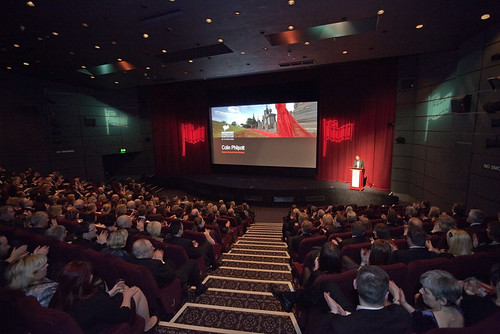
Having discussed the extremely limited budget and what we wanted to achieve, we settled on the idea of asking previous BIFF guests to remember a moment in their personal cinema history.

I approached several high-profile guests from previous Festivals and was delighted to have positive responses from Imelda Staunton and Jim Carter. It seemed rather handy that, as they are married, they could film their 'editions' on the same day. We wanted to film the guests in familiar and comfortable surroundings, and where better than their own front room?

Along with Emma Shaw, the Museum's Media Developer and expert camerawoman, I set off to the Staunton/Carter household early one December morning. Jim had called me on the way to inform us that the council had decided to prune the trees outside their house – today of all days, when what we really needed was silence! Imelda and Jim greeted us with the warmness and kindness which they both exude in abundance. We enjoyed a very welcome cuppa with Hobnobs while Emma and our sound man, Jason, set up the lighting and camera in the front room.

Imelda sat stroking their lovely dog whose name I now forget, and asked how long her "speech" should last. We were aiming for each trailer to be approximately 40 seconds long, so Jim was ready, just off-camera, with his wristwatch – ensuring the 40 seconds was adhered to. She quickly spoke it through and we went for our first take. As was to be expected, Imelda did it perfectly and after a few differing close-up shots we had it in the can. During the various takes, Imelda frequently glanced at Jim to ensure she wasn't going over the allotted time, to which he frequently told her that the takes were "two hours long, love".

As we quickly rearranged the furniture, and some of the ornaments – including the photograph behind Jim, which features their daughter in a TV programme – Jim took the position and began to talk about his experience of "Lords acting" in Harrogate. Imelda frequently repaid the favour of reminding Jim his takes were way too long – and after a few takes, I hope you'll agree, his enthusiasm and passion for film really comes across.

Our next subject was the ever-popular John Hurt. John received the BIFF2010 Lifetime Achievement Award and both John and Anwen, his wife, have become friends of the Festival. A similar trip ensued with Emma and Sven – the Museum's Gallery Developer, and soundman on this occasion. John and Anwen live in Norfolk, which is a lovely journey and we arrived at their desirable country abode in time for lunch. Without doubt, the friendliest and most welcoming showbiz couple I know, John and Anwen had prepared a lovely lunch and so after the five hour journey, we sat around their kitchen table and discussed all-things-film. It was a treat.

Afterwards, we made our way into John's purpose-built artist's studio, in which hangs oil paintings featuring his sons, self portraits, and various sketches. He was working on an amazing self portrait which I loved - a really great use of colour and clearly the work of an experienced artist. I urged John to have them displayed in an exhibition - they were certainly of a high enough standard.

As we set-up the camera and sound equipment, John quickly talked through his plans for the trailer, comprising three separate cinema experiences: his first trip to the cinema to see Robinson Crusoe; a truly mesmerising viewing of Alec Guinness as Fagin in David Lean's Oliver Twist and finally Jules et Jim – the one we chose to feature in the finished trailer, and the one John felt most captures his passion for film. We left after a great day with a true gent and a genuinely lovely, bonefide movie star.

It has, thus far, been a privilege to work with the guests mentioned above, and I sincerely thank them for their time and generosity. We still have more to come, hopefully, so watch this space!

Visit the Bradford International Film Festival website

01 April, 2010

Festival Highlights: Part two - Four Lions


On Day 8 of the 16th Bradford International Film Festival, its Director Tony Earnshaw took the floor for the second time that evening to introduce what was for me the highlight of the festival: the UK premiere of Four Lions, the highly anticipated, inaugural feature length comedy from satirist Chris Morris, best known for TV series Brass Eye which sparked controversy and polarised opinion.

I attended what was supposed to be the UK premiere, after its initial screening at Sundance Festival back in January, but our Film Department managed to add an earlier 'preview' screening in an attempt to meet demand, which itself sold out in less than two days!

It was fitting that the premiere should be held in Bradford, as Morris spent a lot of time here doing research in the preliminary stages of the project, and believes that "coming to Bradford is almost a kind of homecoming for the film". A lot of the cast are from the area, many of whom were in attendance (along with the producers and writing team) for the screening and subsequent Q&A.

I had heard a mixed reaction from film critics after Sundance, but if my expectations as a fan of Morris' work were too high, the man himself delivered a cutting preamble from his wife which served to neutralise my anticipation: "Even if it's really s***; well done, you've made a film," a statement which turned out to be far from the truth. The laughs had already begun.

The 'Four Lions' of the title are a group of would-be jihadis: Omar, Waj, Fessal, Barry and Hassan, technically a fifth lion, but brought in at the last minute before the final showdown. We follow Omar (Riz Ahmed) and Waj (Kayvan Novak) as they flounder through training camp only to be sent home after inadvertently scoring an own goal, watch the band of fools hatch and invariably botch up plans, and their final bungled attempt to strike a blow for Muslims around the world at the London Marathon.

One journalist suggests that Morris has "taken on arguably the most bad-taste subject imaginable", but surely it is one of the most pertinent in today's Britain with its multiculturalism and accompanying divisions. Morris observed that "We are not very good at understanding across a cultural divide." But Four Lions goes further by illustrating the divisions within communities, for example, in the tumultuous relationship between Omar and his devout Muslim brother, both of whom are exposed as having misguided opinions. Challenging our assumptions, the most destructive of the group is in fact white Muslim convert, Barry (Nigel Lindsay).

In typical Morris fashion, no-one is safe, and he questions not only the sense of the protagonists but those who are charged with demobilising the cell, via the police team who are equally incompetent. What comes into play is the judgement brought down upon our own misconceptions, and as the film unfurls, you realise that the film's focus is upon cultural and group identity in general, rather than a commentary on the Islamic religion in particular.

The research Morris spoke of shows throughout the film. Although the characters are ridiculous, they are believable and amiable - testament to this fact was the gasp from the crowd at an unexpected death, which I felt was directly related to the audience's empathy.

After the film, Morris and members of the cast and crew answered questions about the problems of raising money for such a project, and the creative process behind writing collaboratively with Sam Bain and Jesse Armstrong, the writing team behind Peep Show (also in attendance). Actors Riz Ahmed, Kayvan Novak and Arsher Ali (Hassan) spoke of the sense of generosity and friendship between cast members.

Not surprisingly, however, the majority of the questions focussed on the potential offence and controversy surrounding the film. Morris decried that nothing he has done he would classify as controversial, and in answer to whether he is mocking Islam, he is "certain in [his] mind that's not what's going on." He thinks that the idea of offending people is just boring, and he would rather delve into a subject to try and understand it from a particular position. Comedy is as good a vehicle as any for doing this, and takes nothing away from the intelligence apparent and important cultural commentary throughout the film.

Morris had a self-confessed 'Richard Attenborough' moment when he took the opportunity to thank the crew and brilliant actors he had the opportunity to work with: "I didn't want this evening to pass without making that rather gushy but sincere remark." Reviews from the audience reported that Morris was warm and personable with anyone who wanted to talk to him.

This was deservedly the most successful premiere in Bradford International Film Festival's history. I'm still not tiring of its endlessly quotable lines. Go and see this film when it is out on general release in May.

The National Media Museum will be screening the film from 7 May, and is the only place in Bradford you’ll be able to see it on release!

Festival highlights: Part one

Bradford International Film Festival is regrettably over for another year, and what an 11 days it's been! We've seen Oscar nominees and BAFTA winners, actors and film industry luminaries, both home grown and international. It feels like it's finished before it's even begun, and as usual I didn't have time to go to half the films or events I planned on attending.

If you missed any of the highlights, not to worry! We recorded audio and video footage during some of the events, and can now give you the opportunity to watch selected clips from the comfort of your own home (or desk, or bus, or train...)


The first Screentalk took place on Friday 19 March, the first full day of the festival, when we welcomed a truly international special guest: Fernando Meirelles, director of City of God and The Constant Gardner (both of which were shown as part of Fernando's first retrospective outside his native Brazil).

Fernando was recently described as "one of the ten greatest directors working in the world today". He joined Professor Lúcia Nagib, director of the Centre for World Cinemas at the University of Leeds, and personal friend of Fernando, to discuss his career and answer questions.

As a special treat before the interview began, the audience were shown clips of Fernando's early work in commercials/documentary-mockumentaries, and heard about his accomplishments in Brazilian television, into which he "injected so much life and dynamism".

Despite his self-confessed shyness, Fernando is shown to be passionate and very funny indeed. During the evening, he told the story behind "the most expensive joke in history". It occurred during the filming of Blindness, when Gael García Bernal's improvised impersonation of Stevie Wonder cost the production thousands of dollars in music rights!


On the 6th day of the festival we were joined by Imelda Staunton, acclaimed actress who has appeared in countless films, most notibly Vera Drake, a performance which earned her a BAFTA and an Oscar nomination.

Imelda sat in conversation with Phil Penfold and discussed her career in theatre, television and films. She has a vast repetoire at her fingertips, so it was an absolute delight for the audience, particularly any burgeoning actors, to hear wisdom imparted directly from the mouth of one of Britain's most beloved character actresses.

In this clip you can watch Imelda discussing necessary adour in the early stages of an acting career, and the prudence she showed once hers had begun, the differences between 'then' and 'now', and the challenge of finding a decent musical!

26 March, 2010

'Paradise' comes to Bradford

Tom Vincent, Film Programmer, talks about his favourite film of the 16th Bradford International Film Festival, showing today in Cubby Broccoli cinema at 4.45pm.


I saw Michael Almereyda's experimental documentary Paradise towards the end of my visit to the Viennale Film Festival in November last year. I went along to the screening knowing very little about the film, except that it was constructed from several years of Almereyda's own camcorder home movies collected now and then, and without design, on his various travels in America and other countries. Around 40 minutes in, and during a process of looking for connections and patterns in the material, and examining my own patterns of thought, I realised that Paradise was by some way the most affecting film not only of that festival, but of all the films I saw in 2009. Its effect was certainly mysterious, and I'm not certain I can describe yet quite why it worked so well for me. I do know that I'm very pleased and excited that the film is playing in Bradford for its UK premiere, and that I'll get a chance to have a second bite of the cherry...

25 March, 2010

Debunking the 'Alien' Myth!

You may be aware that John Hurt, recipient of the 16th Bradford International Film Festival’s Lifetime Achievement Award, was the victim of the infamous chestburster scene in Ridley Scott’s Alien (1979).

What you may not know is that after the release of the film, a rumour emerged that the cast had no idea what would happen in the scene; only that Hurt’s character (Kane) would die.

During the John Hurt Screentalk last Saturday, the man himself revealed that the myth is only partly true! The cast were aware of the chestburster puppet, but not the fake blood and viscera which would accompany it – one stream of blood unwittingly flew straight toward cast member Veronica Cartwright, whose hysterical reaction was captured on camera.


Alien won the 1979 Academy Award for visual effects, and earned itself a place in Empire magazine’s countdown of the greatest 18-rated moments of all time.

Re-live the moment in glorious 70mm when Alien is screened on Saturday at 2pm as part of the Widescreen Weekend.

Hear more from John Hurt on the National Media Museum Podcasts page.

24 March, 2010

Still to come at Bradford International Film Festival

We hope you’re enjoying the festival so far, and that you’ve not missed any of the highlights of the 16th Bradford International Film Festival.

If you’re trying to decide which screenings to attend over the next few days, here is a quick run down of some of the special events still to come which are sure to captivate and delight their audience.


On Saturday at 8.30pm, we welcome BIFF patron and writer/director Alex Cox to the National Media Museum for a Q&A session after the UK premiere of Repo Chick – another anarchic adventure from the iconoclast who brought us Repo Man – in which society heiress Pixie De LaChasse (Jaclyn Jonet) is disinherited by her family and stripped of her $77 million fortune. Ordered to get a job, Pixie becomes a repo chick for repossession agent Arizona Gray, before joining a band of environmental terrorists with one aim in mind: to criminalise golf!

Also on Saturday at 1.15pm, we will be screening Blue Sky (1991), the final film from Shipley-born director and local hero Tony Richardson. It stars Tommy Lee Jones, Powers Boothe and Jessica Lange (who won an Oscar for her flamboyant performance in this role). Jones is Hank Marshall, a radiation expert whose work problems become embroiled with those created by his sexy wife, Carly (Lange). The screening includes an extended introduction and talk by local film expert Keith Withall.


Greenberg is the new film from director Noah Baumbach who brought us The Squid and the Whale (2005), and is the writing talent behind some of Wes Anderson’s finest films. Ben Stiller plays New Yorker Roger Greenberg, who moves to Los Angeles to figure out his life and housesit for his brother, Philip. An eccentric connection with the family’s PA, Florence, keeps him from doing nothing, and soon they begin to see their zoned lives in a more connected way. Baumbach’s latest comedy drama will be showing at 6pm on Sunday.


Finally, one of the special events we are proud to present at this year’s festival is a unique screening of The Phantom of the Opera (1925). The film will be accompanied on the Wurlitzer cinema organ by international concert organist Donald MacKenzie, who specialises in the accompaniment of silent films and has over 20 feature films at his fingertips including Carmen and Dr. Jekyll and Mr. Hyde. He has appeared on BBC Radio 2, 3 and 4, the World Service, and played for Her Majesty the Queen at several Royal Film Performances. Don’t miss this timeless classic and live performance on Sunday at 7pm.

Charting the Uncharted States

Neil Young is a film programmer and is instrumental in putting together the Uncharted States strand of the Film Festival each year. He talks about his selection of movies for the 2010 festival.

This is the fourth year that I've put together a selection of the best independent American productions under the Uncharted States of America banner. And that means genuinely independent (off-radar, underground, low-budget stuff, not studio-funded "indie" movies.

Once again I'm dazzled by the sheer variety and quality of stuff that's being made over there, very far from Hollywood (in terms of distance and also originality).


Several of this year's selections have never been shown before outside the USA, including Peter Thompson's unclassifiable essay-movie about Dutch art and history, Lowlands (Wed 24 in Pictureville, Thu 25 in Cubby Broccoli) and Kris Swanberg's very warmly-reviewed Costa Rica-set drama It Was Great, But I Was Ready To Come Home (Sat 27 in Otley).

Both of these films are part of a trend whereby American film-makers venture beyond their shores in search of inspiration - another is Jennifer Oreck's dazzling documentary on Japan's fascination with all things entomological, Beetle Queen Conquers Tokyo (Sun 28 in Cineworld), which must be a strong contender for BIFF 2010's most irresistable title.

As in previous years, however, most of the Uncharted selections display a strong engagement with contemporary American economics, politics and geography - perhaps most notably exemplified by Lucy Raven's China Town (showing in a double-bill with Lowlands), a visually remarkable movie made up of dozens of still images that show how copper is mined, processed and eventually exported.

But whereas Uncharted States is essentially a guide to the most exciting newer film-makers in the world's richest and most powerful nation, we also like to have the occasional look back at previous groundbreakers. In collaboration with Watchmaker Films - who also brought us Eagle Pennell's The Whole Shootin' Match a couple of years back - we are really over the moon to present the long-unavailable debut from the great Tobe Hooper.

Hooper is best known for his seminal horror films including Poltergeist, Salem's Lot and The Texas Chain Saw Massacre, so I think audiences will get a major surprise if they check out Eggshells (Fri 26 in Cubby), a "time and spaced film fantasy" from the 1969 that's a pure artefact of the hippie era.

Unmissable documentary Red Poet this coming Sunday


Yesterday I attended the World Premiere of Red Poet, a documentary exploring the life and career of Jack Hirschman, a ‘Communist Poet in America’. More than this he is a man who displays passion, a love of poetry, art and language, and an unfaltering desire to right the wrongs of corporate America and speak out against political injustice.

We were joined by producer Fran Furey (father of the director Matthew Furey) who introduced the film and stayed afterwards for a Q&A. He pleased the local contingent by mentioning that Aggie Falk, Swedish poet and wife of Jack Hirschman, lived in Hebden Bridge before moving to San Francisco, which drew a few cheers from the audience and is a fortuitous association considering Hebden Bridge Picture House is one of the satellite venues for Bradford International Film Festival this year.

I must admit that I’d not heard of Jack Hirschman before watching this documentary, and I regret not having had the opportunity to delight in his stream of consciousness until now. Indeed, I went home last night and ordered some of his works - I only wish that Jack himself would be there to deliver the words, an experience which compels a fellow poet and friend to remark that he is not performing, but proclaiming the poem.

We heard about a story that the 19-year-old Hirschman sent to Ernest Hemingway, one of his early idols. Hemingway replied, "I can't help you, kid. You write better than I did when I was 19. But the hell of it is, you write like me. That is no sin. But you won't get anywhere with it." Hirschman sold the letter to the local paper and bought a station wagon with the proceeds. When Hemingway killed himself shortly after in 1961, the "Letter to a Young Writer" was published by the New York Times.

All of Hirschman’s friends and peers interviewed in the film speak warmly of his passion, enthusiasm and talent. One recounts how Hirschman wants to immediately read his poetry upon completion, which not only reveals that he is in love with it, but its as if he is a child wanting to show something beautiful that he’s made.

There was a period during the 1970s when Hirschman wrote a poem every day in the Russian language – no mean feat, but a mere drop in the ocean when you consider that he has translated books from over nine languages!

This expertise has earned Hirschman a following in pockets all over Europe, despite remaining somewhat underground in his native USA. A possible explanation for this is his overt communist political ideology, of which he states: “I wasn’t born a Communist; I was made one by the things I saw, the things that I studied, the things that I naturally felt.”

Hirschman’s political involvement is well documented in the film, from his role in the anti-homelessness movement of the 1980s, to his being fired from a lectureship at UCLA for alleged “activities against the state” when he spoke out against the war in Vietnam. It seems to me that Furey wants his audience to focus not on the Communist label which Hirschman proudly wears despite it keeping him from mainstream success, but on the successes of his social conscience and incredible talent, which must not go unnoticed.

After the film, we were due to have the Q&A session with Fran although this turned into an informal chat in the bar area – which was perhaps more in keeping with the spirit of the film. And if you missed the inspirational Red Poet, don’t worry; it's showing again on Sunday 28 March at 3pm with another Q&A taking place after the screening. We hope to see you there.

As a postscript, Film Programmer Tom Vincent told me that Jack Hirschman was initially very keen to attend the Film Festival for the premiere of the documentary. However he was called away at the last minute after receiving an invitation to visit Iraq by the Minister of Culture. A rather unorthodox gig for a man with Hirschman’s history, but nevertheless a fitting gesture for a translator and poet so fascinated by myriad cultures around the world, both past and present.

http://www.redpoetmovie.com/

23 March, 2010

Next Stop: Hollywood North

Ben Haller, freelance writer for US and Canadian television, is a member of the selection committee for BIFF, and responsible for Hollywood North - a new strand for Bradford International Film Festival after the success of its Canadian entries last year. I asked Ben what he has enjoyed so far, and what he is looking forward to in the coming week.

As I was slowly enchanted by the wondrous cinematography of Benoit Pilon's The Necessities of Life, I was drawn back to the words of Steinbeck, “As happens sometimes, a moment settled and hovered and remained for much more than a moment. And sound stopped and movement stopped for much, much more than a moment.”

Most films endeavour to achieve such moments, many fall far short. The triumph of Pilon's heart-warming Quebecois film (about an Inuk forced to recuperate from tuberculosis in the big city) is not that it achieves such a moment but that it spawns many.

And the two cinemagoers who stayed to talk to me about the film for an hour after its conclusion on a rainy Bradford Sunday night hailed it as "the best so far at this year's festival."

I am a firm believer in the notion that films find the viewer on occasion - I have certainly found a few hidden gems in film festivals - so I am thrilled that the two festival attendees found that something special at Bradford this year. That is what a film festival should be about in my view.

And there is still of course plenty more to come! Tonight we are delighted to welcome Imelda Staunton to discuss her exceptional career so far; on Thursday we screen the highly-talked-about premiere of Chris Morris' Four Lions, and on Friday Bradford will be invaded by Cinerama and widescreen enthusiasts of the world for this year's Widescreen Weekend.

I shall certainly be in attendance for cult films Die Hard and Alien in 70mm, as well as the not-to-be-missed rare chance to see The Alamo in 35mm thanks to Cinema Retro magazine!

But before I indulge in the wonders of cinema's past, may I point you to another of my selected titles for Hollywood North - Rafael Oullet's New Denmark screening at the Otley Courthouse Arts Centre on Thursday at 9pm.

The extension of BIFF’s arm across Yorkshire sees a strictly unconventional Quebecois film that awed audiences at Toronto and Vary Karlov last year finds it's way into a fantastic venue in Otley, for what I am sure will be a night of new discoveries and stimulating conversation. I hope to see you all there…

22 March, 2010

John Hurt awarded Lifetime Achievement at BIFF 2010


Ben Eagle, Festival Producer, had the honour of presenting John Hurt with his Lifetime Achievement award at BIFF on Saturday night.

"John Hurt joined us on Saturday for a wonderful event led by Tony Earnshaw, the Festival’s Artistic Director. After an introductory speech from Tony, followed by a clip from David Lynch’s The Elephant Man, John Hurt was greeted by rapturous applause from the sell-out crowd."

"Whilst covering a vast amount of Hurt’s repertoire, the 90 minute interview was sufficiently in-depth but left the audience hungry for more as Hurt’s filmography (supplied to the audience as they entered) is in excess of 150 films, all of which couldn’t be mentioned for obvious reasons!"


"Strictly speaking, this wasn’t the first time John had graced Pictureville’s stage. He appeared in Paper Zoo’s theatre production of George Orwell’s 1984 in June 2009 – playing the on-screen Big Brother, which I was heavily involved with. We had spent an afternoon filming with John in London last year and have since stayed in contact. Due to our working together, Tony felt it appropriate that I present John with the BIFF 2010 Lifetime Achievement Award, which I was delighted to do. John received a standing ovation on receiving the award and gave a very gracious but unassuming acceptance speech."

"He was greeted by a large amount of fans outside who he happily spent time meeting and signing autographs for. It was a thoroughly entertaining, enlightening and exciting event which received some wonderful feedback and really was a highlight of the Festival. "

We hope you enjoyed John Hurt's Screentalk if you were in attendance on the night. If you missed it, or want to re-live the evening, you can now listen to a podcast of the interview here.

20 March, 2010

Don't You Forget About BIFF’s teen movies


One of the most popular strands at this year's Film Festival is "Don't You Forget About Me", a retrospective of six perfect teen movies from the 1950s to the 1990s.

It features six much-loved films across three generations - Rebel Without A Cause, Dirty Dancing and The Breakfast Club among others - it sparks memories of teen awkwardness and alienation, rebellion against authority and insights into the seemingly cool American teen landscape.

Tom Vincent, one of the Museum's film programmers, explains his choice of movies for the strand; "these films aren't in the critical canon, but they continue to engage broad audiences and I think they’re well worth exploring".

He constructed a wishlist of films and by a process of elimination whittled the list down to six great examples of the genre. "I think we’ve got a good range of movies. I would have liked more from the 1950s, such as The Blackboard Jungle and Marlon Brando's The Wild One, but I think we're showing a great range of films that strike a chord."


One such film is Pump Up The Volume from 1990, one of the later films in the strand, featuring a young Christian Slater as an anonymous college kid by day, renegade DJ inflaming the town's authorities by night.

"It's one of the most sincere films in the genre," Tom explains, "It holds up well because unlike many teen films from that era, the characters and in particular the soundtrack don't patronise the intended audience". Compare Simple Minds’ “Don't You Forget About Me” from The Breakfast Club to Leonard Cohen’s “Everybody Knows", a song that recurs throughout Pump Up The Volume, and it’s clear that the Slater film was made to stand the test of time rather than to focus on a more momentary trend.

The strand is bookended by two contextual movies, the quintessential outsider movie Rebel Without a Cause from 1955, and Welcome To The Dollhouse 40 years later.

With Rebel Without a Cause Tom explains "it chimed perfectly with what was to become the baby boomer generation, and that gulf of understanding between kids and their parents’ generation. Teenagers wanted to see someone ‘cool’ railing against 'The Man'." Rebel Without a Cause supplied this to the newly-independent teen demographic.

In contrast, Welcome to the Dollhouse by Todd Solondz is a conscious attempt, in Tom's words, "to kill the genre by pushing the alienated ‘ugly duckling’ scenario as far as it’ll go. By exaggerating the setup, Solondz makes the audience look again at how the genre works. The fact that the film is genuinely funny as well as painful shows that he got it just right".

Teen movies are now in a healthy position but are a different beast to the earlier cycles. "The female characters are much stronger - look at the Twilight series of movies for example, or the film that came out at the same year as Welcome to the Dollhouse, Clueless, which spawned a several imitators of its own. Girl characters are more assertive now, the ‘jock’ types are marginalised and the ‘outsider’ male lead has morphed into more of an inclusive 'metrosexual’."