Showing posts with label film. Show all posts

03 January, 2012

Our favourite films of 2011

Blogger: Tom Vincent, Film Programme Manager

The results of our poll of Museum staff's favourite films of 2011 are in! Each contributor was asked to name five favourite new films that played in UK cinema in 2011. Beginning with an interesting tie for first place, our list of most-loved films is, as usual, broad and varied. Eleven people cast their 55 votes for 41 films, with 32 of those either shown at the Museum, or coming here early this year.

Please use the comments section below to let us know your favourites, or tell us what you think of ours.


Blue Valentine

  • The whole thing is such a genuine look at married life. It's not harrowing and relentless, nor is it Hollywood convenient; it's just very honest. (Mike McKenny, Museum Volunteer and Director of Minicine)
  • Great natural chemistry between Ryan Gosling and Michelle Williams. (Tom Woolley, Curator of New Media)
  • Heartbreaking. Ryan Gosling and Michelle Williams are simply brilliant. You will not find two more accomplished performances this year. (Ben Haller, Customer and Colleague Service Champion)


Le quattro volte

  • Went into this not knowing what to expect and was seduced by its beautiful, slow-paced nature. Lingered on my mind for months. (TW)
  • The finest canine sequence in years, and the goats were good as well. (Keith Withall, Film Extra tutor)
  • True craftsmanship. Moving, heart warming and real. (Toni Booth, Collections Manager)


Animal Kingdom

  • "Do you come from a land Down Under? / Where women glow and men plunder / Can't you hear, can't you hear the thunder? / You better run, you better take cover." (Neil Young, Co-Director, Bradford International Film Festival)
  • This was my special mention for 2011 on last year's list and it's still up there, what a mother... (Jen Skinner, Film Education Officer)


Essential Killing

  • A total surprise. Very powerful with a great central performance by Vincent Gallo. (TB)
  • Terrorism reduced to sheer effort; a film with very little story information that somehow achieves total clarity. (TV)


Meek's Cutoff

  • Perfect example of anti-genre. Completely aware of its mythic Western context, but strips away the spectacle to criticise and deconstruct. (MM)
  • A women's viewpoint on the West, and one exquisite lap dissolve. (KW)


Melancholia

  • Sardonic, sarcastic and complex but still generating great emotion. (KW)
  • Armageddon takes very much a back seat in this enigmatic examination of depression and reactions to a crisis. (Sven Shaw - Assistant Gallery Developer)


A Separation

  • Beautifully produced and the cast deservedly swept the acting awards at the Berlin Film Festival. (KW)
  • Incredibly mature filmmaking that looks understated but held all those different characters' complex and contradictory feelings in play throughout the whole film. (Rona Murray, Film Extra tutor)


Shame
(Leeds International Film Festival; London Film Festival)
  • A stylish and compelling observation of personal detachment. (TW)
  • No-one clapped, too uncomfortable. I'm still thinking about it – I think that's part of what Steve McQueen does best. (RM)
Shame is showing in our cinemas from Friday 20 January. There will be a special preview featuring a Live Satellite Q&A with Steve McQueen and Abi Morgan on Tuesday 10 January.


The Skin I Live In

  • Deliberate 'trash' and high art megamix from the master. They slagged it at the BBC4 World Cinema Awards – which makes you love it more, somehow. (RM)
  • Very original and surprising tale of revenge and personal identity. (SS)


Source Code

  • Much like Rodrigo Cortes' fine Buried last year, Source Code built upon breaking the confines of one-shot film-making. Refreshingly inventive and story-driven, I was gripped throughout. (BH)
  • Superb Hollywood sci-fi. (TW)


We Need to Talk About Kevin

  • Disturbingly beautiful and it's by Lynne Ramsay who is just brilliant, so deserves a place on my list. (JS)
  • Wonderful combination of beauty and horror. (TB)
Wuthering Heights
  • No it's not a straight adaptation, so what? Its quality of silence and visuality were just intensely felt and amazingly consistent across a whole feature. (RM)
  • It captured the passion and violence that I felt when I first read Emily Brontë's novel, and it was filmed in Yorkshire. (KW)


13 Assassins

  • Takashi 'four-a-year' Miike is a compulsive lunatic genius. Like fellow great subversive John Waters, he has glorious fun on the banks of the mainstream. (TV)


Archipelago

  • If Joanna Hogg spends the rest of her career making films about posh families on awkward holidays overseas, why should anyone complain? (NY)


Black Power Mixtape 1967-1975

  • Fine, free edit work on Swedish film crews' recordings of the unravelling strands of U.S. Black Power movements. This film proved the maxim: 'show, don't tell'. (TV)


Captain America: The First Avenger

  • Intelligent and thoroughly enjoyable, terrific performances and original action sequences make this the best of the Avenger series by far. Hayley Atwell is mesmerising as Agent Carter. (BH)


Cave of Forgotten Dreams

  • The ever reliable and idiosyncratic Herzog. (TB)


The Descendants
(London Film Festival)
  • 35 years ago America produced mature, emotionally complex films like this every week. Alexander Payne is my favourite American director working today. (TV)
The Descendants is showing in our cinemas from Friday 27 January.


The Divide
(Leeds International Film Festival)
  • Frontière director Xavier Gens bounces back from the studio peril that was Hitman with an intelligent, visually rich and outstandingly acted horror film which suggests hell really is other people. (Sarah Crowther – Life Online Content Curator and Director, Fantastic Films Weekend)


Drive

  • The most exhilarating couple of hours I've spent in a cinema all year, terrific! (BH)


The Future

  • Prrrrrrrrrrrrrrrrrrrrrrrrrrrrrrrrrrrrrrrrrrrrrrrrrrrrrrrrrrrr... (NY)
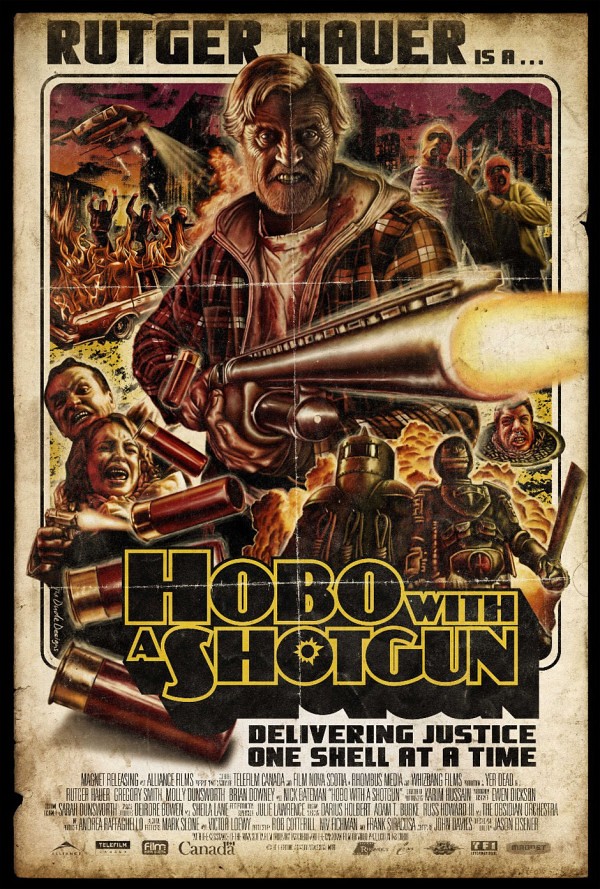
Hobo With A Shotgun
  • Absolutely true to its Grindhouse origins, Hobo... is outrageous, visually rich and the most fun to be had in a cinema this year. (SC)


How I Ended This Summer

  • Desolation and isolation pushed to the very extreme. There have been some fantastic patient films this year, but few - if any - as patient as this one. (MM)


Hugo

  • Martin Scorsese's ode to the magical Georges Méliès and a celebration of cinematic dreams. What's not to like? (JS)
Kaboom
  • The most fun we had in a cinema this year with our clothes on. (Optional) (NY)


Kill List

  • British horror as it should be. (SC)


The King's Speech

  • A moving tale of friendship across the class divide with great lead performances. (SS)
The King's Speech is back by popular demand until Thursday 5 January.


LiTTLEROCK
(Bradford International Film Festival)
  • Beautiful depiction of adolescent communication. Invokes a sense of unease throughout. A touching love letter to small town America, so often either simplified or demonised by mainstream American cinema. (MM)
Masks (Leeds International Film Festival)
  • German director Andreas Marschall's love letter to Giallo. An atmospheric study in Argento and Lamberto Bava, Masks features the best opening sequence of the year. (SC)


Never Let Me Go

  • A love story and sci-fi rolled into one. I found the film detached, cold but totally compelling. (SS)


Pina

  • Feel-good film of the year! The fluidity, grace and passion of the dancers were completely inspiring. (RM)


Rango

  • Some irony in the fact that Johnny Depp's finest hour (and a half) involves no glimpse of his fabled visage. (NY)


The River Used to be a Man
(Leeds International Film Festival)
  • This film utilises masterful cinematography in order for you to soak in the natural beauty - and natural peril - of the African wilderness. (MM)


Senna

  • I had no interest in Formula One but was totally gripped to this film. Asif Kapadia played this epic story out in a fascinating way. (JS)


Submarine

  • I'm a sucker for a misfit film. Great cast, visually very pleasing, a fantastic soundtrack and Paddy Considine with a mullet - what more could you want? (JS)
Submarine is back by popular demand until Wednesday 4 January.


Super 8

  • Was this a satirical take on 80s action movies or an overblown mishmash of genres? It doesn't really matter when a film's this much fun. (SS)


Symbol
(Leeds International Film Festival)
  • Just about indescribable, and more profound than The Tree of Life (and with a great sense of humour) (TB)
Traces of a Diary (Bradford International Film Festival)
  • Watching this fluid, expressive documentary on five highly individual Japanese photographers is the kind of experience that makes organising film festivals worthwhile. (TV)


True Grit

  • A rollicking Coen brothers remake. Loved every minute of it. (TW)
Wake Wood
  • British horror as it should be. (SC)


Win Win

  • Quirky, funny, true and passionate! A life-affirming insight into nowhere-America and a glimpse of hope for middle-age men everywhere. Tom McCarthy has now written The Station Agent, The Visitor, Up and Win Win! (BW)

12 December, 2011

Review of We Need to Talk about Kevin

Guest blogger: Rachel Bannister

I first read the book by Lionel Shriver in 2005 as part of a fledgling book group. At the time, we didn't know what we were letting ourselves in for and 6 years on I felt a familiar feeling preparing to watch the film adaptation of the book. My suspicions were that the film would struggle to get across the story which is laid out in a series of letters in the book, but Director Lynne Ramsay went a different way with her film.

We-Need-to-Talk-About-Kevin-Director-Lynne-Ramsay
Lynne Ramsay

Kevin and his mother Eva have their relationship laid out for us to analyse as we try and work out why he has committed a terrible act of violence. The film opens with a vivid scene – Eva at a tomato festival in Europe enjoying an almost carnal pleasure among the red fruits and the pandemonium. This is the Eva who is young and carefree, and a stark contrast to the other two Evas that we see. One struggles alone with the baby and toddler, increasingly frustrated, and the older Eva sees something menacing in Kevin that her ever cheerful husband Franklin does not.

The film challenges our understanding of the relationship between mother and child... was Kevin born a monster or was he made that way by the (apparent) absence of a bond with Eva? In the book I remember feeling more inclined to pity Eva, but the film adaptation leaves little room for sympathy in the role played (excellently) by Tilda Swinton.

We-Need-to-Talk-About-Kevin
Tilda Swinton and Rock Duer as Eva and Kevin (toddler)

The cinematography is bleak and harsh and Eva seems uncomfortable in almost every situation with her family. John C Reilly plays a dependable but not entirely believable father figure and the young actors responsible for Kevin are fantastically odd and moody.

We Need To Talk About Kevin left me with unanswered questions and stayed with me for a good few days after watching it - surely the mark of a film worth watching?

19 June, 2011

Son of Babylon: Review and Q&A with Mohamed Al Daradji

Guest blogger: Mike McKenny

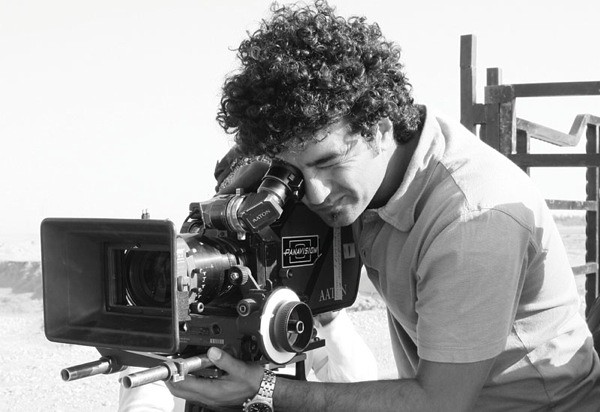
During Leeds International Film Festival 2010, which I was covering for Film & Festivals magazine, I attended the screening of Son of Babylon. The film was preceded by an introduction from the director, Mohamed Al Daradji, who described it as a homecoming event, for although it was shot and set in Iraq, it was produced in Leeds. Mohamed, an Iraqi born filmmaker, lives in and completed his education in the city.

Son of Babylon

Review of Son of Babylon

The fact that it was produced in Leeds and that the filmmakers learned their trade in the West makes a telling contribution, as the film adopts formulaic road movie genre functions - a tried and tested method of portraying physical, existential and socio-cultural journeys. Yet this road movie's beauty comes from having such an honest, genuine and fresh perspective.

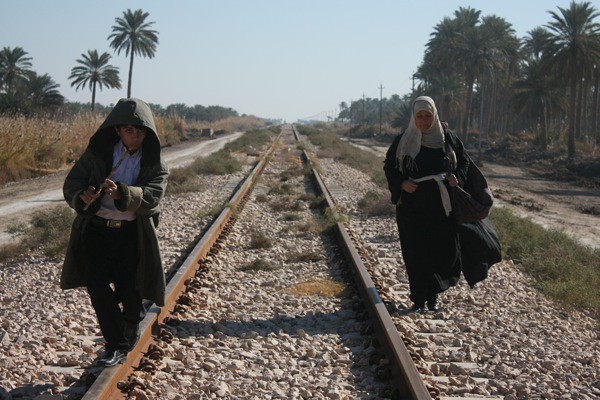
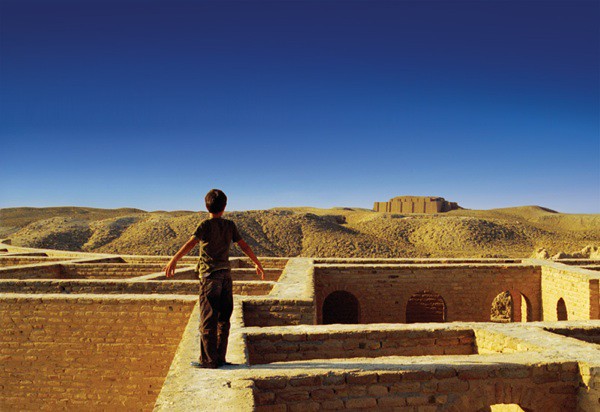
Set three weeks after the fall of Saddam Hussain's regime, the film follows the young Ahmed and his Kurdish grandmother through Iraq as they search for his father who has been missing for twelve years, having been forced to become a soldier and torn from his passion for music. In showing this child’s journey, the film also illustrates the journey that Iraq is currently undertaking; the past that brought it to this present, and a glimpse of possible futures.

The bilingual Ahmed, who can speak both Kurdish and Arabic, is juxtaposed against his elderly grandmother who is hampered by her inability to speak Arabic; he represents the youth of the country and hope for the future, which belongs to the young.

Son of Babylon

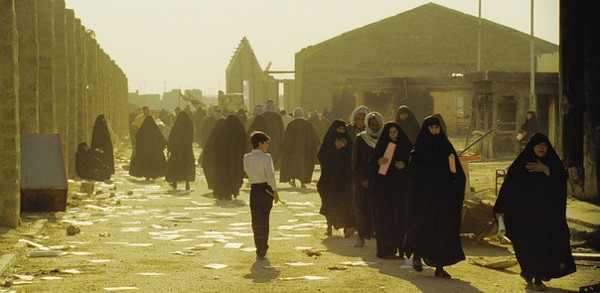
Although the American and allied forces feature as an occupying presence, the film never veers away from its main focus: on Iraq, Iraqi people and their concerns for the future. I thought this was a wonderfully subtle and adept way of acknowledging the occupation of Iraq, while asserting that the only way forward is for Iraqis to find and make their own future.

It would be some stretch to describe this as an uplifting story but there really is a well crafted optimism at its heart. Speaking of of well crafted, the landscape was used within the cinematography with such striking effect that the country really does adopt its own character.

After the screening, Mohamed took to the stage and humbly and admirably insisted that he is by no means the only force behind the film. The Director proceeded to call up many from the crew along with a representative from Screen Yorkshire, who were credited as being an essential factor in producing this film.

Iraq's Missing Campaign

Isabel Stead (Producer) spoke about the Iraq’s Missing Campaign (IMC), which the film is supporting. IMC was established to campaign about and provide support to the relatives of missing and disappeared person in Iraq. Isabel explained that nobody in the United Nations, nor any department that they spoke to would take responsibility for, or supply them with the statistics regarding missing people in Iraq that they wanted to show before the end credits. The campaign intends to pressure the UN into doing something to address this problem.

You can show your support for the Iraq's Missing Campaign by signing their petition and joining their Facebook group.

Mohamed Al Daradji

Short Q&A with the Director

Any spoiler questions have been left out, but one did lead Mohammed to explain that whenever he got stuck creating the character of Ahmed, he based it on his own experiences and feelings at a similar phase in his own life.

When did you shoot the film?


October 2008 - March 2009. Mohammed explained that a great deal of the shooting was a little problematic, but Nasiriya was a nightmare. The Mayor gave him permission to shut down the square, but during shooting, called and asked who gave them permission to do this! He said that he may lose his job and therefore they needed to wrap up in two hours despite having at least eight hours of planned shooting left that day.

How - as an individual – did it feel returning to Iraq?


Mohammed explained that alone, he is very afraid, but surrounded by family and friends it feels really good. He said that it's amazing to see how the country is coming along; that it's getting safer and more secure all the time. The Iraqi army and police - which they would much rather use than private security companies - were very protective and very helpful.

What was it like, shooting the scenes with the mass graves?


Son of Babylon

All the mass graves were produced, rather than shot on location, which was out of respect for all individuals and families involved. However, all the women at the mass graves in the film had lost loved ones and agreed to feature in the film in support of its cause.

Finally there was a difficult question from a man who had recently been to the northern regions of Iraq, and claimed that the characters being able to travel through borders so easily was implausible. Mohammed dealt with this tricky question in a very sensitive, but thorough manner and justified this feature of the story as the film was set three weeks after the fall of Saddam, and the chaos which ensued caused these checkpoints to break down. He further ratified his point by stating that the actress who played the grandmother had actually made that very journey.

A full interview with Mohammed Al Daradji can be found in issue 26 of Film & Festivals magazine. The issue was dedicated to the Middle East and Middle Eastern cinema.

Mike McKenny is a Bradford based academic and film writer. He writes for Film & Festivals magazine, contributes to Hope Lies at 24 Frames Per Second and is the editor of Destroy Apathy. He can also be found on Twitter (@destroyapathy).

08 June, 2011

The Dead: Interview with the Ford brothers

Guest blogger: Mike McKenny

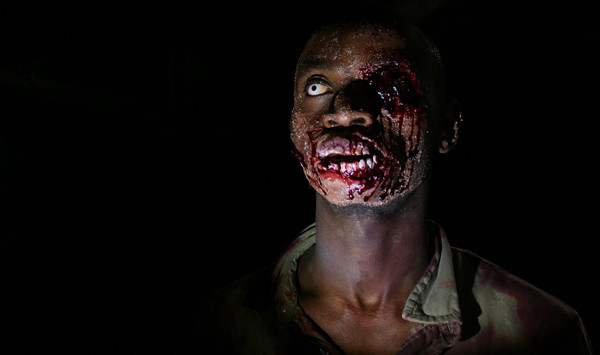
Last November, I was covering the Leeds International Film Festival (LIFF) for Film & Festivals magazine. During that intense two weeks of film viewing I had the pleasure of interviewing the filmmakers behind the African set, British produced zombie-apocalypse film The Dead, which is playing at this year's 10th annual Fantastic Films Weekend here at the National Media Museum (9.30pm on Friday 10th June).

Prior to the screening at LIFF, I met up with Howard and Jon Ford, the brothers responsible for writing, directing, shooting and producing the film, along with the film's main star Rob Freeman. It is really heartening, meeting a group so enthusiastic about their film; a truly independent film, funded primarily by the brothers themselves. Further still, to see the lead actor get so strongly behind this along with the filmmakers gives more indicators as to the energy within and behind the production.

Review of The Dead

The film really is a genre homage on many levels, fitting equally perfectly as a contribution to the zombie movie, the road movie or the buddy movie, with Leone infused nods to the spaghetti western chucked in for good measure. All genre elements are utilised lovingly and knowingly rather than cheaply and exploitatively and the sheer fact that so many genre elements can be infused without ending up a complete mess shows for some great script writing ability.

Lt Brian Murphy (Freeman) (a character based – lovingly rather than lazily – on Leone's Clint Eastwood/Man with no name) is a mechanic, who after having attempted to flee the continent of Africa in the opening sequence crashes just off of the West coast and steadily sets on his journey inland in an attempt to find some way of getting back to his family in the US. As he makes his way inland, he runs into Sgt Daniel Dembele (Prince David Oseia), a soldier who has deserted his post to return to his village in search of his wife - who was killed in the opening sequence - and his son, who has been taken to a survivor's base in the north.

This is all you need to know of the plot as it is rightfully and elegantly simplistic. As with all great genre cinema, the film keeps all elements that make the formulaic plot recognisable and simple, but deviates from this formula enough to say something interesting and give the audience a completely new perspective on a familiar setting.

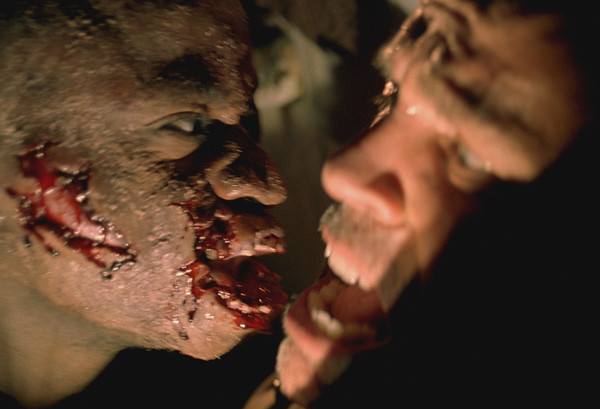
The Dead

Without doubt, the major game-changer here is the setting of Africa; the landscape is so at odds with the post-apocalyptic, claustrophobic urban environment seen in so much zombie-media in the last thirty years and for this reason has been unjustly compared to the Resident Evil 5 game, which is also set in Africa. Resident Evil 5 has taken a series full of suspense and intrigue with a slow burning anticipation at its heart and turned it into a mindless, dull, explosion-fest. The Dead, adversely, takes a genre that, through the evolution of the 'fast zombie' has strayed from its suspenseful roots; this places itself firmly back there, complete with slow zombies and a well crafted, laboured suspense rather than cheap jumps and breakneck editing.

The Romero influenced slow zombies are complemented by the Leone influenced long takes and expansive landscape shots, with zombies slowly but inevitably filling that vast landscape. This technique allows the suspense to build constantly, to the point where the slightest setback (stalled car, jammed pistol, etc) can turn the threat from constantly steadily building to imminently present in a matter of seconds. It is this slow burning suspense, along with well crafted set-pieces that makes this film a very worthwhile contribution to the genre.

It lacks the blatant political allegory of the Romero films, yet in an acceptable way, never becoming pointless or apathetic. One of the worries I had about the African setting was the way relentless liberal academics (myself, unfortunately sometimes included in this category) would be poised to criticise a film with the central white protagonist in amongst the 'zombified' natives of Africa, yet having seen it, I believe the way the buddy relationship is handled along with the representations of tribesmen and local militia met along the way easily do enough to make some statements on humanity without relying on lazy and potentially offensive typecasts.

Interview with the Ford brothers and Rob Freeman

(As will very shortly become clear, this interview took place before Mike watched the film.)

First of all I haven't read anything about the film as I haven't seen it yet (see?) and I do like to go into films with as blank a slate as possible; especially when it has picked up quite a bit of buzz as this has since playing at Frightfest. So, my questions will be more about you guys and genre film in general.

Fast Zombies or slow Zombies; which have you chosen, why, and was this a lengthy discussion?

Howard: Definitely slow zombies! Not only was this how our inspirations such as Romero did it, but from a directing perspective it was also the best way to make the film more suspenseful as the fast running zombies force you to shoot an action sequence.

Did you have a premise and then added the zombies to that, or adversely did you think: zombies are cool, let's build a story around them?

At this point Jon pre-empts a later question going back to what initially lit the filmmaking fire in his belly; he explained:

"Seeing Dawn of The Dead at such a young age really made me want to be a filmmaker, so this script has been in the process of being made for a very long time."

Howard: We had always wanted to do a movie about a lone man in an unfamiliar landscape, but it was when shooting all kinds of TV commercials in Africa that we discovered these un-tapped locations, and at the same time we were getting the feeling of having worked on commercials for so long and that this was paying the bills but just not fulfilling our dreams. Then a commercial for a well known brand of nappies tipped us over the edge and Jon said "we have to do this Zombie film now".

The Dead

How has current momentum behind zombie media helped? For the last ten years, starting with the original Resident Evil games, coming right up to the present with the TV show, The Walking Dead, zombies have been an increasingly successful commodity. Even specifically in Britain, we have had Dead Set, 28 Days Later and Shaun of the Dead.

Howard: It was 28 Days Later more than anything else, that enabled the Z-word to be used in pitching or trying to establish partnerships, even though 28 Days Later doesn't technically feature 'zombies'. This and Shaun of the Dead had done so well financially that it gave people confidence in the genre again. We had wanted to do a zombie movie since teenagers but the time had to be right if it was to work. I then went to my accountant to tell him about the idea, thinking he would laugh me out the window but not at all, in fact he offered to match my finance pound for pound and became an executive producer!

How have your journeys to get here been?

Rob came in at this point to reveal the extent of Howard & Jon's passion as filmmakers – he is visibly impressed with the filmmaking brothers after hearing their stories.

"When they were young, they would never go out and spend money on having a social life; they would save up and buy film equipment, going out all night shooting short films rather than going out on the town."

Co credits – what is the situation here? It always interests me when filmmakers make a point of pluralising the creators like Powell and Pressburger.

Howard: We have been compared to the Coen brothers – and embarrassingly, the Scott Brothers - but that's just the way it is. I have been directing and Jon as DOP through three features and well over 100 commercials and this is the way it usually works. Yet with The Dead, Jon had been so heavily involved with the script and initial concept it was only right that he had the chance to co-direct. However, as we got going, the reality of the tough shoot in Africa meant that Jon had enough responsibilities as a DOP so mainly we slipped back into our usual roles with me directing, but at the same time we were both as involved and invested.

Rob, how and when did you get involved?

Rob explained that he was taking a break from acting over in the states and came over to England to do some inline skating, a personal hobby. He met a girl who knew the Fords, and acquaintances were made. When it was time to start putting this zombie film together, Howard and Jon instantly thought of Rob. Howard remarked that

"probably no other actor could have survived the shoot as Rob is a fitness fanatic and this was one hell of a tough ride"

and anyway, his piercing blue eyes were essential to the role.

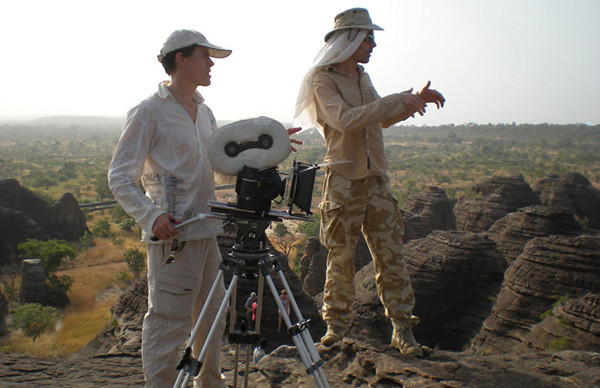
The Ford brothers on location

We spoke about their experiences on the shoot.

Howard: Rob got malaria and even features in The Dead whilst almost dead for real; "three days from death" as the doctor had told us at one point. For a shot in the film where his character Murphy has a fever, [Rob] had been wheeled out of the hospital, had his drip taken out and shot it right there whilst still delirious.

Howard reveals that he was mugged at knifepoint on their first day in the West African city where they would start their journey. Because his licence was taken, the production had to pay the police to keep him out of jail.

"We would have money extracted from us constantly, a lot of the time this was by armed police. We also had to wait five weeks to get all of our gear out of the ports there and when sufficient money had been parted with to get it in, some of it had been damaged and some of the prosthetic props had even melted in the heat."

Jon: Having come so close to death many times during the shoot, I still sometimes wake up in the middle of the night in a sweat, thinking I am stuck back out in Africa on location. A big part of me wanted to go home the moment I arrived, but luckily Howard persuaded me to stay.

Rob: I felt that something strange had been going on. I and many others felt that we may never get back home.

Howard: Although it was an incredibly harrowing experience, the African people in the villages that we encountered were fantastic and even though they hadn't even seen cameras before they agreed to become involved in the film, often acting as zombies or survivors. We all remain grateful for the people allowing us to film in their homes and villages and hopefully adding to the unique appeal of the film.

Come and watch The Dead on Friday night and decide for yourself - don't forget to let us know what you think.

Visit the official The Dead movie website

Mike McKenny is a Bradford based academic and film writer. He writes for Film & Festivals magazine, contributes to Hope Lies at 24 Frames Per Second and is the editor of Destroy Apathy. He can also be found on Twitter (@destroyapathy).

30 March, 2011

BIFF 2011 - Amos Vogel, Terry Gilliam, Industry Networking & a Hobo with a Shotgun

Blogger: Lisa Brook, Bradford City of Film / Leeds Film Festival / Fanomenon

Saying that film festivals are "a chance to experience cinema that you otherwise might not see" is both the biggest appeal of film festivals for me and a phrase that has become cliché.

But I repeat that tenet to audiences, press, friends, family, and anyone who will listen to my obsession. Yes, it's about cinema, but BIFF 2011 reminded me that film festivals are about experiences that you cannot get anywhere else; films and frolic in a hazy festival bubble.

With that in mind, my planned list of film reviews is now something a bit different: I give you four BIFF experiences that I probably wouldn't encounter anywhere else in quite the same way as here in Bradford, the first UNESCO City of Film.

1. Being shocked by films screened at a film society that I’d previously never heard of.

Film can and should expose us to anything and everything outside our individual realities. I’m drawn to cinema that subverts, challenges, and is at times difficult to watch, and while this often results in an unhealthy diet of horror and extreme cinema, at BIFF I took a journey into another kind of subversive cinema.

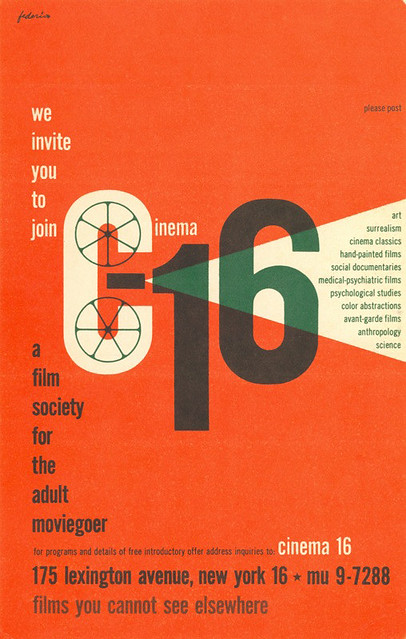
Amos Vogel and the subversive Cinema 16 society was something I knew very little about, and in the festival's tribute to them, I discovered a programme of short films that is as shocking and relevant today as it must have been when the films first screened over half a century ago.

BIFF 2011 Day 2

The disturbing dreamlike sequences appealed to me as a David Lynch fan, but the alarming footage of animal slaughter in the dingy abattoirs of Paris brought home that horror exists in the real world, and when a film exposes something both true and horrific, it has the power to shock us to the core.

2. Cheering at 1am with a hundred other gore-hounds as Rutger Hauer asserts that saving the world with a shotgun is "the only way I know how".

How did a film that began as a fake trailer for Tarantino and Rodriguez's Grindhouse double-bill, manage to secure Rutger Hauer (Bladerunner, and genre cinema legend) as its lead - a tramp? Genius casting.

Hobo With a Shotgun

Those of us at the midnight screening of Hobo with a Shotgun were lucky enough to experience the utterly maniacal, blood-soaked, downright offensive yet positively joyous vigilante Hauer.

This is the ONLY film I have ever seen that I could genuinely watch again immediately after, despite it’s early-hours-of-the-morning credit roll. I will be quoting it for weeks, and I urge you to seek it out so you too can experience the mayhem, and feel the power of Hauer!

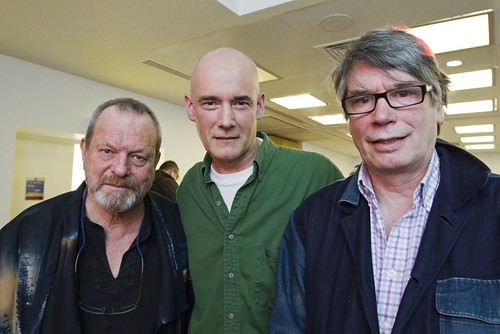
3. Opening the back door to the panel event at which I'm working, to see Terry Gilliam staring back at me.

Helping to organise a panel on low and no-budget filmmaking which was programmed at exactly the same time as the sold out Terry Gilliam Screentalk was naturally a concern, but one I needn’t have worried about. The draw of industry figures like Nik Powell (Oscar-winning producer of The Crying Game) and Marc Price (director of the £45 zombie movie Colin which has secured distribution around the world) brought a full-house to our event, regardless.

BIFF 2011 Day 3

About an hour in, after we’d considered inventive ways of coming up with a budget (including remortgaging houses: very hard times...) and how to avoid trouble with the police during a shoot (some interesting stories there...) I opened the back door to check that everything was ready for the networking session, and Terry Gilliam was standing on the other side.

I managed not to ask him what he was doing here, (a wander during the screening of Time Bandits, in case you were wondering), and heads began to turn as in he came.

BIFF 2011 Day 3

Confirming all reports that he is indeed a genuinely lovely man, Terry got involved with our little event, and was happy to chat to everybody before making it back to Pictureville for his Screentalk. What a guy! Thank you, BIFF, and thank you, Terry. A serendipitous occurrence for everyone who passed up Terry’s Screentalk to attend. Amazing.

4. Going into Pictureville Bar knowing there will be someone who wants to talk about how "their BIFF" is going.

Festivals are personal. Making a selection from 200 films screened this year means you can tailor your own experience, and that itself is part of the festival experience.

To see so many people planning their festival, perusing brochures, or with laptops out frantically blogging and tweeting, and to talk to them about how you’re doing exactly the same gives a festival its sense of community. We may fall in love with film together, but the individual experience of BIFF 2011 will always be mine.

22 March, 2011

BIFF 2011 Day 2

Blogger: James Cross, Front of House

Continuing on my film odyssey, where I watch football, fantasy, avante garde film, and a drunk man sings A Whole New World.

Kick Off

Kick Off UK Premiere

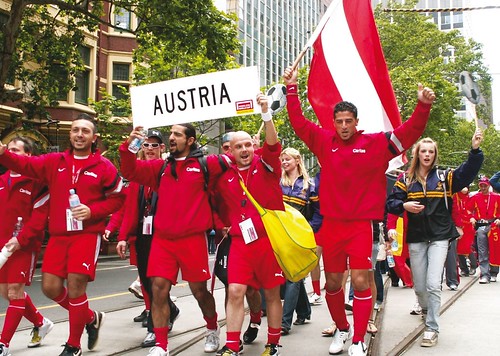
This documentary follows the Austrian homeless soccer team competing at the 2008 Homeless World Cup in Australia. These men, all of who have been homeless and addicts of one sort or another, are playing to restore their faith in themselves. Each have their own stories, but as one of the team members comments "it's the same stories", of isolation, desperation, hopelessness, and the desire for redemption.

Although Kick Off doesn't exploit the story to its full potential, the human-interest appeal of the film's characters carries you through to the end. I was left wondering "What will happen to these people, whose sense of self is so intertwined with this tournament, now that it is over?"

Kick Off screened for a second time on Sunday 20th March, did anyone else watch this film? Let me know what you thought.

Tideland

Tideland

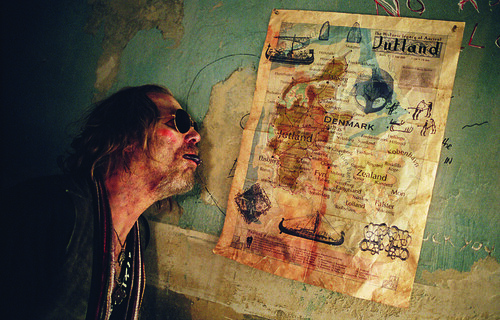
Terry Gilliam has always toyed with the surreal, but with Tideland he took a far more sinister turn. Jeliza-Rose (Jodelle Ferland) is the daughter of a dead-beat rocker (Jeff Bridges) and self-obsessed junkie (Jennifer Tilly), who spends her childhood cooking up heroin for mum and dad. When her mother ODs, Jeliza-Rose is whisked away by her father to grandma's abandoned farmhouse house in the deep south of America. When her father goes 'on vacation' (takes an overdose) we find ourselves pulled into Jeliza-Rose's fantasy world. References to Alice in Wonderland mix with a healthy dose of the macabre to highlight Gilliam's convention-defying sensibilities. I just hope I don't meet his inner child...

BIFF 2011 Day 2

Amos Vogel Part 1: Cinema 16

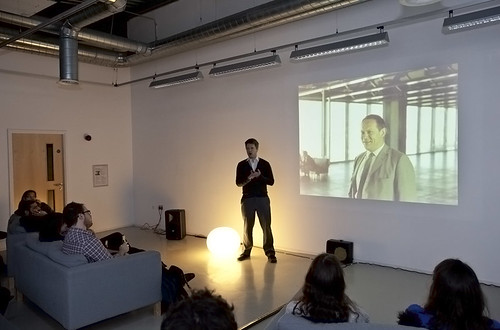
This has been my favourite strand of the festival so far. The session was dedicated to a selection of short films representative of Amos Vogel's work. Screened at Impressions Gallery, the atmosphere was amazing. Sitting on a couch with an old projector clacking away behind me; this is DIY film exhibition at its best.

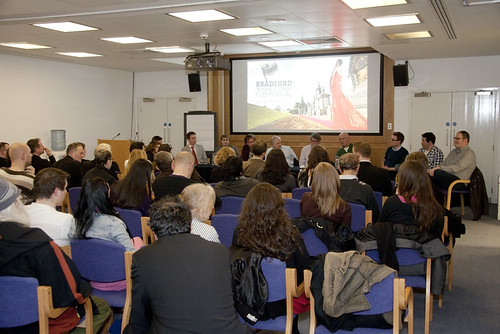
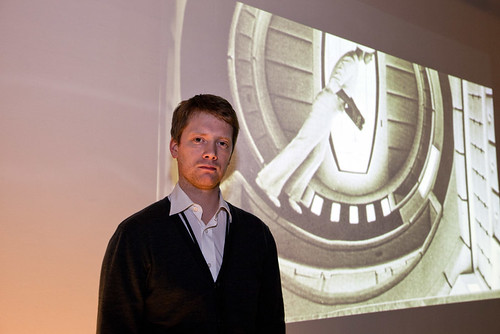
Tom Vincent introduced the session explaining that the aims of Bradford International Film Festival are very much the same as those of Vogel's Cinema 16 film society: to screen films you can't see anywhere else. This is certainly true of the innovative and thought provoking films that were shown here today, and one of the most intriguing aspects was to examine how the films had aged 50 years on.

BIFF 2011 Day 2

The intermission provided an opportunity for the audience to discuss the films, and as we stood outside in Bradford's Centenary Square, currently undergoing some regeneration, a passing drunken man serenaded me with A Whole New World, which definitely added to the overall experience). I won't be missing Amos Vogel: Part 2 on Friday night, a selection of modern films created with the Cinema 16 aesthetic in mind. Will I see you there?

18 March, 2011

BIFF 2011 Day 1

Well, the film festival is in full swing now, and there's lots going on this weekend, including Q&As from Jim Loach (Oranges & Sunshine), Marcin Wrona (The Christening) and the cast and crew of Blooded tonight, followed by the Terry Gilliam Screentalk and the Bradford After Dark mini horror-fest in collaboration with Celluloid Screams tomorrow. On Sunday, Gaylen Ross (former actress turned director) will be here with her new documentary Killing Kasztner, which I hear is incredible.

There's so much going on, that I've enlisted the help of Museum staff and festival goers to review some of the events and film screenings they've been enjoying (or not!) Yesterday you heard from Ben Eagle, BIFF Producer, and now - yesterday's film discoveries from James Cross, box office pro and all round helpful chap.

Blogger: James Cross, Front of House

Yesterday, the festival started in earnest, and it was nice to see some familiar faces along with some new ones. Best of all was being able to compare notes with that special breed of film fan, willing to spend much of the next 10 days sitting in a dark room. On to the films...

Limelight

Limelight

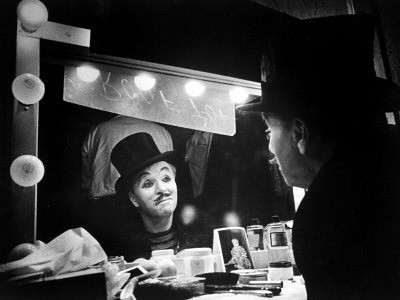
The first in the Claire Bloom retrospective, this film is a perfect example of art mirroring life. Charlie Chapin plays Calvero, a music hall performing 'tramp' clown, who rescues dancer Terry (Claire Bloom) from an attempted suicide. Calvero then nurses Terry back to health, after her inexplicable paralysis. By enthusing and encouraging Terry to seek and achieve her dream of becoming a prima donna ballerina, he realises that his own career and talents are waning.

This is almost a direct comparison between Chaplin and Bloom, because Limelight was his self-referential swan song and her big break. Both leads show what tremendous talent and chemistry they have; people were crying as they left the auditorium.

Cinema16

Film as a Subversive Art: Amos Vogel and Cinema 16

A brilliant introduction to Amos Vogel and the Cinema 16 film society, especially if you are as uninformed as me. Although not cinematically brilliant, the story and personality of Amos Vogel keeps you engaged. He's tried to be "sand in the machinery of the world" his whole life, and as a result turned the New York film scene on its head.

Despite Vogel's many successes, you are left with a slight feeling of missed opportunity and longing as he tells of the demise of Cinema 16. A great introduction to an irrepressible character.

Double Bill: Disfarmer: A Portrait of America + An American Journey

It's easy to see why these two films were programmed together, as both focus on photographers who felt isolated from the culture they documented, and the consequences of their work. I will try not to give too much away as this duo is repeated on Monday 21 March.

Disfarmer

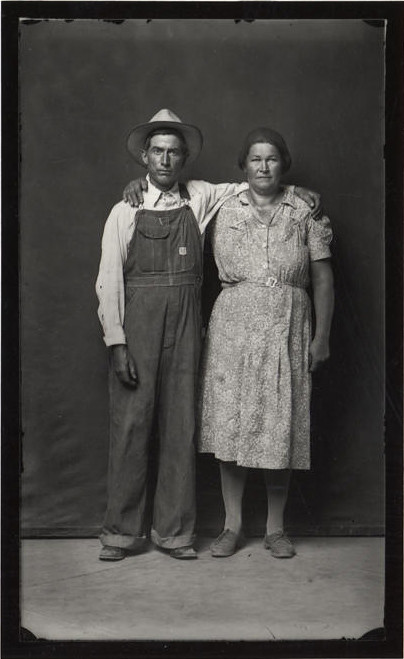
Disfarmer: A Portrait of America

This intriguing story follows the discovery and subsequent selling of odd-ball Mike Disfarmer's (aka Mike Meyers) portrait photography from the depression era of his local farm community. It wasn't until 1974, when photographer Peter Miller found the prints and sent them to New York, that Mike Disfarmer was 'discovered'.

What ensues is a tale that gradually pulls you in as the townspeople are amazed and bewildered at the importance of his work, and the wider photographic community stirs. Small town meets big city.

An American Journey

We were lucky enough to be joined by the film's Director, Philippe Séclier, who introduced his film and stayed for a brief Q&A afterwards. In 1958, Swiss-born Robert Frank first published The Americans, his photographic investigation of the American way of life. 50 years later Philippe Séclier retraced Robert Frank's steps. On this odyssey we learn about the differences in culture 50 years on, the characters portrayed in the book, and its importance in photographic and art history.

What comes across, not only in the film but in the way Philippe talks about his efforts, is that An American Journey is a personal one. Philippe says that Robert Frank was him 50 years ago, travelling and exploring across an unfamiliar culture. I would definitely recommend this to any photography fans.

17 March, 2011

BIFF 2011 Opening Night Gala

Blogger: Ben Eagle, BIFF Producer

BIFF 2011 Opening Night

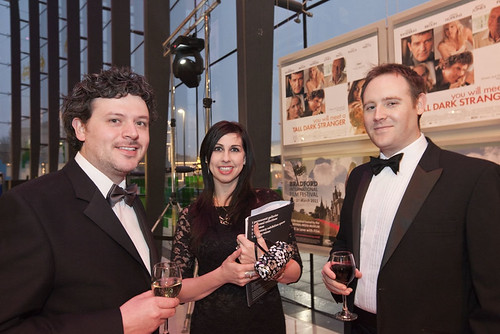
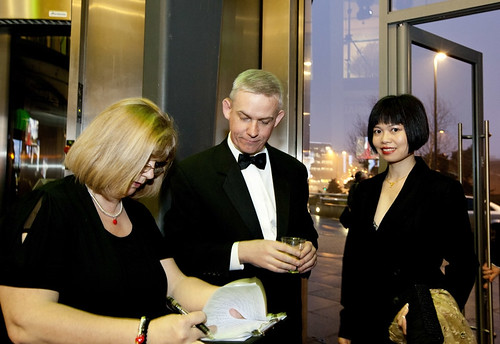
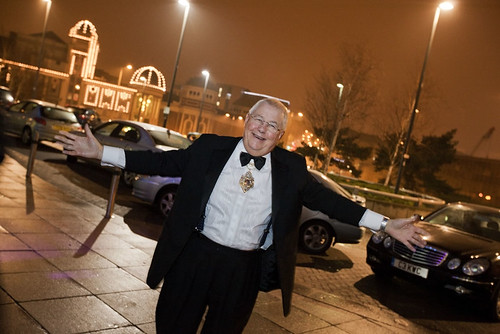
The opening night of any large-scale event is always going to be a big deal, and last night certainly wasn't an exception for the BIFF team. We were delighted to be opening with Woody Allen's latest, featuring a who's who of Hollywood, and although due to working commitments the cast couldn't be in Bradford, the evening was still rich with glitz and glamour.

BIFF 2011 Opening Night

There were canapés and fine wine on offer for the invited audience who all seemed to thoroughly enjoy the night. Following that, there was a 9pm screening for delegates and members of the public, which was introduced by Artistic Director Tony Earnshaw.

BIFF 2011 Opening Night

And now, the fun really begins! The 27th March seems a long way off, and with almost 200 films and events between now and then, I sincerely hope you enjoy the 17th BIFF.

Here's a selection of photos from the Opening Night Gala - you can see them all in our Bradford International Film Festival 2011 Flickr set - and there's more to come.

BIFF 2011 Opening NightBIFF 2011 Opening NightBIFF 2011 Opening NightBIFF 2011 Opening NightBIFF 2011 Opening NightBIFF 2011 Opening NightBIFF 2011 Opening NightBIFF 2011 Opening NightBIFF 2011 Opening Night

03 March, 2011

Interview: Neil Young Talks Film Festivals

Blogger: Greg Spencer

The name Neil Young may not be familiar to you, but as the International Consultant for Bradford International Film Festival, he is one of the people responsible for selecting the films screened at BIFF. I caught up with him to find out what it means to be a film festival programmer.

Greg: How many film festivals do you attend each year and why do you choose those particular festivals?

Neil: Last year I attended fourteen festivals - including Bradford - and this figure is average for my attendances over the last five years or so. I visited Tromsø in Norway, Rotterdam, Berlin, Bradford, Leicester (British Silent Film Festival), Crossing Europe in Linz, IndieLisboa in Lisbon, Edinburgh, Wroclaw in Poland, San Sebastian in Spain, Reykjavik, Vienna, Leeds and Ljubljana. I also had a day trip to London Film Festival to catch a single picture, but such a fleeting visit hardly counts as 'attendance'.

Some of these festivals I work with in a programming capacity, where I'll suggest films for the programmes, then attend to introduce the films or lead a Q&A. Tromsø, Linz, Lisbon, Edinburgh, Vienna and Ljubljana fall into that category (though I'm no longer connected with Edinburgh). Of the others, some are certain long-established and very big events like Rotterdam, Berlin and San Sebastian, which are of particular interest from a programming and journalistic capacity as they have so many world and/or European premieres. Others - such as Wroclaw and Reykjavik, I visited for the first time last year on the basis of recommendations from friends and colleagues, and because the cities themselves looked worth exploring (I'd never been to Poland or Iceland before).

Over the last 10 years I've built up a core list of festivals which I visit every year (or try to) but I'm always on the lookout for new places to go. If I'm lucky I might get invited by a festival, which means they will cover the hotel costs and maybe the transportation. If an invitation doesn't clash with an existing commitment, I'll probably take it up - unless I've heard negative reports about the event or its location. For example, in November I'll be on the jury of a festival in Skopje, Macedonia, and this will be my first time in that country. I'm expanding my film-festival attendance at the moment and might make it to 16 or more festivals during 2011, if I'm lucky.

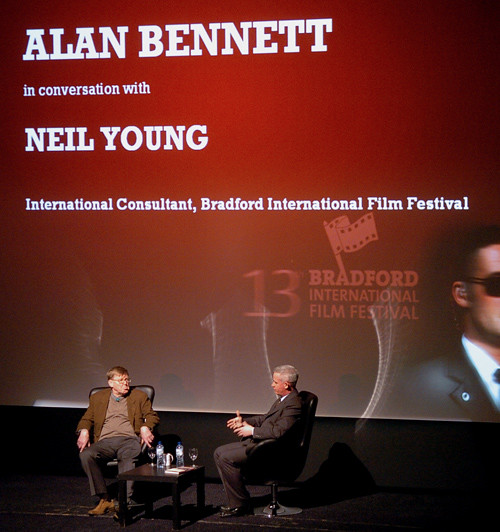
Alan Bennett and Neil Young

Neil Young in conversation with Alan Bennet at BIFF 2007

Greg: Based on your vast knowledge and experience, would you say that the overall quality of the films screened at festivals has improved or declined in recent years?

Neil: Commenting about overall quality is tricky, because there are so many hundreds of films being made and screened all over the world every year, and festivals are looking for the best and most interesting of these. Looking back at my first experience at the Berlinale in 2002 (Berlin International Film Festival, one of the big three in Europe alongside Cannes and Venice), I watched 33 films, walked out of three, and considered 7 especially noteworthy. This year I watched 32 films, had two walkouts, and found 10 noteworthy films. Not a scientific study, of course, and it could be that I've become more skilled at selecting movies to watch, but I don't think we can say that festival films are "getting worse". Of course, that's what many commentators say, and have been saying for 100 years now. Geographically, festivals have become more adventurous and eclectic, and it's no longer so rare to come across a new film from, say, Kazakhstan or Paraguay.

Greg: How do the British festivals compare to the other European ones that you have attended?

Neil: Of course I'm naturally biased when it comes to Bradford. Historically the major British festivals have never really had the international profile of Europe's big three, or of major North American events such as Toronto or Sundance, and it's a struggle for UK festivals to get prominent world-premieres for anything other than British films.

You'll see all the major new films each year at British festivals, of course, plus dozens of smaller discoveries, but it's surprisingly unusual to find programmers from European festivals who will make time in their schedules to go to the long-running film festivals at Edinburgh or London. This is partly because most other European countries have always had one big festival which dominates, and which gets the most coverage, support and funding - Cannes, Berlin, San Sebastian, Karlovy Vary in the Czech Republic, Locarno in Switzerland, and so on - whereas in Britain there's never really been one clear leader which attains international must-visit status.

Greg: Very interesting. I wonder if London Film Festival will become more prominent and a major player alongside Cannes and Berlin.

Neil: Well, it's not really a Bradford Film Festival person's place to comment on the future fate or fortunes of London Film Festival! We wish them all the best.

Greg: I'd like to ask about the BIFF strand that most concerns you which is Uncharted States of America. How does the selection process work, what criteria do you use, and how do you decide whether a film is suitable for the audience?

Neil: I contribute a hefty chunk of Moviedrome, at least 20 titles in that section each year. Uncharted is a smaller section but I'm pretty much responsible for all of it.

I look for very low-budget features and documentaries, preferably with directors and casts which are new to me, and I have a special interest in films which show unexposed corners of the USA. So many movies from that country are set and shot in Los Angeles, New York or the bigger metropolitan areas, but there has been a long tradition of what used to be called 'regional cinema' back in the 1970s and early 80s, taking us off the beaten track, as it were.

I look for films at the festivals I attend and request DVDs of interesting-sounding contenders which I either hear about or stumble across by trawling websites of the smaller American festivals - there's a network of underground film festivals over there which always have plenty of imaginative movies shot on the thinnest of shoestrings. In most cases, I rely on my own taste and judgement - but I'm aware that the films are playing to paying audiences, so I do take into account what it's reasonable to expect the public to spend their time and money on. With the more experimental or avant-garde material, I tend to concentrate on shorter running-times, perhaps 60-80 minutes, and look for documentaries dealing with relatively accessible subject-matter.

Greg: What do you think is special about film festivals? The shared experience, meeting new people, or discovering exciting new films?

Neil: Film festivals are appealing for several reasons, the most obvious being the films; the chance to see many films in a day, over the course of several days, and of a much greater variety than one would be able to see in any day or week's cinema attendance, even in a big city; ideally featuring a mixture of new (sometimes brand new) and archive materials, intelligently curated and professionally presented.

Then there's the communal aspect. You are always seeing people you know and meeting new people, all of whom share your interest in film and, hopefully, your hunger to discover the next delight. There's also the chance to discuss the films and wider cinema culture between and after the movies, often in a foreign or exotic city which is worthwhile visiting in its own right. And if you get to meet a film-maker or performer, so much the better - often smaller festivals are best for this, while at the really big jamborees such access is very heavily restricted.

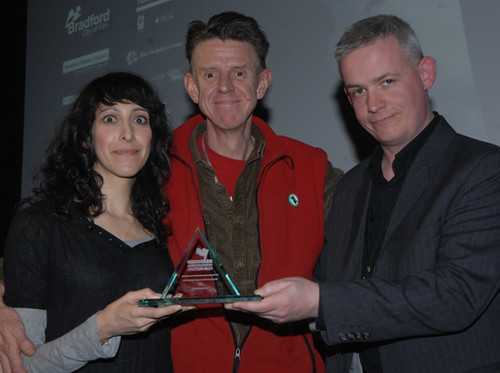
Alex Cox, Neil Young and Shine Short Film Award Winner Harry Wootliff

Alex Cox and Neil Young with Shine Short Film Award Winner Harry Wootliff

Greg: What can someone who is coming to BIFF for the first time expect?

Neil: A first-time visitor to BIFF should plunge in and take a chance on movies they might know nothing about at all, from a director - or even a country - whose films are unfamiliar to them. I'd strongly advise dipping into the retrospectives and archival screenings, as it's increasingly rare to see classic films shown from prints on big screens in top-quality projection conditions, which is what you are guaranteed to get at Bradford (though on occasion films have to be shown from digital sources).

Attending a film festival in person should be a social activity - chat about the films you've seen or are planning to see with fellow attendees, and take suggestions or recommendations. Anyone coming to BIFF, whether it's for the first or for the 16th time, will stumble across films that will startle and dazzle them - and maybe one or two that make them wonder why on earth they were selected! One of the great things about festivals is that everyone will have their own opinions about everything they see.

Greg: What has been your favourite festival moment in all the years you've been doing this job?

Neil: Two that stand out are James Benning's great masterpiece Casting a Glance at Bradford in 2008, when we had various problems with the 16mm projector, and I had to keep going out from the booth to beg the audience's patience - everybody stayed, and when the film finally came on it was quite magical, if nerve-shredding, to watch it unfold, and dreading a recurrence of the glitch any second.

Much more recently, there was the prize-giving at Rotterdam in January, which took place in the beautiful 1960s trashy splendour of the Luxor cinema (all mirrors and light bulbs on the walls), and featured a live electric-guitar performance from Sonic Youth's Lee Ranaldo - his guitar suspended from the ceiling - accompanying two 10-minute Japanese experimental films shown from a 16mm projector in the middle of the auditorium.

Straight after, they announced that my favourite film of the festival, Sergio Caballero's unclassifiable art-film spoof Finisterrae had (against all expectations) won one of the festival's three equal-top awards, the Tigers.

Greg: Finally, have you seen any films this year that you expect to be big hits or you would strongly recommend?

Neil: Finisterrae would certainly be one of the films I'd advise you to keep an eye out for later in the year - I do hope it comes to the Museum, perhaps for BIFF 2012...

Another must-see I spotted too late for BIFF 2011 had its world premiere in competition at Berlin a couple of weeks back - it's Alexander Mindadze's thrillingly visceral Chernobyl drama Innocent Saturday (think Cloverfield, with the reactor instead of the monster), which will hopefully get plenty of exposure in conjunction with the 25th anniversary of the explosion in April. For my money, it's a masterpiece.

See you at BIFF.

08 February, 2011

The King's Speech: A Royal Occasion

Blogger: Greg Spencer

The furore surrounding The King's Speech is quite astounding. After being nominated for a plethora of awards including Best Motion Picture - Drama at the Golden Globes, and Colin Firth picking up Best Actor in the same night, The King's Speech is the film of 2011. After performing well at the Screen Actors Guild Awards and the Toronto Film Festival, the film is expected to clean up at the Oscars and the BAFTAs.

The impact of a film being nominated for the main Oscar awards is huge. U.S. online ticket seller Fandango reported a 76% increase in ticket sales in the 24 hours after the Oscar nominations were revealed, a fact that illustrates just how much impetus just being nominated can have.

In the Oscars' Best Picture category, The King's Speech finds itself up against such films as 127 Hours, Black Swan, Inception, True Grit, Toy Story 3, The Social Network, The Kids are All Right, The Fighter and the surprise inclusion, Winter's Bone. I think the strongest competition will be from David Fincher's The Social Network and Darren Aronofsky's Black Swan, though the Coen brothers' True Grit may be a shock winner, having made $148m in the U.S. in six weekends.

It will take something special to knock The King's Speech of its Royal perch - people in this country are applauding at the end of screenings; something us reserved Brits aren't used to. We musn't underestimate that Americans are fascinated by our monarchy, as demonstrated by Helen Mirren winning Best Actress in a Leading Role for her role in The Queen in 2006. Our monarchy is something that other cultures admire, and this is undoubtedly a big factor in the success of both films.

What do you think of The King's Speech? Is it really worthy of all the hype?

04 February, 2011

Filming a BIFF Trailer with the Stars

Blogger: Ben Eagle, BIFF Producer

It occurred to me, rather belatedly, that Bradford International Film Festival has never had a trailer.

Having discussed the extremely limited budget and what we wanted to achieve, we settled on the idea of asking previous BIFF guests to remember a moment in their personal cinema history.

I approached several high-profile guests from previous Festivals and was delighted to have positive responses from Imelda Staunton and Jim Carter. It seemed rather handy that, as they are married, they could film their 'editions' on the same day. We wanted to film the guests in familiar and comfortable surroundings, and where better than their own front room?

Along with Emma Shaw, the Museum's Media Developer and expert camerawoman, I set off to the Staunton/Carter household early one December morning. Jim had called me on the way to inform us that the council had decided to prune the trees outside their house – today of all days, when what we really needed was silence! Imelda and Jim greeted us with the warmness and kindness which they both exude in abundance. We enjoyed a very welcome cuppa with Hobnobs while Emma and our sound man, Jason, set up the lighting and camera in the front room.

Imelda sat stroking their lovely dog whose name I now forget, and asked how long her "speech" should last. We were aiming for each trailer to be approximately 40 seconds long, so Jim was ready, just off-camera, with his wristwatch – ensuring the 40 seconds was adhered to. She quickly spoke it through and we went for our first take. As was to be expected, Imelda did it perfectly and after a few differing close-up shots we had it in the can. During the various takes, Imelda frequently glanced at Jim to ensure she wasn't going over the allotted time, to which he frequently told her that the takes were "two hours long, love".

As we quickly rearranged the furniture, and some of the ornaments – including the photograph behind Jim, which features their daughter in a TV programme – Jim took the position and began to talk about his experience of "Lords acting" in Harrogate. Imelda frequently repaid the favour of reminding Jim his takes were way too long – and after a few takes, I hope you'll agree, his enthusiasm and passion for film really comes across.

Our next subject was the ever-popular John Hurt. John received the BIFF2010 Lifetime Achievement Award and both John and Anwen, his wife, have become friends of the Festival. A similar trip ensued with Emma and Sven – the Museum's Gallery Developer, and soundman on this occasion. John and Anwen live in Norfolk, which is a lovely journey and we arrived at their desirable country abode in time for lunch. Without doubt, the friendliest and most welcoming showbiz couple I know, John and Anwen had prepared a lovely lunch and so after the five hour journey, we sat around their kitchen table and discussed all-things-film. It was a treat.

Afterwards, we made our way into John's purpose-built artist's studio, in which hangs oil paintings featuring his sons, self portraits, and various sketches. He was working on an amazing self portrait which I loved - a really great use of colour and clearly the work of an experienced artist. I urged John to have them displayed in an exhibition - they were certainly of a high enough standard.

As we set-up the camera and sound equipment, John quickly talked through his plans for the trailer, comprising three separate cinema experiences: his first trip to the cinema to see Robinson Crusoe; a truly mesmerising viewing of Alec Guinness as Fagin in David Lean's Oliver Twist and finally Jules et Jim – the one we chose to feature in the finished trailer, and the one John felt most captures his passion for film. We left after a great day with a true gent and a genuinely lovely, bonefide movie star.

It has, thus far, been a privilege to work with the guests mentioned above, and I sincerely thank them for their time and generosity. We still have more to come, hopefully, so watch this space!

Visit the Bradford International Film Festival website

18 January, 2011

West is West Preview Screening with Bradford Actor Aqib Khan

On Saturday, we were proud to present an exclusive preview screening of West is West prior to it's release next month - and even better for our audience, the tickets were completely free!

Demand was high, but those lucky enough to secure tickets for the event were joined by local actor Aqib Khan. Our Film Programmer, Tom Vincent was there:

"Hosting the preview screening of West is West in the hometown of Aqib Khan, the 16 year old star of the film, was a real pleasure.

"Aqib landed the role of young Sajid Khan – his first ever acting job - after a teacher at Nab Wood school passed on information about a local audition.

"An amazing break for a newcomer, but one with a lot riding on it: West is West is a sequel with a high profile thanks to the much-loved original, East is East, Aqib's character is in almost every scene, and the shoot required a lengthy trip overseas that clashed with Aqib's studies.

"Yet Aqib has met all these challenges head on, taking on acting tips from the likes of the great Om Puri. And going by the enthusiastic response on Saturday, he's already making the very best of his big break.

"Aqib fielded questions from the audience after the film, and spoke about the shoot, developing as an actor, and his own self-belief in stepping up to the part. With West is West's release coming on 25 February, we wish him every success!"

West is West is playing here from 11 March.

22 December, 2010

2010 at the Cinema

With great style, no shortage of black humour, and an intriguing concept at the heart of its strange tale, Greece's Dogtooth has topped our poll of Museum staff's favourite films of 2010.

Dogtooth had a relatively small cinema release, so has become something of a grassroots champion, one that made a big impression on those who saw it back in spring. Early birds caught this story of an isolated family and their misinformed way of life when it previewed at Bradford International Film Festival in March - proof that you can trust us to seek out the good stuff! – and the film has just been entered as Greece's contender for the Best Foreign Language Film Oscar.

In our survey each member of staff was asked to list their five favourite new films on general cinema release in 2010, and were also asked to list any films they're looking forward to for early 2011. Did you see many of our staff's choices? Do you agree with us, or have we got it all wrong? Please add your own list in the comments section below. It's fun to share!


Toni Booth, Collections Manager

Ponyo - Miyazaki effortlessly creates another magical world, very nearly reaching the heights of My Neighbour Totoro.

Dogtooth - a perfect mix of unsettling visuals and narrative.

Exit Through the Gift Shop - Was I being made a fool of? I didn't really care as this was smart, entertaining and at times hilarious.

Revanche - a stunning, serious film dealing with adult themes whilst avoiding the usual melodrama pitfalls.

Hump Day - this one just saw off The Kids are All Right, for its less polished, more awkward and entertainingly juvenile world view.

For 2011: The Great White Silence - Very much hoping to be able to see Herbert Ponting's restored film of the Scott Expedition on the big screen in 2011. Cave of Forgotten Dreams - Herzog's dramas are always entertaining (Bad Lieutenant), but it's his documentaries where he really shines.


Sarah Crowther, Internet Gallery Researcher:

Enter the Void - Hypnotic and mind-bending. Not so much a film as an experience.

Dogtooth - Brave and stylised filmmaking. Simultaneously hilarious and disturbing in equal measure.

Micmacs - Fun, quirky and charming. A Gallic delight to warm the cockles.

House of the Devil - A love letter to 80's horror - slow-burning and utterly involving. Extra points for the simultaneous VHS/DVD release.

Alice in Wonderland - A visual feast as ever from king of the genre Tim Burton.


Ben Haller, Duty Manager:

Inception - a masterpiece in modern suspense cinema that achieved new heights in cinematography. Nolan's meticulous study into the depth of character was a revelation.

The Town - a captivating reinvention of the heist movie, with stand-out performances from Jeremy Renner, Blake Lively and Pete Postlethwaite. The prison scene with Ben Affleck and Chris Cooper is the best scene I've seen all year.

Splice - haunting look into genetic research which pushes the boundaries of comfort with horrific intent. I was gripped throughout, Adrien Brody and Sarah Polley are brilliant as scientists caught between love, science and reality!

A Single Man - luxurious in style, elegant in process and harrowingly honest in character...Colin Firth's finest role to date.

Bad Lieutenant - Nic Cage delivers an inspired performance as a corrupt cop weaving his sinister way through the destruction of post-Katrina New Orleans. Magnificent filmmaking!

For 2011: Never Let Me Go, Blue Valentine, The Fighter, Immortals, Captain America - The First Avenger.


Kathryn Penny, Film Manager:

Dogtooth - dark, funny and different - that poor cat!

Winter's Bone - gripping tale of determination - amazing performance from Jennifer Lawrence.

Inception - great fun and visually great - just don't think about it too much.

Four Lions - I laugh every time I see a Mini Babybell. Great to see the premiere at the Bradford International Film Festival.

For 2011: Animal Kingdom. Intense Australian suburban crime drama - marry me Guy Pearce!

Sven Shaw, Assistant Gallery Developer:

The Social Network - Utterly compelling, slick interpretation of the events leading to creation of the website that defined an era.

The Arbor - Highly original, haunting account of Andrea Dunbar's life and the family she left behind.

Cemetery Junction - Very funny re-visitation of the Kitchen Sink genre which keeps the audience guessing.

Greenberg - Good characterization and great performance from the leads in this existentialist black comedy.

Valhalla Rising - Slow paced, atmospheric and immersive Viking drama.


Jen Skinner, Film Education Officer:

Toy Story 3 - What a rollercoaster ride of emotion, I had to sob silently so that my four year old son didn't notice, definitely the film of the year in terms of personal engagement with the characters.

A Town Called Panic - Animated equivalent of popping candy, totally exhilarating and a joy to watch.

Exit Through the Gift Shop - Clever and inventive. Really lifted Banksy to another level in my view.

A Prophet - Intense, brutal and beautiful.

Dogtooth - I watched this film very early on in the year, at 9.00am without knowing anything about it, I think it took me a while to digest it, I knew it was good but it has grown on me so much as the year has gone on and is now my top new film of the year, so powerful, it's incredible, a breath taking film.

For 2011: I'm very excited about the new Coen brothers film True Grit and I've seen Animal Kingdom which is brilliant.


Tom Vincent, Film Programmer:

The Arbor - Achieved much in many many ways. The British film of the year was also the most vital talking point on Bradford's screens.

Still Walking - Deep emotional impact that accumulated so subtly - I sometimes forget that films can do this. Ozu would approve, and Kore-eda is a great.

Jackass 3D - Along with Piranha, this strange film, the gayest multiplex movie since Top Gun, is the crass, joyous state of 3D art; no need to pretend otherwise.

The Social Network - Mark Zuckerberg's overactive brain races his status anxiety and loses by a whisker. Obsession breeds obsession in Fincher's movies.

I Am Love - The font used in the opening titles told us this was going to be great. Tilda Swinton reclaims melodrama from middlebrow pap.

For 2011: Black Swan (Aronofsky), 13 Assassins (Miike), Animal Kingdom (Michôd), The Descendants (Payne).


Tom Woolley, Curator Of New Media:

The Social Network - excellent script, punchy dialogue and great acting had me gripped. Also proved that it's possible to make a compelling film about websites.

Heartbreaker - a smart, stylish and highly enjoyable comedy with another star turn by Romain Duris.

A Single Man - beautifully shot and dripping in style, Tom Ford's debut perfectly captures those rare moments of clarity. Transcendent and moving.

The Girl With The Dragon Tattoo - a thrilling introduction to Stieg Larsson's world of corrupt media, computer hacking and twisted family trees.

Ponyo - an enchanting animation that deserves to be seen by as many people as possible.

In 2011: I'm especially looking forward to seeing the film version of Murakami's Norwegian Wood. From the stills it looks like Anh Hung Tran has captured the mood of the novel and a soundtrack by Radiohead's Jonny Greenwood makes it a must-see. Also intrigued to see new documentary Catfish and the forthcoming drama Never Let Me Go - after The Social Network and Red Riding, it’s exciting to see Andrew Garfield's ascent to stardom.


Neil Young, The Hollywood Reporter, International Consultant, Bradford International Film Festival:

Involuntary - Ruben Östlund's glacial, brilliant dissection of social boundaries world-premiered in 2008, but was only released in UK cinemas this year – all things Swedish now being apparently very cool thanks to Lisbeth Salander, Kurt Wallander and Let the Right One In.

Monsters

The Disappearance of Alice Creed

My Son, My Son, What Have Ye Done - 2010 proved a banner year for Werner Herzog, with Bad Lieutenant sneaking into multiplexes and his jawdropping making-of-Fitzcarraldo diary Conquest of the Useless finally appearing in English-language paperback.

I Am Love

For 2011: Darren Aronofsky's Black Swan; John Carpenter's The Ward; Joanna Hogg's Archipelago; Elliot Lester's Blitz and the re-release of Frank Ripploh's Taxi Zum Klo.


Thanks to our Film Programmer, Tom Vincent, for putting this together, and to all the staff who submitted their top fives.

Do you disagree with any of these choices? Let us know your films of 2010.